Community Trust ScoreVerified
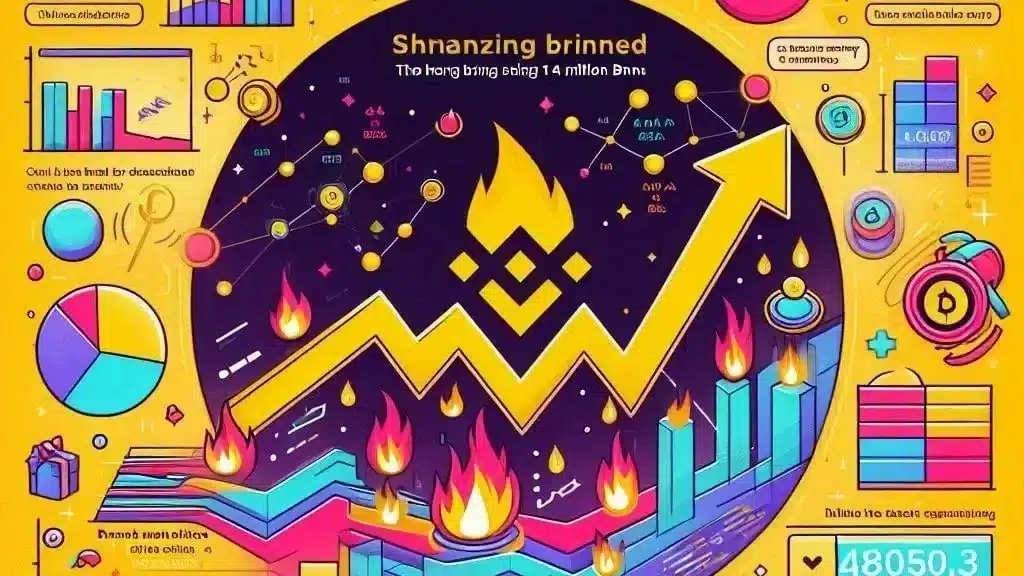
The latest quarterly Binance burn has once again captured the crypto community’s attention as the exchange removed 1.44 million BNB tokens, valued at approximately $1.65 billion, from circulation. This latest reduction in supply brings the total number of burned tokens to 64.26 million BNB, reinforcing Binance’s long-standing deflationary strategy aimed at gradually tightening the token’s supply.
Since its inception in 2017, Binance’s burn mechanism has been a cornerstone of its tokenomics, designed to reduce the total BNB supply from 200 million to 100 million over time. With only 137.7 million BNB remaining, the deflationary approach appears to be progressing steadily. At the current burn rate of roughly 4 million BNB per year, the token could see its supply drop below the 100 million mark within the next decade.
Understanding the Deflationary Mechanism
The BNB burn program operates through two major components: the Auto-Burn and the Pioneer Burn Program. The Auto-Burn adjusts the burn amount based on BNB’s price and the number of blocks generated on the BNB Chain, while the Pioneer Program compensates users who lost tokens through legitimate errors.
Together, these initiatives ensure that BNB maintains a deflationary structure without disrupting the network’s broader ecosystem. The gradual reduction in circulating supply supports scarcity, a principle that could potentially enhance the token’s value in the long term—especially if demand continues to grow alongside network usage.
Network Activity Supporting the Burn
Beyond the token burns, BNB Chain continues to demonstrate strong fundamentals. The blockchain’s focus on scalability, decentralized applications (dApps), and institutional adoption has helped it maintain relevance in an increasingly competitive ecosystem.
Recent partnerships, such as collaborations with countries like Kyrgyzstan to bring national processes on-chain, highlight BNB Chain’s growing real-world utility. This rise in transactional activity naturally increases network fees, which in turn contributes to higher burn volumes—a feedback loop that supports the token’s deflationary design.
Additionally, Binance founder Changpeng Zhao (CZ) has repeatedly linked the chain’s momentum to its “community and builder-driven” approach. He noted that network engagement and new integrations are key catalysts behind the steady growth of BNB’s utility and on-chain demand.
Technical and On-Chain Signals Stay Bullish
From a technical perspective, BNB’s price has shown resilience despite the broader market’s volatility. The token has maintained strong support above the $1,000 level, even after facing rejection near $1,400 earlier this month. Analysts suggest that breaking through the previous resistance could open the door for a potential rally toward $1,500, a critical psychological milestone.
Supporting this bullish narrative, several indicators remain positive. The Relative Strength Index (RSI) continues to hover above the midline, signaling sustained buying interest. Likewise, the On-Balance Volume (OBV) indicator—often used to gauge market participation—has stayed above its key trendline throughout 2025, indicating that buyers still dominate the market.
On-chain analytics from Arkham Intelligence further reinforce this optimism. In October, Binance saw a net negative exchange flow, meaning more BNB was moved out of exchanges than into them. This suggests that investors are opting for self-custody, a bullish signal that often precedes price appreciation, as fewer tokens are available for immediate selling.
At the time of writing, the average exchange outflow stood at 179,000 BNB, underlining a broader trend of accumulation rather than liquidation among holders.
Comparison with Other Deflationary Assets
Interestingly, Binance’s strategy bears some resemblance to other deflationary models in the crypto space. Projects like Hyperliquid (HYPE) have implemented aggressive buyback and burn programs, using transaction fees to reduce token supply over time.
Such models typically rely on strong ecosystem growth to sustain the deflationary cycle. In BNB’s case, continuous network activity, combined with real-world integrations, could accelerate its burn rate and reinforce its scarcity narrative.
The Road to $1,500 and Beyond
While BNB’s fundamentals remain strong, short-term performance will still depend on broader macro trends and market sentiment. Factors such as global liquidity, regulatory developments, and Bitcoin’s trajectory will likely influence whether BNB can sustain momentum above $1,000 and eventually retest the $1,500 level.
Some analysts argue that the current deflation rate alone may not immediately propel prices upward. Instead, they point to Binance’s growing ecosystem—spanning DeFi, Web3 applications, and institutional partnerships—as the real long-term driver.
Still, the deflationary nature of BNB adds a layer of predictability that appeals to both retail and institutional investors. As supply tightens and utility expands, the token could become an increasingly scarce asset, potentially supporting higher valuations over time.
Investor Outlook
The combination of steady burns, positive on-chain activity, and consistent accumulation trends has strengthened investor confidence in BNB’s long-term trajectory. Many see Binance’s disciplined approach as a model for token economics that prioritize sustainable growth rather than speculative hype.
For long-term investors, BNB’s consistent supply reduction and the network’s continued expansion could make it a cornerstone asset in diversified crypto portfolios. However, short-term traders should remain mindful of external factors such as market volatility, regulatory news, and overall crypto liquidity conditions.
Final Thoughts
Binance’s latest 1.44 million BNB burn, valued at over $1.6 billion, underscores the exchange’s commitment to its deflationary roadmap and long-term ecosystem growth. With fewer tokens in circulation, increasing on-chain adoption, and rising interest from treasury entities, the outlook for BNB appears strong.
Whether this move will immediately push prices past $1,500 remains to be seen, but one thing is clear: Binance’s consistent execution of its burn program continues to set a benchmark for deflationary token models across the industry.