Community Trust ScoreVerified
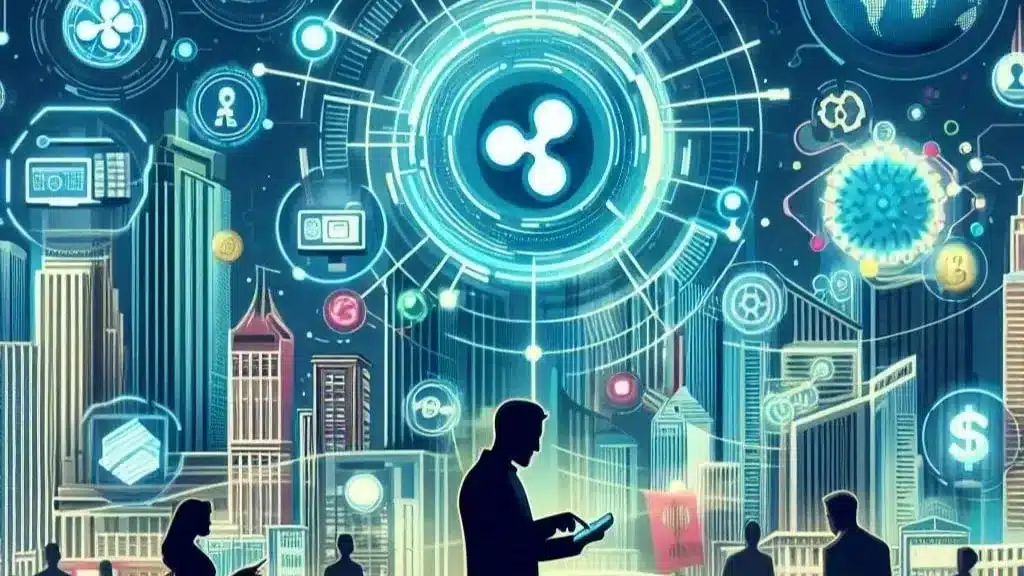
David Schwartz, Chief Technology Officer at Ripple, has clarified that the XRP Ledger (XRPL) was not created to increase the XRP token’s price, but rather to serve as a fast, low-cost, and secure payment network.
Schwartz made the statement during a recent community discussion that began after the Balancer hack incident, which evolved into a broader debate over the XRPL’s design philosophy and long-term purpose.
He explained that the core mission of XRPL has always been to build efficient infrastructure for transferring value — not to manipulate or inflate XRP’s price.
“The XRPL wasn’t built to make XRP’s price go up,” Schwartz said. “It was built to provide a reliable, decentralized payment network that can move assets efficiently across the world.”
Focus on Utility Over Price
In response to an XRP supporter’s question about mechanisms like token burns and institutional inflows from investment products such as a potential Grayscale XRP ETF, Schwartz clarified that these factors were not central to XRPL’s design.
He emphasized that XRP’s value proposition lies in its utility, stability, and reliability, not in speculative price action. The ledger’s architects aimed to make XRP a scarce, fungible, censorship-resistant digital asset that can move easily and efficiently across borders.
While Schwartz acknowledged that network adoption can indirectly enhance XRP’s long-term value, he underscored that this was a byproduct, not the network’s goal.
“The original developers, including myself, didn’t build XRPL to make XRP’s price rise,” he said. “We built it to enable global payments that are cheap, fast, and secure.”
The Role of XRP in the XRPL Ecosystem
Schwartz also highlighted that XRP plays a crucial role in XRPL’s auto-bridging feature, which helps link different assets and improve liquidity between them. This functionality allows XRP to act as a bridge currency, streamlining cross-border transactions and reducing friction between diverse payment systems.
Despite its importance within the XRPL ecosystem, Schwartz maintained that XRP’s use is functional, not speculative. The ledger’s architecture does not favor any individual, institution, or government, reinforcing its neutral and decentralized design.
He reiterated that XRP’s value increases naturally as the XRPL sees greater usage, but this reflects organic network growth rather than any deliberate effort to manipulate price.
Debate on Middlemen and Decentralization
The discussion followed a community-wide conversation sparked by the Balancer hack, which drained over $120 million from the Ethereum-based project. The event reignited debate within the XRP community about whether the XRPL’s design makes it more resilient than smart contract–heavy blockchains.
An XRP community member known as xmoonkie argued that the hack highlighted the dangers of smart contract dependence, praising XRPL for using native features rather than relying on external code or intermediaries.
Another supporter, Dondropit, echoed this sentiment, referencing Schwartz’s past remarks that XRPL was designed so that no one profits from transaction fees — making it one of the only blockchains truly free of “middlemen.”
Critics Challenge the Narrative
Not all community members agreed. Some critics contended that Ripple and its founders benefited from XRP’s initial distribution, arguing that the existence of validators still creates an intermediary structure similar to Bitcoin miners.
Schwartz addressed this directly, clarifying that XRPL validators do not operate like miners and are not compensated by network participants.
“Validators on the XRPL don’t get paid by users, and they don’t choose which transactions to process,” Schwartz explained. “Their role is to order transactions and prevent double-spending — not to profit from them.”
This approach, he added, was intentional: the goal was to design a network that maintains security and consensus without creating incentives that might compromise decentralization.
XRPL’s Vision Remains Focused on Payments
Schwartz’s comments reaffirm Ripple’s long-standing narrative — that XRPL’s purpose is to revolutionize payments, not to serve as a speculative vehicle for XRP price appreciation.
While some investors may focus on market value, Ripple’s leadership continues to emphasize the utility-first approach, highlighting how XRPL’s performance, scalability, and neutrality make it a cornerstone for global digital payments.
The CTO’s remarks come at a time when institutional interest in XRP continues to rise, especially amid growing discussions around XRP ETFs and broader tokenized finance initiatives. Yet, Schwartz remains consistent in his message: the network’s success should be measured by adoption and efficiency, not market price movements.