Community Trust ScoreVerified
Sui’s blockchain network has introduced a pioneering mechanism that merges deflationary tokenomics with sustainable network growth. The Sui storage fund, a core part of its infrastructure, strategically reduces SUI supply, turning every transaction into a driver of scarcity while supporting long-term storage needs. This approach not only enhances the value of SUI but also aligns the network’s expansion with sustainable practices.
Understanding Sui’s Storage Fund
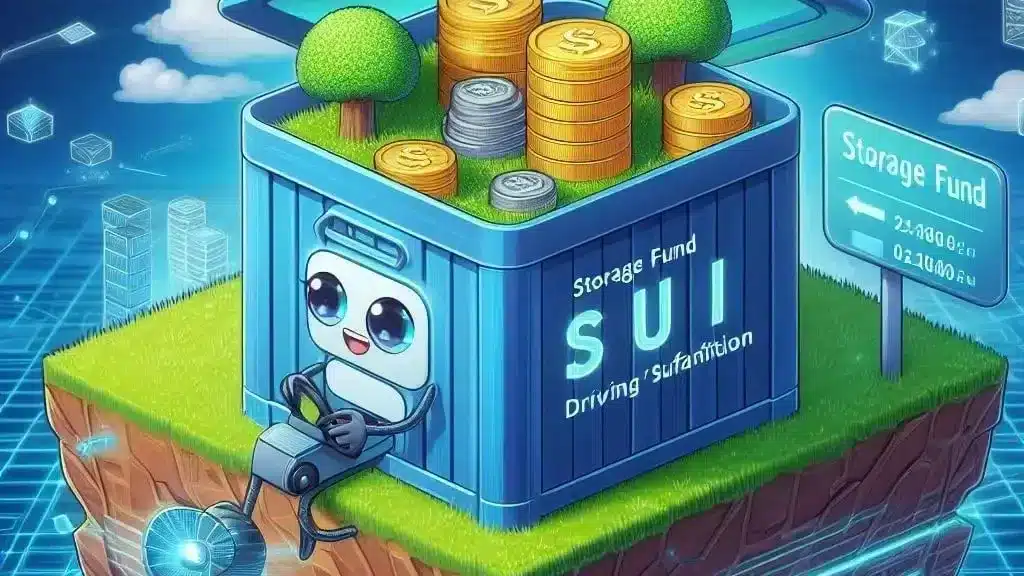
The Sui storage fund is a reserve of SUI tokens designed to subsidize the ongoing cost of on-chain data storage. Distributed among active validators in proportion to their stake, the fund generates rewards while offsetting the cost of maintaining data. This ensures that storage expenses are proportionally shared by users and validators, creating a sustainable ecosystem where network growth does not overburden infrastructure participants.
When users create or modify objects on the Sui network, they pay a storage fee divided into two components. The refundable deposit is returned if the object is later deleted or reduced in size, while the non-refundable fee is absorbed permanently by the storage fund. This permanent removal of tokens from circulation introduces a strong deflationary effect, directly linking network usage to scarcity.
How the Fund Creates Deflation
Sui’s storage fund is not just a reserve; it functions as a structural deflationary mechanism. Non-refundable fees ensure a portion of every transaction is permanently removed from circulation. Additionally, immutable deposits tied to certain objects remain locked indefinitely, further reducing the actively circulating supply of SUI.
As decentralized storage applications such as Walrus grow, each stored blob on its network creates a corresponding mutable object on Sui. This process drives more tokens into the storage fund, increasing deflationary pressure as adoption rises. The more the network is used, the greater the amount of SUI permanently removed or locked, creating a self-reinforcing loop between usage, scarcity, and value creation.
Current Statistics and Impact
Since Sui’s mainnet launch, the storage fund has collected approximately 1.95 million SUI. Of this, about 700,000 tokens have been permanently removed from circulation, with an additional 1.2 million effectively frozen through locked deposits. This significant deflationary impact is expected to grow as more users and developers engage with the network, ensuring that SUI scarcity continues to strengthen over time.
By systematically reducing supply, the storage fund applies consistent downward pressure on available SUI tokens. This approach benefits token holders by ensuring that network growth does not dilute the value of existing tokens. In essence, every transaction, contract deployment, or NFT mint contributes to a more scarce and valuable asset, integrating economic incentives directly into network usage.
Linking Sustainability with Growth
Sui’s storage fund aligns network expansion with sustainable blockchain practices. By tying storage costs to actual usage, the network avoids unnecessary strain on validators while maintaining a deflationary structure. This method allows Sui to scale efficiently without imposing higher storage costs, benefiting both developers and token holders.
The fund also supports a more environmentally and economically sustainable network. As validators are compensated from the storage fund, there is a direct incentive to maintain robust infrastructure while minimizing unnecessary energy consumption. This model sets Sui apart from other blockchains that struggle to balance growth, scalability, and economic incentives.
Unique Positioning in the Blockchain Ecosystem
The Sui storage fund is not merely a technical innovation; it is a strategic feature that positions Sui as a blockchain focused on value creation and sustainable growth. By linking network usage with token scarcity, Sui ensures that increased activity leads to higher value for holders. This model contrasts sharply with networks where token supply can inflate unchecked, reducing the long-term economic benefits of network growth.
With nearly 2 million SUI already locked or permanently removed, Sui demonstrates the practical effects of its deflationary design. Each new user, transaction, and application contributes to scarcity, creating a cycle that reinforces the token’s value while funding network sustainability.
Conclusion
Sui’s storage fund exemplifies a blockchain model where scalability, sustainability, and scarcity are tightly interwoven. By permanently or temporarily removing SUI through a transparent and automated mechanism, the network ensures that every interaction supports long-term value creation. This deflationary approach, combined with robust infrastructure incentives, gives Sui a unique position in the blockchain ecosystem. As adoption increases, the storage fund will continue to reduce circulating supply, strengthen scarcity, and support a sustainable growth trajectory, making Sui a forward-looking platform for both developers and investors.