Community Trust ScoreVerified
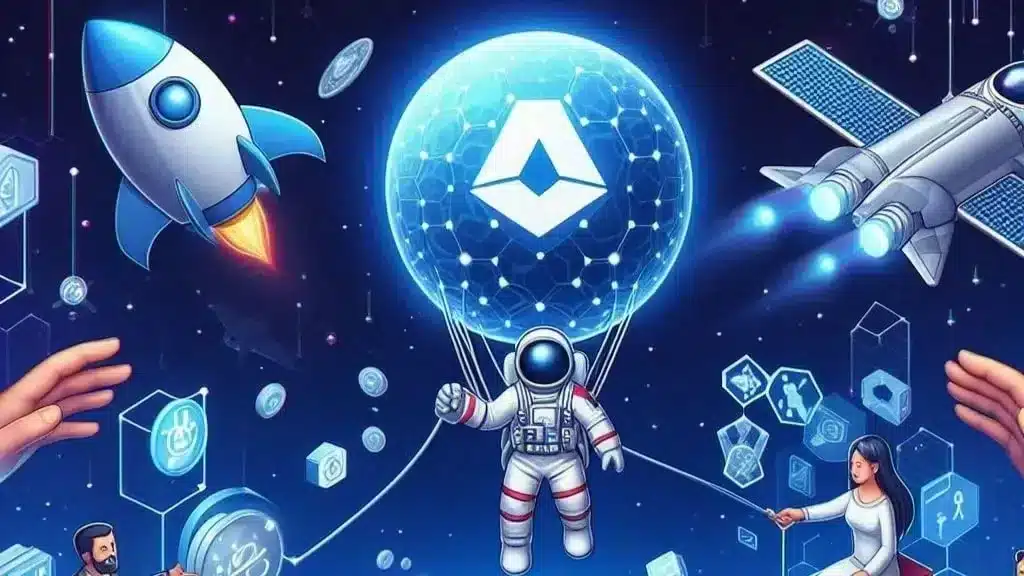
The Open Network (TON) Foundation and the U.S.-based Space Exploration and Research Agency (SERA) have unveiled a groundbreaking initiative that combines blockchain technology with civilian space exploration. The two organizations have launched Mission Control, a Telegram-based Mini App powered by the TON blockchain, designed to let people across the world vote for who gets to fly into space.
This bold experiment aims to “democratize” access to space, giving everyday individuals the chance to become astronauts through an open selection process.
A Blockchain-Powered Path to Space
According to the announcement, SERA has secured six seats on a future Blue Origin New Shepard mission, with the flight scheduled for an upcoming launch. Of these, five seats are reserved for candidates from underrepresented nations—India, Nigeria, Brazil, Thailand, and Indonesia—countries that have historically had little to no representation in human spaceflight.
The sixth seat will be awarded to a member of the global public through a worldwide vote. However, citizens of sanctioned countries will be excluded from participating.
The Mission Control app allows participants to support candidates by completing challenges and earning “SpaceDust,” an in-app point system. Votes are recorded onchain using the TON blockchain, ensuring transparency and fairness in the astronaut selection process.
How the Selection Process Works
TON Foundation CEO Max Crown, speaking at the Token2049 conference in Singapore, explained that astronaut selection will combine multiple approaches depending on the country. In some regions, national TV shows will feature candidates, while in others, online voting will drive the decision.
“The idea was basically to democratize space,” Crown said. “Space travel has always been elitist. There are only about 300 astronauts worldwide if you count them all. We want to change that.”
The final crew of six will therefore represent both a technological milestone in blockchain-powered voting and a symbolic step toward opening up human spaceflight to people outside traditional elite channels.
Funding and Long-Term Vision
The TON Foundation is funding the initiative, alongside sponsorships and advertising tied to national campaigns. The long-term ambition is to replicate the model in additional countries, allowing more citizens worldwide to experience space through similar voting and selection systems.
This project also serves a dual purpose: boosting adoption of the Telegram-integrated TON Wallet, which is required to participate in the voting process. Users must create a wallet to cast votes, and achievements will be rewarded as NFT badges stored on the TON blockchain.
SERA’s Mission to Make Space Accessible
SERA, which describes itself as a “space agency for everyone,” has been exploring innovative ways to open astronaut opportunities to ordinary people. In 2022, SERA organized an NFT-powered campaign that sent a Brazilian citizen to space. According to Crown, that participant became a national celebrity, showing the cultural impact of making space travel accessible through decentralized mechanisms.
By collaborating with TON, SERA aims to expand its reach globally, enabling millions of users to directly influence astronaut selection through blockchain-backed voting systems.
TON Wallet Expansion and Adoption
This initiative also arrives shortly after Telegram rolled out its TON Wallet in the United States in July 2025. The self-custodial wallet, built on the TON blockchain, allows users to send, receive, and store digital assets like Toncoin and USDT directly inside the Telegram app.
The TON Wallet was developed by The Open Platform, a Web3-focused tech company building decentralized apps for Telegram. The project has already attracted strong investor support, raising $28.5 million in a Series A funding round at a $1 billion valuation earlier this year.
Why This Matters for Blockchain and Space Travel
The TON-SERA partnership marks a unique convergence of blockchain and space technology. For the blockchain industry, it demonstrates how decentralized infrastructure can power transparent and inclusive decision-making in real-world projects. For the space industry, it represents a shift toward civilian participation, breaking down barriers that have historically restricted space travel to government astronauts and the ultra-wealthy.
If successful, this initiative could pave the way for a new model of public involvement in space exploration, where national representation, community voting, and blockchain-powered transparency determine who gets to cross the boundary into orbit.
Conclusion
By combining onchain voting, Telegram-based access, and an international selection process, TON and SERA are taking a major step toward making space travel accessible to ordinary citizens. With five seats reserved for underrepresented nations and one for the global public, the initiative reflects a vision of inclusivity and technological innovation.
As Mission Control prepares for its debut on a future Blue Origin New Shepard flight, the world will watch closely to see if blockchain can truly help “democratize” space—turning astronauts from an exclusive elite into representatives of global communities.