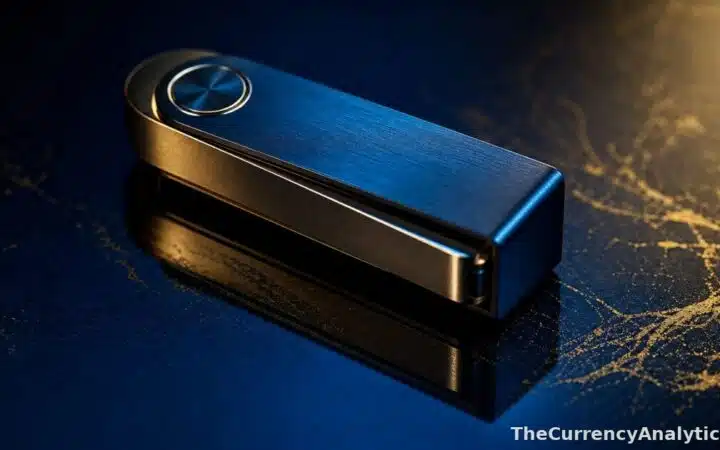
A coin from 2011. Twenty-five Bitcoin. Roughly $1.78 million unlocked during one of the rougher stretches the crypto market has seen lately.
Galaxy Research flagged the movement: a physical Bitcoin piece identified as an S1-COIN-25 Casascius coin, originally loaded with 25 BTC more than a decade ago, was cracked open and its funds moved on-chain. The timing caught attention fast. Bitcoin was sitting near $63,000 on June 4 — not a great stretch for anyone who bought high — and here was someone pulling dormant coins out of cold storage, or at least out of a physical brass collectible, and putting them back into the active supply. Whether that means a sale is coming, nobody knows yet. The funds haven’t shown up at any exchange or known liquidity venue.
What the On-Chain Data Shows
The Bitcoin inside the coin was first received way back in block 156,413, recorded on December 7, 2011. That’s early. Bitcoin was barely a concept most people had heard of. The coin sat untouched for years — a physical artifact holding real digital value, sealed behind a hologram.
Then things moved fast. On June 3, the first spend hit: 25.00002187 BTC left the address. Of that, 24.98998 BTC came right back to the original address — probably a test transaction, or just the mechanics of how Bitcoin UTXOs work. Then on June 4, 24.98996629 BTC moved again, this time to a SegWit address. After that, the original address was empty. Cleared out. The coin, for all practical purposes, is now just a piece of metal.
No exchange deposit. No custodian fingerprint. The BTC basically moved from an old legacy address format to a modern SegWit address and stopped there. Could be a custody shift. Could be the first step before a sale. Unclear.
Casascius Coins and Why Anyone Cares
Casascius coins are a weird and wonderful artifact from Bitcoin’s early days. Each one is a physical coin — metal, real weight in your hand — with a Bitcoin address and private key embedded inside. The key sits hidden under a tamper-evident hologram. As long as the hologram is intact, the Bitcoin is “loaded.” The moment you peel it back to grab the private key, the coin is “redeemed” and loses its collectible status permanently.
That’s the trade-off every holder of one of these things faces. Keep the hologram sealed, and you’ve got a rare collector’s piece that commands a serious premium over the face value of the Bitcoin inside. Redeem it, and you’ve got liquid Bitcoin — but a basically worthless chunk of metal. The scarcity angle is gone. You can’t un-peel a hologram.
So when someone redeems a Casascius coin, especially one loaded with 25 BTC from 2011, it’s not a small decision. It’s a choice between holding a museum-quality crypto artifact and accessing real money. The holder here clearly picked liquidity.
Reading the Market Timing
The redemption landed during a rough patch for Bitcoin prices. Near $63,000 on June 4, Bitcoin had been under pressure. Whether that’s a reason someone chose to redeem — maybe they needed cash, maybe they wanted to reposition — is pure speculation. The source doesn’t say. There’s no name attached to the wallet, no statement from whoever holds the private key.
What’s probably true is that holders of very old Bitcoin watch markets closely. Long-dormant coins moving during selloffs tend to spook people a little — the assumption being that someone who’s been sitting on Bitcoin since 2011 might be heading for the exit. But that’s not confirmed here. Not even close.
And it’s worth saying: movements like this get scrutinized hard. On-chain analysts, traders, Crypto Twitter — everyone watches when old coins wake up. The Bitcoin that’s been sitting still since Casascius was minting physical coins is basically legend status in the community. Seeing it move feels significant even when the actual market impact is probably minimal. Twenty-five Bitcoin is real money, but it’s not going to move the needle on a market that trades billions daily.
The SegWit address the funds landed on hasn’t done anything further, at least not at the time Galaxy Research flagged the activity. Whether the BTC stays parked there or eventually heads somewhere else — an exchange, a cold wallet, a custodian — is the open question.
Old coins from 2011 don’t redeem themselves often. When they do, the market watches. Right now, 24.98996629 BTC is sitting in a SegWit address, and nobody outside the holder knows what happens next.
Frequently Asked Questions
What is a Casascius coin and how does redemption work?
A Casascius coin is a physical metal coin embedded with a Bitcoin private key hidden under a hologram seal. Redeeming it means breaking the seal to access the key, converting the collectible into spendable Bitcoin — but permanently destroying its value as a collector’s item.
How much Bitcoin was in the redeemed coin and what was it worth?
The coin held 25 BTC, valued at approximately $1.78 million at the time of the unlock. The funds were first received in block 156,413 on December 7, 2011.