Community Trust ScoreLikely Real
Bhutan is selling again. On June 6, the Himalayan kingdom transferred 738 bitcoins — approximately $44.88 million — marking what appears to be another step in a liquidation process that has been ongoing for months. No explanation. No press conference. Just the on-chain movement, observed by everyone except Thimphu.
What stands out is the pace. Bhutan isn’t selling just once or discreetly rebalancing its portfolio every other quarter. It sells regularly, repeatedly, with each transaction further depleting reserves whose total volume remains unknown. No official figures have ever been released on the initial extent of the country’s bitcoin holdings. We know what’s leaving. We don’t know what remains. And the government says nothing to clarify this.
Forty-four million. In a single day.
A Silence Fueling All Theories
The lack of official communication is, at this point, almost as noteworthy as the sales themselves. Bhutanese authorities have provided no explanation for why these bitcoins are being sold, nor what the government is doing with the generated funds. Is the money going into infrastructure? Foreign currency reserves? A more conventional sovereign fund? Not clear. Really not clear.
And this fuels speculation. Some observers believe Bhutan is looking to reduce its exposure to digital assets — likely because bitcoin’s volatility remains difficult to integrate into prudent state reserve management. Others see these sales as a need for liquidity for unspecified internal expenses. Perhaps both at once. Perhaps something else.
What is certain: each transfer reduces the reserves. And without a known starting point, it’s impossible to say whether Bhutan is at 10% or 80% of its total liquidation.
No official response for now.
The Market Watches, But Doesn’t Really React
738 bitcoins is a lot for a sovereign state to sell in one day. But in a market that handles billions daily, this volume is probably not enough to significantly move prices. The direct impact on bitcoin’s price remains limited — at least in the short term.
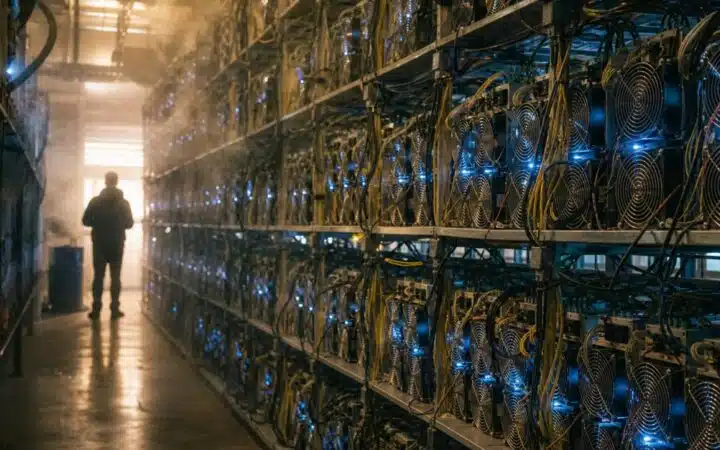
What interests the markets is the signal. A state accumulating bitcoin makes headlines. A state selling regularly, silently, without a communicated strategy, raises questions. And it raises even more questions because Bhutan was considered a textbook case just a few years ago: a small kingdom that had bet on bitcoin mining by leveraging its hydroelectric resources, accumulating digital reserves at a time when few governments were seriously considering it.
This positioning was seen as a form of financial avant-gardism. Today, successive sales give a different impression. Perhaps a strategic withdrawal. Perhaps a budgetary constraint. Perhaps a change in economic doctrine. The government’s silence leaves all these hypotheses open.
And that’s what frustrates analysts who closely follow these movements: without communication on the use of proceeds, without indication of the remaining volume, without a published roadmap, it’s impossible to properly assess what this says about Bhutan’s economy in the short term. Transactions are observed. The strategy is not understood.
The series of sales continues, in any case. And at this rate, the question of whether Bhutan will go to zero — a total liquidation of its bitcoin holdings — is no longer as theoretical as it was six months ago. No one can answer that today. Not with the available information.
What is there: 738 bitcoins less, $44.88 million somewhere, and a government that still says nothing.
Hub: Bitcoin: Price, News, and Analysis
Crypto Community Debates Bitcoin Dominance Stability This Weekend
Frequently Asked Questions
How many bitcoins did Bhutan transfer on June 6?
Bhutan transferred 738 bitcoins on June 6, valued at approximately $44.88 million.
Has the Bhutanese government explained why it is selling its bitcoins?
No. Bhutanese authorities have not provided any official explanation for the reasons behind these sales or the use of the generated funds.
How many bitcoins does Bhutan still hold in reserve?
No official figures have been released on the total volume of initial or remaining reserves — the government has not disclosed this information.