Community Trust ScoreVerified
Leopold Aschenbrenner’s hedge fund is back out with the hat. Situational Awareness, the fund he launched in 2024 after leaving OpenAI, is actively reaching out to investors and lenders for fresh capital following painful losses tied to a July slide in AI-related stocks.
The fund was managing roughly $20 billion in assets as of June 8. That’s a big number. And for a while, the returns were equally striking — Situational Awareness had posted a gain of 439% after fees through June, a figure that would turn heads on any trading floor. But the fund was running with heavy leverage, and when AI stocks started selling off in July, that borrowed money turned a bad month into something considerably worse. The exact dollar figure of the losses hasn’t been disclosed. Neither has the specific amount of new capital the fund is seeking. Aschenbrenner did write to investors, though, and his message was essentially: the sell-off created new openings. He seems to think the dip is a buying opportunity rather than a reason to exit the thesis.
The Bitcoin Miner Bet at the Center of It All
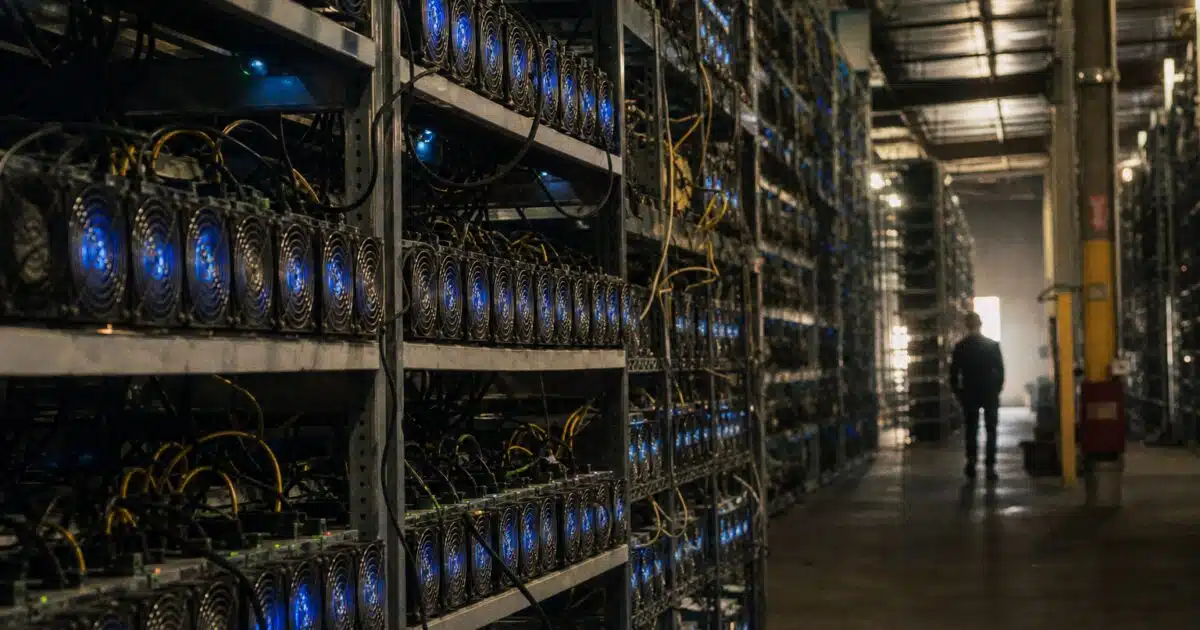
A March filing with the U.S. Securities and Exchange Commission laid out just how much Situational Awareness had committed to one particular corner of the market. The fund had put approximately $1.11 billion into seven Bitcoin miner stocks. The names included IREN, Core Scientific, Riot Platforms, and CleanSpark — all companies that have been repositioning themselves, to varying degrees, around the idea that their data center infrastructure and cheap power can serve AI computing workloads just as well as they serve Bitcoin mining.
That’s the bet, basically. Bitcoin miners sitting on large facilities and energy contracts are, in theory, well-placed to pivot toward the kind of high-density computing that AI model training and inference require. Aschenbrenner and his team seem to have believed that story hard enough to put over a billion dollars behind it.
It’s a logical thesis on paper. Not always in practice.
The AI Stock Slide That Broke the Trade
AI stocks had a rough July. The broader enthusiasm that had driven valuations in the sector through much of the year ran into some turbulence, and leveraged funds caught in that move felt it fast. Situational Awareness was apparently no exception. The leverage that amplified those 439% gains through June worked the other way when prices dropped, and the fund found itself looking for options — including, per reports, offering some investors the chance to acquire portfolio assets directly.
That’s a pretty significant move. It’s not a fire sale, necessarily, but it does mean the fund is exploring ways to manage its position beyond just waiting for a recovery. Whether lenders are getting nervous or whether Aschenbrenner is simply trying to bring in new money at what he sees as a good entry point — unclear. The fund hasn’t commented. Repeated attempts to get a response from Situational Awareness haven’t gone anywhere.
No details on the fundraising timeline either.
Aschenbrenner’s Longer View on AI
It’s worth remembering who Aschenbrenner is and why the fund attracted $20 billion in the first place. He’s probably best known outside finance for a series of essays on artificial general intelligence he published around the time Situational Awareness launched in 2024. The writing was dense, confident, and pretty provocative — he predicted that AGI systems would surpass the capabilities of college graduates by the end of the decade. That kind of conviction about the trajectory of AI clearly shaped the fund’s portfolio construction, with a heavy tilt toward the infrastructure layer: power, data centers, and the miners who are trying to straddle both the crypto and AI worlds.
Whether that vision holds up through a volatile patch in AI stocks is a different question. The fund’s strategy was always going to be bumpy given the leverage involved and the concentration in a sector that moves fast and sometimes irrationally.
Right now, Situational Awareness is in a tough spot. Big gains through June, big losses in July, and a scramble for new capital that the fund still hasn’t fully explained publicly. The $1.11 billion allocation to Bitcoin miner stocks — IREN, Core Scientific, Riot Platforms, CleanSpark among them — sits at the heart of the problem and, if Aschenbrenner is right, potentially the recovery too.
The fund managed roughly $20 billion as recently as June 8.
Frequently Asked Questions
How much did Situational Awareness have in assets before the losses?
As of June 8, Situational Awareness managed roughly $20 billion in assets, and had posted gains of 439% after fees through that point.
Which Bitcoin miner stocks did Situational Awareness hold?
A March SEC filing showed the fund held approximately $1.11 billion across seven Bitcoin miner stocks, including IREN, Core Scientific, Riot Platforms, and CleanSpark.