Community Trust ScoreVerified
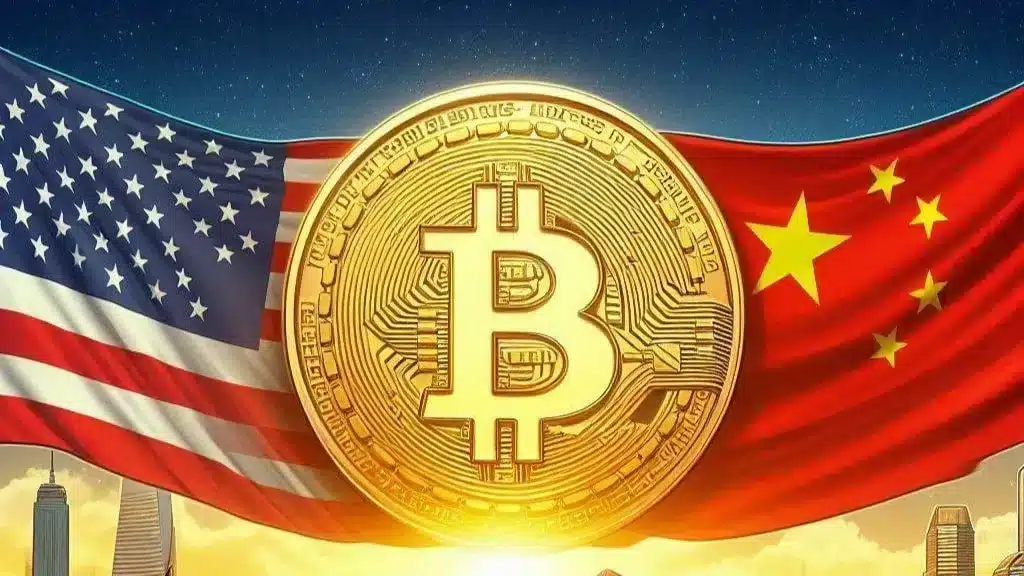
The global economic landscape just took a sharp turn with the recent easing of trade tensions between the United States and China. A temporary 90-day agreement to reduce tariffs—from 125% to just 10%—has triggered renewed optimism in global markets. This pause in the trade dispute is not just a diplomatic win but also a financial development that could affect a wide range of assets, including Bitcoin.
As a borderless digital currency, Bitcoin is uniquely sensitive to shifts in macroeconomic sentiment. With the trade war taking a breather, traders and long-term investors alike are evaluating how this change could impact Bitcoin’s value and its role in the evolving financial ecosystem.
Bitcoin’s Price Action: Holding Strong at Key Levels
Bitcoin continues to hover near its all-time highs, consolidating just below resistance zones that could signal either a continuation of the current rally or a potential pullback. This price behavior shows a market waiting for its next catalyst—and macro events like a trade truce could be exactly that.
A key factor supporting Bitcoin’s current strength is the steady inflow of institutional capital into spot Bitcoin exchange-traded funds (ETFs). According to data from Farside Investors, these funds have experienced continuous growth in investment volume. These capital movements indicate robust confidence from large investors and reinforce Bitcoin’s positioning as a maturing financial asset.
Dollar Weakness Could Boost Bitcoin
Another important element to consider is the recent decline in the US Dollar Index (DXY). As the dollar weakens, demand for alternative stores of value typically increases. This makes Bitcoin, which is not tied to any government or central bank, an attractive hedge against currency risk and inflation.
Even though Bitcoin has shown strong historical correlations with stock market indices such as the Nasdaq and the S&P 500, recent activity suggests that it’s beginning to behave more like a standalone macro asset. In times of weakening dollar strength and improved economic sentiment, Bitcoin has increasingly acted as a recipient of global liquidity flows.
Impact of US-China Trade Truce on Bitcoin
The reduction in tariffs between the US and China brings optimism to global trade prospects. For investors, this easing translates to a more predictable environment and fewer headwinds for economic growth. China’s decision to focus on stimulating its domestic economy also plays into this larger theme, signaling a shift toward internal demand as a growth driver.
This atmosphere encourages investors to diversify into riskier assets, and Bitcoin fits squarely into that category. Lower global friction in trade also points to an increase in capital movement, which often supports digital assets. More liquidity in the market means more money available for alternative investments—including cryptocurrencies.
However, it’s not all upside in the short term. If the US dollar regains strength due to perceived global stability, Bitcoin could experience slower growth. A stronger dollar traditionally lessens the appeal of Bitcoin as a hedge, reducing some of the defensive capital flowing into the asset.
But a notable shift is occurring. Analysts have pointed out that Bitcoin’s relationship with the dollar is becoming less predictable. Even in periods of dollar strength, demand for Bitcoin has stayed resilient. This is largely due to its rising reputation as “digital gold” and a strategic hedge within institutional portfolios.
Short-Term and Long-Term Outlook for BTC
In the short term, Bitcoin may face resistance if the US dollar rebounds and investors become more risk-averse. However, ETF inflows and institutional support continue to act as a floor beneath BTC’s price, providing strong support in case of corrections.
From a long-term perspective, the story remains bullish. The current pause in trade tensions between the world’s two largest economies contributes to an overall macro backdrop of easing geopolitical pressure. This could trigger broader confidence in financial markets, helping Bitcoin attract both retail and institutional investors.
Bitcoin’s Role in a Changing Global Economy
The trade truce also symbolizes a deeper shift in global economic relations—one where countries balance cooperation with competition. For Bitcoin, this scenario creates both risks and opportunities. On one hand, reduced demand for safe-haven assets may briefly affect prices. On the other, a healthy global economy and growing risk appetite support Bitcoin’s expansion as a financial instrument.
The ongoing institutionalization of Bitcoin through regulated investment vehicles like ETFs is helping to establish it as a core part of diversified portfolios. This reduces volatility over time and brings new layers of credibility to the asset class.
Conclusion: A Strategic Asset in the Spotlight
The 90-day US-China trade pause may seem like a temporary diplomatic gesture, but its effects on the broader market—particularly Bitcoin—could be lasting. A more stable global economy, increased capital circulation, and ongoing demand from professional investors are all factors that align to keep Bitcoin in the spotlight.
While Bitcoin may lose some of its defensive shine if the US dollar strengthens, its growing reputation as a portfolio diversifier and hedge against systemic risk keeps it highly relevant.
Investors watching global trade developments would do well to keep Bitcoin on their radar. Whether it’s navigating inflation, shifting dollar values, or evolving trade policies, Bitcoin is increasingly positioned not just as a speculative asset—but as a strategic one for the digital age.