Community Trust ScoreVerified
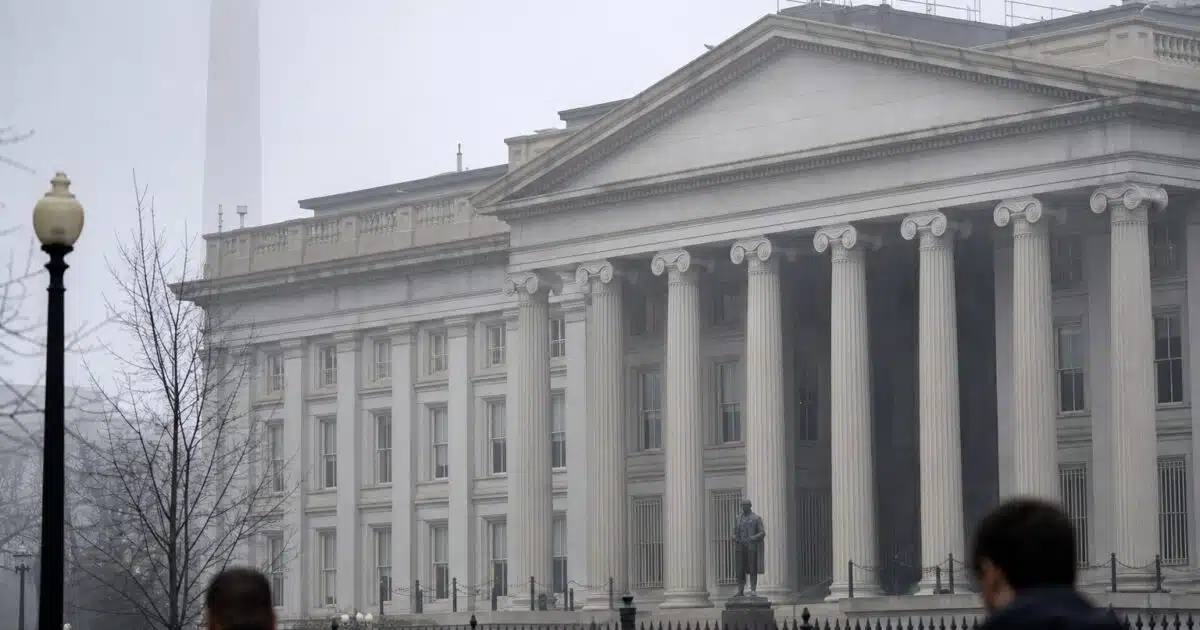
Bitcoin hit $77,000. A two-month high. And it got there fast — roughly 25% in a matter of hours after the U.S. Treasury dropped a surprise announcement on August 19, saying it would double its long-dated bond buyback operations. The move triggered a short squeeze in the crypto derivatives market worth an estimated $3.5 billion.
Why It Matters
The U.S. Treasury's unexpected decision to double its bond buyback operations not only reflects changing monetary policy dynamics but also highlights the interconnectedness of traditional financial markets and cryptocurrencies. This significant movement in Bitcoin's price, driven by a short squeeze, illustrates how macroeconomic developments can rapidly influence investor sentiment and trading behaviors in the digital asset space, emphasizing the growing role of crypto as a barometer for broader economic shifts.
That’s a big number. And it came out of nowhere, at least for most traders.
What the Treasury Actually Did
The backdrop here matters. The 30-year Treasury yield had climbed to 5.34%, the highest level since 2007, pushed up by a combination of global inflation fears and geopolitical tensions involving Iran. Yields that high put pressure on basically everything — equities, credit, and yes, crypto. The Treasury’s response was to scale up its buyback operations for 10- to 30-year bonds, raising the minimum per operation from $2 billion to $4 billion. The plan: inject $14 billion in liquidity this quarter, with buybacks potentially expanding to $83 billion total.
Right after the announcement, yields fell. The 30-year dropped to 5.184%. The 10-year slid six basis points to 4.66%. Bitcoin ripped higher. Traders who’d been short got squeezed hard, and that $3.5 billion in forced liquidations added fuel to an already fast-moving rally.
But the bond market didn’t really buy it. Not for long.
The Pullback — and What Bessent Said
By August 20, things had already started reversing. Treasury Secretary Scott Bessent floated the idea of pushing buyback amounts even higher, and he tied current yield levels partly to geopolitical tensions. It seemed like an attempt to keep the momentum going. Didn’t work, at least not fully.
The 30-year yield climbed back to 5.24%. The U.S. dollar recovered its losses. And Bitcoin? It fell back below $70,000, settling somewhere in the high-$60,000s. The Federal Reserve’s meeting minutes came out around the same time, and they weren’t exactly dovish — hints of ongoing rate-hike risks didn’t help sentiment. So what looked like a breakout turned into a sharp reversal inside 24 hours.
Some analysts read the Treasury move as tactical. August liquidity is thin. Bond shorts were crowded. The announcement caught a lot of people off guard at exactly the right moment. Whether that was intentional or just good timing is unclear.
Not Quantitative Easing — But Close Enough to Fool the Market
There’s been a lot of confusion about what this buyback actually is. It’s not QE. Full stop. The Treasury is issuing new short-term bills to finance the purchase of long-dated bonds — that’s a refinancing swap, not money creation. The money supply doesn’t expand. Financial conditions don’t loosen the way they would under a traditional Fed bond-buying program.
That distinction matters. It’s probably why the initial market reaction faded so quickly. Traders priced in a liquidity injection, realized it wasn’t quite that, and adjusted. The bond market’s partial rebound in yields basically said: we’re not convinced this changes anything structural.
And structurally, the challenges are still there. U.S. debt now exceeds $40 trillion. Fiscal deficits aren’t shrinking. The Treasury has to keep issuing new debt to cover those gaps, which puts natural upward pressure on yields regardless of buyback operations. The buyback can smooth things out at the margin, but it can’t fix the underlying math.
What it can do — and kind of did — is buy time. Temporarily stabilize the long end of the curve. Give markets a moment to breathe. Whether that breathing room lasts is another question entirely.
Crypto markets, for their part, showed exactly how sensitive they’ve become to macro surprises. Bitcoin’s 25% surge and same-day partial reversal weren’t really about Bitcoin fundamentals. They were about leveraged positioning, thin liquidity, and a policy announcement that nobody saw coming. The derivatives market amplified everything — $3.5 billion in short squeezes will do that.
Platforms like Kalshi, which let traders take positions on economic outcomes, probably saw some interesting action around the announcement. Predictive markets tend to move fast when official policy shifts unexpectedly, and an August Treasury surprise is exactly the kind of event that rewards people who’d been positioned for a yield-control move.
The bigger picture is murky. Geopolitical tensions aren’t going away. The Fed hasn’t pivoted. And the Treasury is managing a debt load that keeps growing. Market participants are watching every statement from Bessent closely now, looking for any sign that buybacks get expanded further or that the strategy shifts again.
Bitcoin settled in the high-$60,000s after the dust cleared.
Frequently Asked Questions
What triggered Bitcoin’s 25% surge on August 19?
The U.S. Treasury announced it would double its long-dated bond buyback operations, sparking a $3.5 billion short squeeze in the crypto derivatives market and pushing Bitcoin above $77,000.
Did Bitcoin hold its gains after the Treasury announcement?
No — Bitcoin fell back below $70,000 by August 20, settling in the high-$60,000s after the bond market partially reversed and Federal Reserve minutes hinted at ongoing rate-hike risks.
Is the Treasury’s bond buyback the same as quantitative easing?
No. The Treasury is refinancing existing debt by swapping long-dated bonds for short-term bills, not creating new money — a key difference from the Fed’s QE programs.