Community Trust ScoreVerified
J.P. Morgan Asset Management, which oversees $5 trillion in assets, has included Bitcoin in its 2027 outlook, estimating a 10% average annual return for the asset over the next ten years. The move marks a notable departure from the firm’s previous crypto-skeptical stance and has drawn attention to how major institutions are recalibrating their risk models to accommodate digital assets.
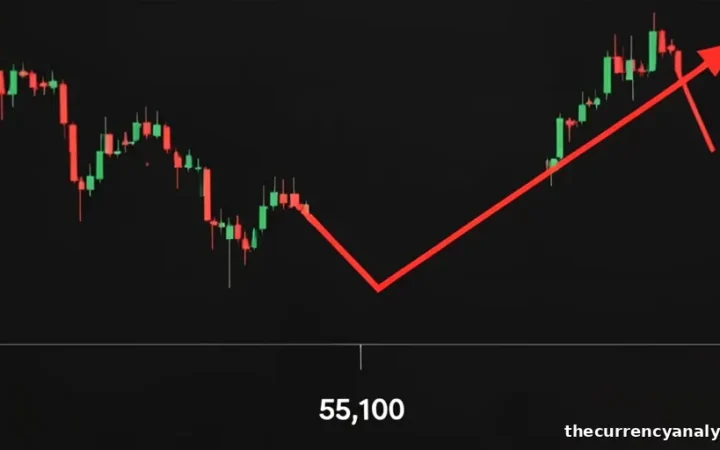
As of 05:03 UTC, Bitcoin traded at $61,214, +3.6% over 24 hours, with $28.7 billion in 24-hour volume.
Institutional Posture Shift
Mike Belshe, CEO of BitGo, highlighted the significance of J.P. Morgan’s public support for crypto market structure legislation. “Let that sink in. The world’s largest bank, long crypto-skeptical, is now publicly supporting crypto market structure legislation. This is a different ballgame,” Belshe stated. The bank’s inclusion of Bitcoin in its long-term outlook suggests a growing acceptance of the asset class within traditional asset management frameworks.
Despite the institutional embrace, the metrics used to evaluate Bitcoin risk often differ from those applied to equities. J.P. Morgan cited Bitcoin volatility at 55%, a figure that contextualizes the asset’s behavior relative to traditional markets. However, the firm’s projection of a 10% annual return over the next decade contrasts with Bitcoin’s recent performance, where it has averaged a 60% annual return over the last three years.
Limitations of Standard Metrics
Standard risk tools, such as standard deviation and the Sharpe ratio, measure the dispersion of returns but do not account for the magnitude of individual gains or losses. This limitation is particularly evident in Bitcoin’s return distribution, where a small number of trading days drive the majority of long-term gains. Excluding Bitcoin’s ten best trading days reduces its average annual return over the last three years to 7%. Conversely, excluding the ten worst days increases that average to 197%.
Bitcoin’s daily price fluctuations are approximately three times wider than those of the S&P 500. While this volatility is significant, Bitcoin’s realized volatility has declined over time to levels comparable to individual large-cap U.S. stocks. The Sortino ratio, which measures returns against downside volatility only, offers a different perspective by ignoring upside volatility, potentially providing a more nuanced view of risk for assets with asymmetric return distributions.
Since 2011, Bitcoin has experienced drawdowns of 50% or more on seven occasions. These historical declines underscore the importance of understanding the full distribution of returns rather than relying solely on average volatility. The tendency of Bitcoin’s gains to pile on top of each other, with the asset performing better after winning months than losing months, further complicates traditional risk assessments.
Diversification in a Broader Market
Bitcoin’s correlation with major U.S. equities stands at 33%, a figure lower than the correlation of international equities, corporate bonds, and hedge funds with the same U.S. indices. This lower correlation suggests that including a small portion of Bitcoin in an institutional portfolio can enhance returns and efficiency without significantly increasing overall risk or maximum losses.
However, the crypto market has evolved beyond Bitcoin. Over the last three years, Bitcoin has accounted for only about 50% of the volatility in returns across all major crypto sectors. Correlations among different crypto sectors have decreased during this period, indicating a more diversified market structure. The modern crypto landscape now includes smart contract platforms, decentralized finance, consumer applications, and artificial intelligence projects.
In the last two years, six different non-stablecoin tokens have led returns on a quarter-by-quarter basis among the top 10 largest non-stablecoin assets by market cap. Bitcoin has not led returns on a quarterly basis during this period. This shift in leadership highlights the diversification of the broader crypto market and suggests that Bitcoin is no longer the sole driver of sector performance.
While cryptocurrencies have historically shown low correlation with traditional assets, this relationship can change during periods of market stress, where correlations between crypto and traditional assets may increase. The evolving dynamics within the crypto market and its interaction with traditional finance continue to shape how institutions approach risk and allocation.