Community Trust ScoreVerified
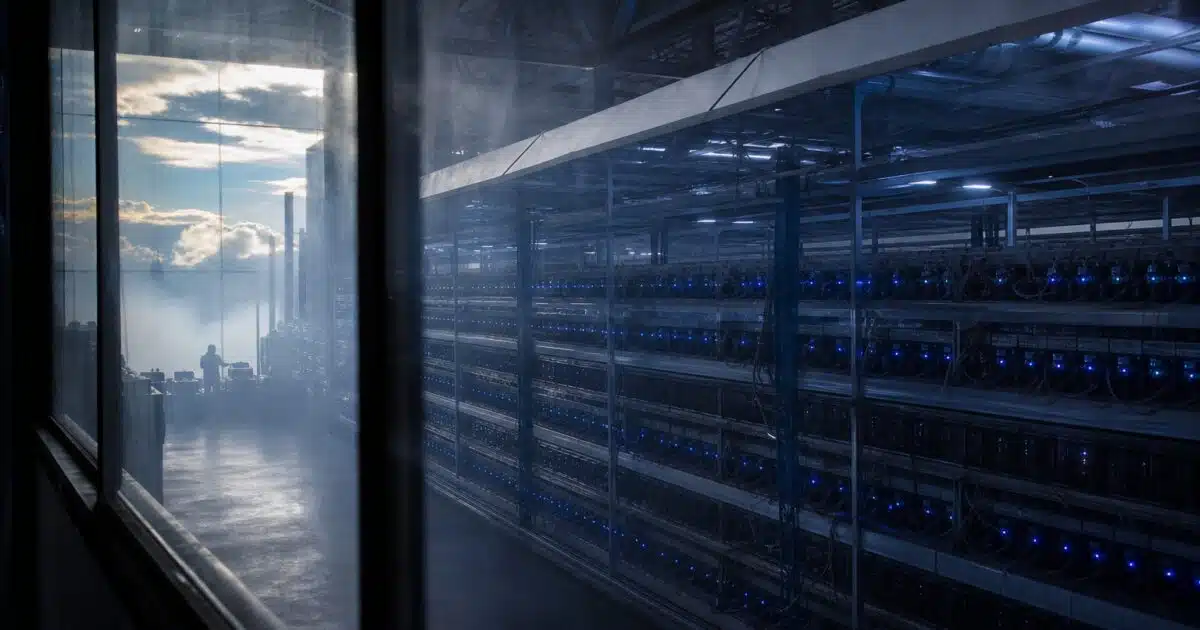
Paraguay is burning through energy fast. Bitcoin mining alone now eats up roughly 30% of the country’s total energy production — and the pressure on the grid is only getting worse.
Why It Matters
The rapid increase in Bitcoin mining in Paraguay highlights a critical intersection of energy demand and infrastructure capacity, raising concerns about the sustainability of both the mining industry and the country's energy grid. As mining consumes a significant portion of Paraguay's energy output, the risk of blackouts could not only disrupt local economies but also impact global Bitcoin production, potentially influencing market dynamics and investor sentiment. This situation underscores the broader challenges faced by countries balancing renewable energy resources with the growing demands of cryptocurrency operations.
To put that in physical terms, energy researcher Victorio Oxilia said mining operations consume the equivalent output of about one and a half turbines from the Itaipu dam. That’s not a small number. Itaipu is one of the largest hydroelectric facilities on the planet, and running it at partial capacity just to power mining rigs is a significant drain on a country that hasn’t built meaningful new generation infrastructure in decades. Paraguay’s pitch to miners has always been cheap, clean hydroelectric power — and it worked, maybe too well. Now the country is staring at a potential energy crisis that could arrive as soon as 2029, according to Oxilia, if the contracts with mining companies — set to expire in 2027 — aren’t renewed or renegotiated.
Not renewed. Not expanded. Just not renewed.
Julio Fernández, from the Center for Economic Studies of the Paraguayan Industrial Union, basically said the same thing a different way. He warned last year that without action, rising energy demand with no corresponding growth in generation capacity could lead to actual blackouts. That’s the word he used — blackouts. Not “supply stress” or “grid tension.” Blackouts. It’s a stark warning for a country that has positioned itself as a serious player in the global bitcoin mining industry.
A $15 Billion Problem and One Underpowered Project
Paraguay’s energy infrastructure has pretty much stalled. The only significant project currently underway is Aña Cuá, and it will add just 135 megawatts of capacity. For context, that’s not nearly enough to keep pace with growing demand from both residential users and industrial operations, including mining. Analyst Cecilia Llamosas put a dollar figure on what’s actually needed: somewhere between $11 billion and $15 billion invested over the next 13 years to meet future energy demands. That’s a massive number for a relatively small economy.
Llamosas did draw a useful distinction, though. Bitcoin mining demand is flexible — operators can dial consumption up or down depending on grid load. Residential demand doesn’t work that way. Homes need power on hot nights and cold mornings regardless of what the grid looks like. So in theory, mining operations can absorb some of the pressure by backing off when the grid is stressed. Whether that happens in practice is a different question, and the source didn’t specify how reliably miners have actually done that in Paraguay so far.
Still, the flexibility argument is real. It’s one of the few things that could make the situation manageable without a massive infrastructure overhaul happening immediately.
Energy Theft and the Government Crackdown
There’s another layer to all this. It’s not just legal mining operations straining the grid — there’s a documented problem with energy theft tied to bitcoin mining, and Paraguayan authorities have been pushing back hard. Convictions have been recorded. The government has intensified its enforcement efforts, and the crackdown has apparently produced real results in terms of prosecutions.
That’s worth paying attention to. Illegal energy consumption linked to mining operations isn’t just a financial crime — it directly destabilizes a grid that’s already stretched thin. Every kilowatt stolen is a kilowatt that can’t go to a home or a hospital. And if Paraguay wants to keep attracting legitimate mining operations, it can’t afford to let the illegal side of the industry undermine the entire energy ecosystem.
The broader regulatory picture is murky, though. The 2027 contract expiration hangs over everything. If those contracts lapse without renewal, the energy previously allocated to mining firms could theoretically be redirected elsewhere — to residential use, to other industries, or simply left as spare capacity while the country figures out its next move. But “spare capacity” isn’t really Paraguay’s problem right now. The problem is not enough of it.
Five decades. That’s roughly how long the country has gone without significant investment in new energy generation. The Aña Cuá project is a start, but 135 megawatts against a potential $11-to-$15 billion funding gap is barely a dent. And with the 2027 contract deadline approaching faster than any new infrastructure can be built, the math is getting uncomfortable.
Mining operations can adjust. Residential demand can’t. And the government is chasing down illegal connections while simultaneously trying to figure out whether to keep the legal ones running past 2027.
Llamosas put the investment need at up to $15 billion over 13 years. The Aña Cuá project delivers 135 megawatts.
Frequently Asked Questions
How much of Paraguay’s energy does bitcoin mining currently consume?
Bitcoin mining consumes roughly 30% of Paraguay’s total energy production, equivalent to the output of about one and a half turbines at the Itaipu dam, according to energy researcher Victorio Oxilia.
When do Paraguay’s energy contracts with mining companies expire?
The contracts are set to expire in 2027, and if they aren’t renewed, Oxilia warns a potential energy crisis could follow by 2029.
How much would Paraguay need to invest to fix its energy infrastructure?
Analyst Cecilia Llamosas estimated between $11 billion and $15 billion over the next 13 years would be needed to meet the country’s future energy demands.