Community Trust ScoreVerified
James Howells claims the private keys to approximately 8,000 Bitcoin are trapped on a hard drive buried in a landfill in Newport, Wales, in 2013. The unresolved retrieval of those coins remains the most extreme illustration of the stakes involved in self-custody, a practice where users hold their own cryptographic keys rather than entrusting them to an exchange or third party.
As of 02:53 UTC, Bitcoin traded at $61,366, +1.0% over 24 hours, with $22.3 billion in 24-hour volume.
The Mechanics of Key Control
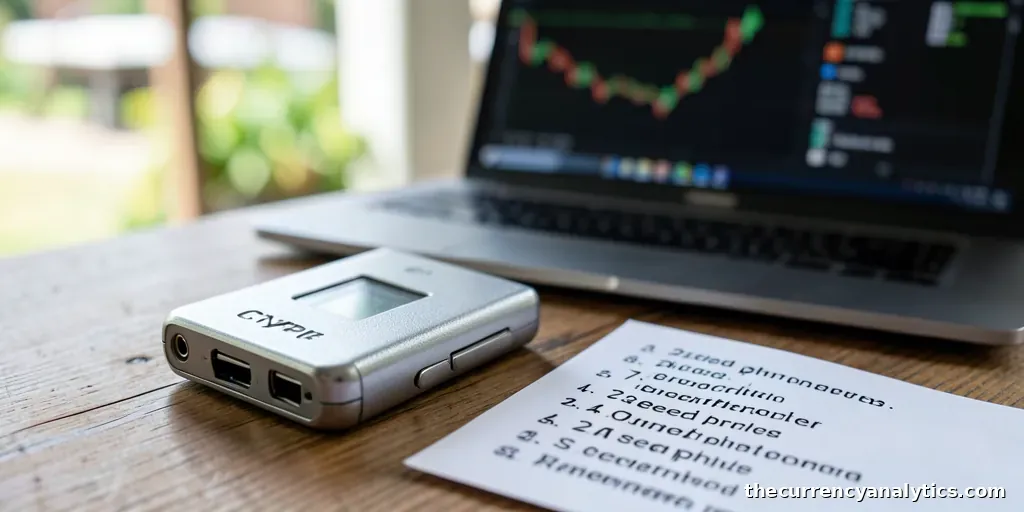
Self-custody fundamentally changes the relationship between a user and their digital assets. Instead of relying on a centralized entity to manage access, the individual retains full authority over their funds. This control is typically exercised through a seed phrase, usually a list of 12 or 24 words that serves as a backup for private keys. If a user loses their device, the seed phrase allows them to restore access; if they lose the phrase, the assets are permanently inaccessible.
The infrastructure for holding these keys varies significantly in terms of security and convenience. Software wallets, such as MetaMask, are often categorized as ‘hot’ wallets because they operate on internet-connected devices. While these offer immediate access to funds, they expose private keys to potential online threats. In contrast, hardware wallets keep private keys offline and sign transactions internally, creating a physical barrier between the sensitive data and the internet.
For those seeking the highest level of isolation, air-gapped wallets represent the endpoint of this security spectrum. These devices never connect to the internet, Wi-Fi, Bluetooth, or USB cables. Transactions are authorized using physical mediums like microSD cards or QR codes, ensuring that the private keys never touch a networked environment. Multi-signature wallets offer a different layer of security by requiring more than one key to approve a transaction, such as a two-of-three key configuration, which mitigates the risk of a single point of failure.
Security Breaches and Physical Risks
The collapse of FTX in November 2022 left millions of users unable to withdraw funds, a event that reinforced the maxim within the crypto community: “not your keys, not your coins.” While centralized exchanges offer convenience, they introduce counterparty risk that self-custody eliminates. However, self-custody transfers the burden of security entirely to the individual, exposing them to distinct physical and technical risks.
In July 2026, a firmware vulnerability in the Coldcard hardware wallet allowed attackers to reconstruct some users’ seed phrases. Galaxy Research reported that losses from this specific vulnerability rose to nearly $114 million in Bitcoin within days of the breach. This incident highlighted that even offline devices are not immune to sophisticated attacks if their firmware is compromised.
Physical coercion represents another persistent threat. CertiK verified 52 wrench attacks worldwide in the first half of 2026, up from 39 the previous year. Chainalysis stated that these attacks were on pace for a record year in 2026. A wrench attack involves a criminal forcing a user to reveal their seed phrase or hardware wallet PIN under threat of violence, bypassing the technical security of the device itself.
Regulatory Shifts and AI Integration
Regulatory bodies in the United States and France have recently adjusted their approaches to self-custodial assets. In October 2026, the U.S. Treasury’s Financial Crimes Enforcement Network withdrew a 2020 proposal that would have required banks to keep records on self-custodial wallet transactions over $3,000 and report those over $10,000. The withdrawal removes a significant compliance hurdle for users holding their own keys.
Similarly, in November 2026, the French Senate rejected a plan that would have required holders to declare self-custodied crypto worth more than €100,000. These decisions suggest a growing regulatory recognition of the privacy and ownership implications of self-custody, moving away from aggressive reporting mandates.
The integration of artificial intelligence into self-custody is also accelerating. In 2026, MetaMask, a product of Consensys, launched Agent Wallet, a self-custodial wallet designed specifically for AI agents. Coinbase also introduced self-custodial wallets for AI agents in 2026. These developments indicate that self-custody is evolving from a user-centric practice to a foundational element of autonomous digital interactions, where non-human entities manage cryptographic keys.