Community Trust ScoreVerified
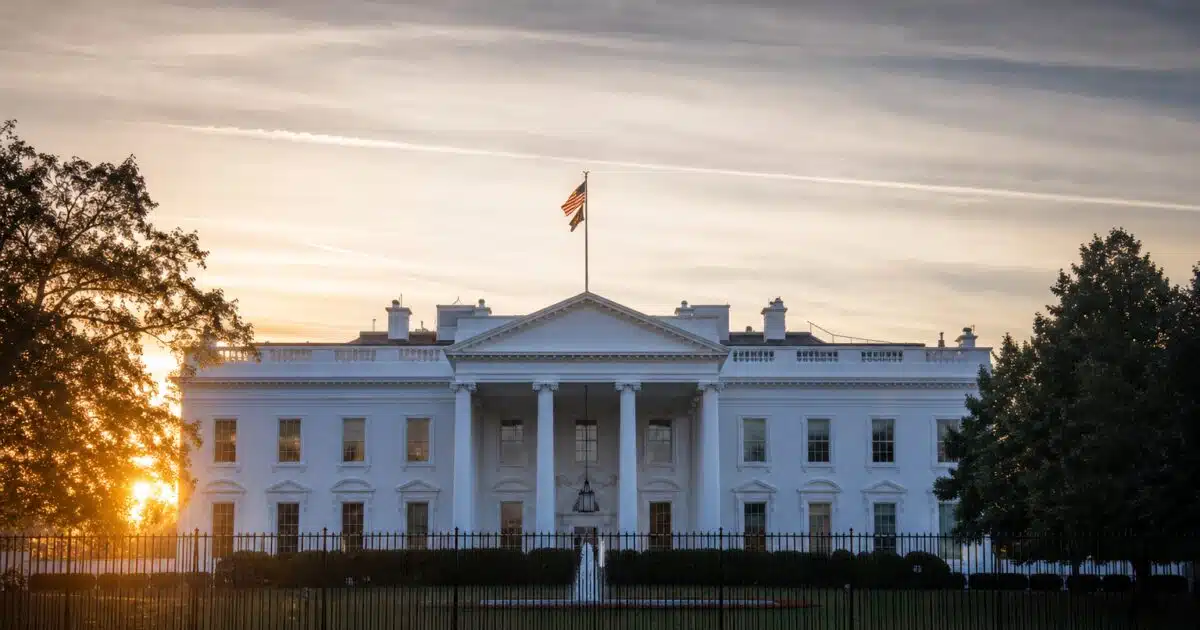
President Trump is set to sit down with crypto executives at the White House on August 19. The guest list is long and heavy — Coinbase, Ripple, Andreessen Horowitz, Chainlink, Kalshi, Paradigm, Kraken, Gemini, the New York Stock Exchange, and Nasdaq have all been invited. SEC Chair Paul Atkins and CFTC Chair Michael Selig are expected in the room too.
Why It Matters
This meeting underscores the growing recognition of cryptocurrency's role in the broader financial landscape, particularly as regulatory frameworks are being debated. The involvement of prominent crypto firms and regulatory leaders highlights the urgency for clarity in the digital asset market, which could significantly influence investor confidence and innovation within the sector. The outcome of this discussion may set important precedents for future legislation and regulatory approaches in the rapidly evolving crypto space.
The timing is pretty deliberate. Congress is grinding through a critical stretch for the Digital Asset Market Clarity Act — a bill designed to create a federal framework for crypto markets — and the numbers aren’t looking good. Polymarket puts the odds of the CLARITY Act passing at 19%, down sharply from 82% earlier this year. Galaxy Digital is even bleaker: it estimates just a 10% chance the bill becomes law in 2026. The reasons are familiar but messy. Political fights over crypto regulations, ethics questions tied to President Trump’s own crypto ventures, disputes over stablecoin rewards, and arguments about anti-money-laundering protections have all chipped away at what was once a solid bipartisan coalition behind the bill. Senate Majority Leader John Thune did file cloture on the motion to proceed, but the legislative calendar is basically working against everyone here. The Senate heads into recess for midterm campaigns soon, and that window is narrow.
Not a lot of margin for error.
CLARITY Act Stalls as Bipartisan Support Cracks
The CLARITY Act started the year with real momentum. Bipartisan backing, a clear need for federal crypto rules, and a White House that seemed ready to push — it looked like a real shot. But the coalition has frayed badly. Disagreements over how government officials’ crypto activities should be treated, what protections against illicit finance should look like, and how stablecoin rewards fit into the picture have all created friction that’s hard to paper over. Senate leaders can file cloture all they want, but if the votes aren’t there, the calendar just runs out.
Galaxy Digital’s 10% estimate probably isn’t the floor either. It’s unclear how much room there is to negotiate the sticking points before recess hits.
SEC and CFTC Push Ahead Without Congress
While the CLARITY Act sits stuck, both the SEC and CFTC are moving on crypto through the authority they already have. SEC Chair Atkins has two main projects in motion: something called Reg Crypto, which targets crypto offerings, and an Innovation Exemption aimed at tokenized securities. Neither has sailed through smoothly — both face resistance from traditional securities sectors — and scheduled votes have been pushed back. But Atkins is clearly not waiting around for Congress to hand him a new rulebook.
The CFTC is moving fast too. Chair Selig has the agency’s inaugural Innovation Advisory Committee meeting lined up for August 20 — one day after the White House gathering — where the focus will be on future financial regulation and how the CFTC engages with industry players. And the agency has already shown it’s willing to use emergency powers when it needs to. It stepped in to keep Kalshi’s event-contract market running against state-level challenges, which is basically a live demonstration of the jurisdictional mess between federal derivatives law and state gambling regulations. Prediction markets are caught right in the middle of that fight, and it’s not getting cleaner anytime soon.
That CFTC intervention matters beyond Kalshi. It’s a signal that federal agencies are willing to act unilaterally to preserve oversight, even when state regulators push back hard. The broader question of who controls prediction markets — and by extension, a growing slice of the crypto-adjacent financial world — still doesn’t have a clean answer.
The White House meeting on August 19 lands right in the middle of all of this. It’s not a signing ceremony. There’s no bill ready to sign. It’s more of a pressure-release valve — a place for regulators and industry leaders to talk through where things stand and maybe sketch out what’s possible if the CLARITY Act can’t get across the line this year.
For the companies in the room, the stakes are real. Coinbase, Ripple, and Kraken have all dealt with prolonged regulatory uncertainty. Gemini too. Andreessen Horowitz has been vocal about wanting clearer rules for years. Getting face time with Atkins and Selig alongside a White House backdrop is valuable, even if nothing concrete comes out of it.
The CFTC’s Innovation Advisory Committee meets the very next morning, August 20.
Hub: XRP price, news, and analysis
Frequently Asked Questions
Who is attending the August 19 White House crypto meeting?
Executives from Coinbase, Ripple, Andreessen Horowitz, Chainlink, Kalshi, Paradigm, Kraken, Gemini, the New York Stock Exchange, and Nasdaq are invited, along with SEC Chair Paul Atkins and CFTC Chair Michael Selig.
What are the current odds of the CLARITY Act passing in 2026?
Galaxy Digital puts the odds at 10%, while Polymarket’s probability has dropped to 19% from 82% earlier this year, with political disputes and ethics concerns cited as the main obstacles.