Community Trust ScoreVerified
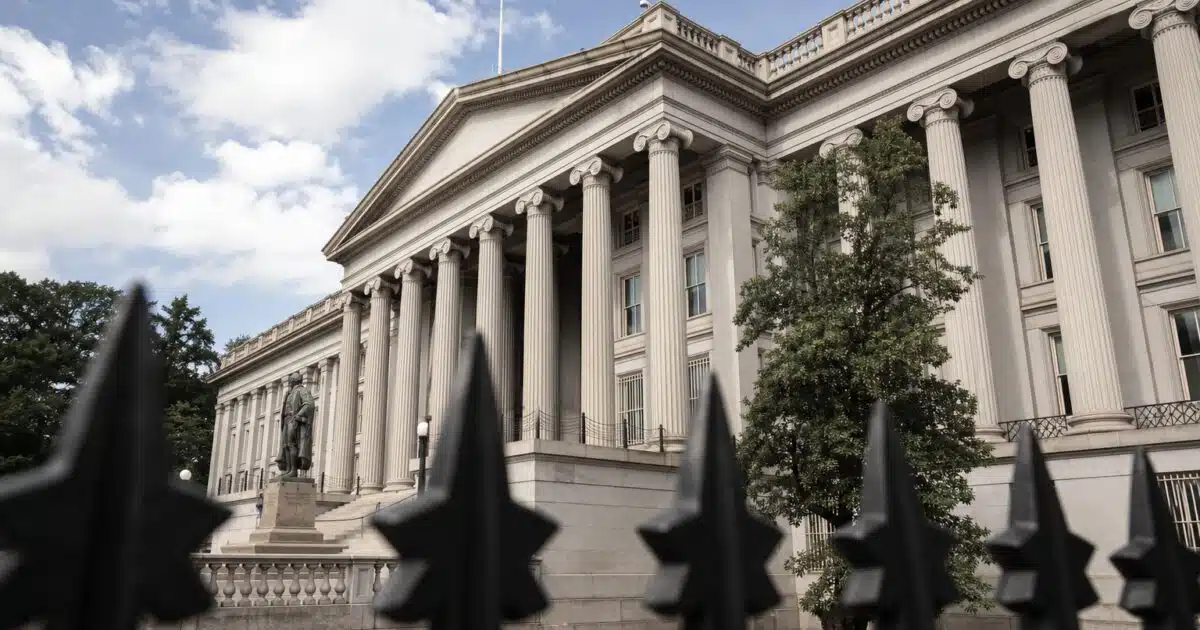
The US Treasury just widened its sanctions net — and Iran’s crypto sector is squarely in the middle of it. The Office of Foreign Assets Control, known as OFAC, announced new measures targeting over $100 million in cryptocurrency transactions tied to Iranian oil sales, pulling in exchanges, brokers, and entire digital asset industries in one sweeping move.
Why It Matters
This crackdown reflects the increasing scrutiny on the intersection of cryptocurrency and international sanctions, particularly in the context of Iran's oil sales, which have been a focal point of US foreign policy. By targeting specific exchanges and brokers, the US Treasury signals a robust commitment to enforcing sanctions, potentially reshaping the operational landscape for crypto firms engaging in or facilitating transactions with sanctioned nations. This move could also lead to heightened compliance measures within the crypto industry, as firms reassess their exposure to geopolitical risks.
The newly issued determination gives OFAC the authority to sanction individuals and companies anywhere in the world if they do business with Iran’s digital asset sector. That’s a meaningful shift. Before, US sanctions tended to hit specific wallets or named exchanges. Now the framework casts a much wider net — anyone operating in that sector, foreign or domestic, can be designated. The Treasury said Iran is increasingly leaning on crypto to get around sanctions, with the Islamic Revolutionary Guard Corps, the IRGC, directly implicated in some of those transactions. The expanded authority also covers gold, aviation, shipping, and technology, but it’s the digital asset angle that’s drawing the most attention.
Ivan Obukhov and Foscom FZE Named
One name stands out in the new batch of designations: Ivan Obukhov. He’s a UAE-based Ukrainian broker, and the Treasury says he’s been processing crypto payments tied to Iranian oil sales since 2023 — more than $100 million worth. His company, Foscom FZE, is now under OFAC sanctions alongside him. Not a small operation, and not a peripheral player either. The Treasury’s framing here is pretty direct: Obukhov wasn’t just moving money, he was actively helping Iran monetize oil that international sanctions were supposed to block.
Also named in the latest round are Shelbit and Aban Tether, two exchanges accused of facilitating roughly $5 million in digital asset transactions linked to Iran. Smaller numbers, but the designation matters — it shows the Treasury isn’t only chasing the big fish. Smaller platforms that process Iran-linked flows are on the radar too.
A Pattern of Escalating Pressure
The Obukhov and Shelbit designations didn’t come out of nowhere. The Treasury has been building this case for months. Back in January, two UK-registered exchanges — Zedcex and Zedxion — got sanctioned for Iran-related activity. Then on June 3, the Treasury went after four Iranian crypto exchanges in a single action, including Nobitex, which is Iran’s largest trading platform. That’s a significant target. Nobitex isn’t some obscure wallet service; it’s the dominant domestic exchange inside Iran.
And the numbers keep climbing. The US Treasury Secretary said nearly $1 billion in cryptocurrency had been seized from Iranian entities. That figure is hard to ignore. It’s a signal that the US isn’t treating this as a fringe enforcement issue — there’s real money moving, and Washington seems determined to disrupt as much of it as possible.
The legal backbone for all of this is Executive Order 13902. Under that order, anyone found operating in Iran’s digital asset sector can be designated. Once designated, their US-linked properties get blocked. Foreign banks that run significant transactions for sanctioned entities could lose access to US financial accounts entirely — which is a serious threat for any institution with dollar exposure.
The reach of that secondary pressure is probably the most consequential part of the whole framework. Iran-linked crypto flows don’t just run through Iranian exchanges. They move through intermediaries, brokers, over-the-counter desks, and foreign platforms that may not even realize they’re touching sanctioned activity. The new sectoral determination means OFAC can now go after that broader ecosystem, not just the obvious nodes.
Crypto’s role in sanctions evasion has been a growing concern across multiple jurisdictions, not just the US. Regulators in Europe and Asia have tightened their own AML frameworks around digital assets in recent years, and the Iran case keeps coming up as the clearest example of why those rules matter. It’s murky territory — blockchain transactions are traceable in theory, but layering through multiple wallets and jurisdictions makes attribution hard. The Treasury clearly thinks it’s gotten better at that attribution game.
What’s unclear is how much of this actually disrupts Iran’s oil revenues in practice. Sanctions designations are a legal tool, but enforcement depends on whether foreign counterparties care about US access enough to cut ties. For major banks, that’s basically a given. For smaller brokers operating out of jurisdictions with limited US exposure? Less certain.
Foscom FZE is now blocked. Obukhov is designated. Nobitex got hit in June. And OFAC’s new sectoral determination means the list of potential targets just got a lot longer — the Treasury said the new authority significantly expands its capacity to go after foreign individuals and companies supporting Iran’s digital asset operations.
Shelbit and Aban Tether were accused of moving $5 million in Iran-linked digital assets.
Frequently Asked Questions
Who is Ivan Obukhov and why was he sanctioned?
Ivan Obukhov is a UAE-based Ukrainian broker sanctioned by OFAC for allegedly processing over $100 million in crypto payments since 2023 to help facilitate Iranian oil sales. His company, Foscom FZE, was sanctioned alongside him.
What exchanges has the US sanctioned for Iran-linked crypto activity?
Sanctioned exchanges include Nobitex (Iran’s largest platform, targeted June 3), UK-registered Zedcex and Zedxion (January), and Shelbit and Aban Tether, the last two accused of facilitating $5 million in Iran-linked digital asset transactions.