Community Trust ScoreVerified
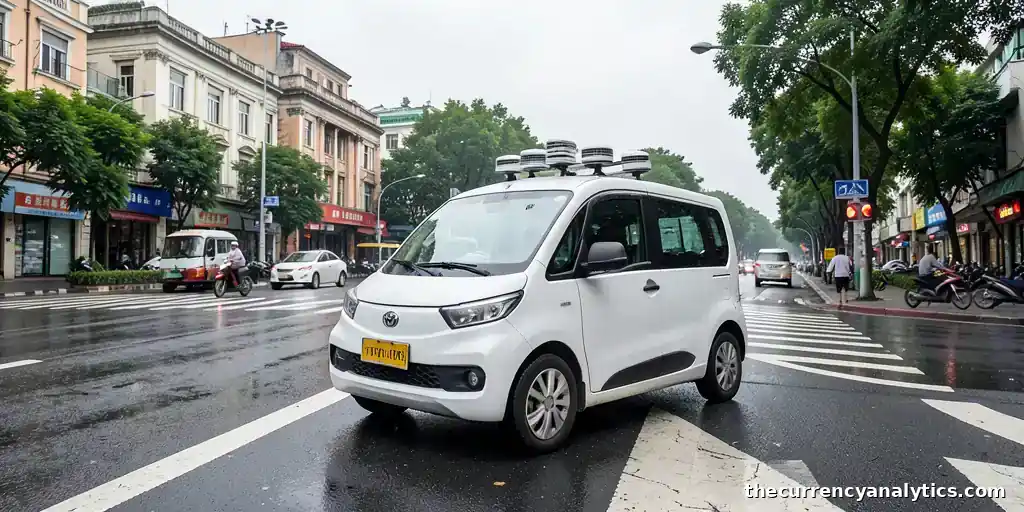
Pony.ai reported that robotaxi fare revenue rose nearly 400 percent in the September quarter, a sharp increase driven by the consolidation of its service area in Guangzhou. The company filed its financial results on Nov. 18, showing that while revenue grew significantly, operating losses only narrowed by about $1 million to $68.7 million.
More coverage is filed under Technology.
Guangzhou Zones Merge
As of Nov. 17, the previously separate operating zones in central Guangzhou and Nansha formed one contiguous service area. The total service area now covers more than 1,000 square kilometers. James Peng, the company’s CEO, stated that the PonyPilot app now allows riders to book trips across Nansha, Haizhu, Tianhe, Huangpu, and Panyu.
Peng noted that this wider network had increased trip distances and the average price per ride in Guangzhou. The company holds a citywide commercial permit in Guangzhou, which facilitates this expansion. Riders use the PonyPilot app to initiate bookings within these merged zones.
Revenue and Losses
Robotaxi services revenue reached $17.8 million in the September quarter, up from $6.7 million in the same period of the previous year. This represents a growth rate of 165.4 percent. The company defines robotaxi services revenue as including passenger fares and vehicle deliveries to joint deployments. These vehicle deliveries occurred in China and overseas.
Total quarterly revenue, which includes robotaxi, robotruck, and intelligent solutions businesses, came to $44.6 million. This marked a 75.2 percent increase. The operating loss for the quarter was $68.7 million, down from $69.7 million in the prior year. As a percentage of revenue, the operating loss fell to 154.2 percent from 273.9 percent.
Cost Structure Details
Pony.ai stated that fares covered tracked vehicle costs in Guangzhou and Shenzhen. The company did not provide specific margin percentages for these covered costs. Tracked vehicle costs include vehicle depreciation, charging, wages for remote and ground staff, cleaning, maintenance, insurance, parking, and communications.
Depreciation covers the vehicle, including the battery and autonomous driving hardware. It accounts for about half of the tracked vehicle costs. Fare calculations start with fares after discounts and refunds. Insurance premiums per seventh-generation robotaxi fell 19 percent from a year earlier at renewal.
The company did not provide a profit margin for an individual ride. Leo Wang, the CFO, was listed among the executives involved in the reporting, though no specific quotes from him were included in the filing details provided.