Community Trust ScoreLikely Real
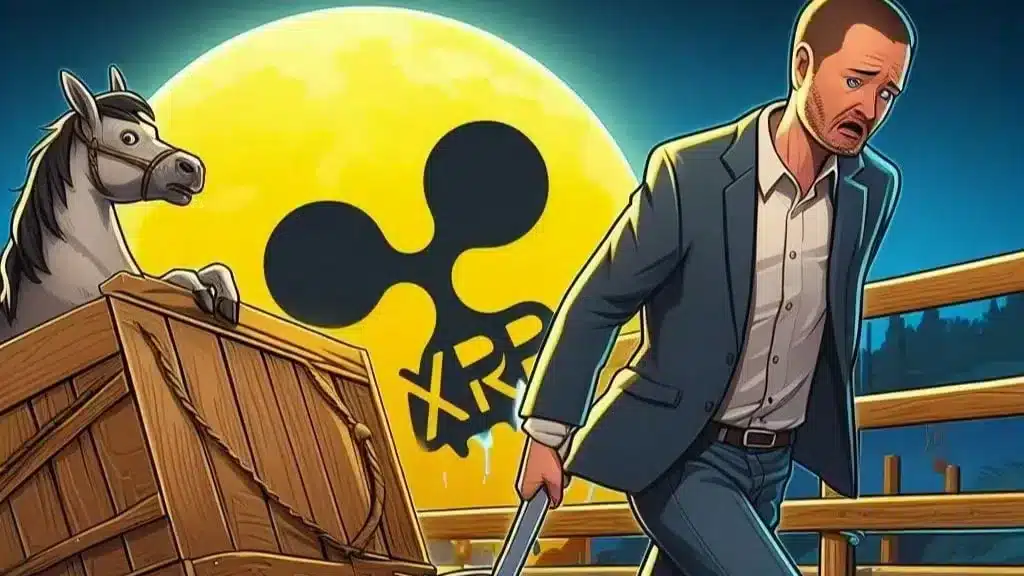
The world’s largest cryptocurrency exchange, Binance, is under scrutiny after claims surfaced that it has been deliberately selling off XRP to suppress its price. According to market analysts, the exchange may be using its position to offload XRP and other tokens through market makers, keeping prices artificially low while profiting from retail traders.
These allegations come at a time when XRP has been struggling to regain momentum. Despite broader market recovery, XRP has fallen by around 4% in the past week, now trading close to $2.80. Critics say the timing of the sell-offs raises serious concerns about whether market manipulation is preventing the token from reaching its true potential.
Expert Calls Out Binance
Crypto analyst Pumpius took to X (formerly Twitter) to argue that Binance has been intentionally placing sell pressure on XRP to block its breakout potential. In their view, Binance’s business model benefits from artificial liquidity drains that create volatility for retail traders.
Pumpius pointed to a recurring pattern: whenever Ripple or XRP gains positive attention—such as the resolution of its long-running lawsuit—waves of sell orders seem to appear across Binance’s markets. The analyst suggested this is no coincidence, but rather a coordinated effort to keep XRP from achieving stronger market recognition, effectively relegating it to the role of “just another altcoin.”
Another analyst, Pepesso, backed this claim, noting that Binance recently offloaded more than $1.5 billion worth of Ethereum in just one week. These transactions, according to Pepesso, were funneled through Wintermute, a major market-making firm, in what appeared to be an effort to disguise Binance’s direct involvement.
Coordinated Selling and Its Implications
Critics of the exchange argue that coordinated selling campaigns create the illusion of organic market activity, driving prices lower while liquidating leveraged traders in the process. Such actions can trigger cascading liquidations, forcing many traders out of their positions at a loss.
This is not a new concern in the crypto market. In 2024, several sudden sell-offs across major tokens wiped out hundreds of millions of dollars in trader positions in a single day. Observers say similar tactics may now be at play with XRP and even Solana, as abrupt sell pressure appears in moments when these tokens begin gaining traction.
For Binance, these allegations highlight a potential conflict of interest. As both an exchange operator and a participant in market-making activity, questions arise over whether it benefits more from volatility than from long-term token stability.
XRP’s Struggle to Rebound
While accusations swirl, XRP continues to face pressure in the market. Over the past week, the token slipped 4%, despite Bitcoin and Ethereum leading a modest recovery across the crypto sector. Still, XRP showed some resilience, bouncing back slightly with a 1.94% gain to $2.80.
Market sentiment around the token has cooled. The widely tracked Crypto Fear & Greed Index has shifted from “greed” in July to a more neutral reading today. On-chain data also paints a cautious picture: active addresses on the XRP Ledger have fallen from around 45,000 in mid-July to just 20,000 currently, signaling reduced participation among retail traders.
This slowdown in activity makes XRP more vulnerable to external pressures. If sell-offs from large holders or exchanges continue, the token could find it difficult to hold its ground.
Positive Developments Amid Pressure
Despite these challenges, not all signs are negative for XRP. Large investors, often referred to as whales, have reportedly accumulated approximately 340 million XRP tokens over the last two weeks. This suggests that some market participants view the recent decline as a buying opportunity.
In addition, Ripple’s ecosystem continues to expand in Asia. Chinese supply chain giant Linklogis recently integrated the XRP Ledger into its global finance platform, underscoring the blockchain’s relevance in real-world business applications. Such developments provide hope for long-term adoption, even as short-term market conditions weigh on price performance.
XRP vs Remittix: A Growing Debate
As XRP navigates these headwinds, comparisons to emerging payment-focused tokens like Remittix have become more frequent. Priced at just $0.10, Remittix has gained traction as a PayFi challenger with exchange listings, a wallet rollout planned for Q3 2025, and strong community backing.
While XRP remains a cornerstone of blockchain-based payments, critics argue that manipulation claims and slower adoption rates may hinder its upside. Meanwhile, Remittix’s utility-first approach and aggressive roadmap have led some analysts to predict a faster growth trajectory, with price projections that could eventually rival or surpass XRP’s.
The contrast between XRP’s established presence and Remittix’s rising momentum highlights the evolving nature of competition in the PayFi space. Both tokens aim to reshape cross-border finance, but their paths—and challenges—are very different.
What’s Next for XRP Holders?
For XRP investors, the weeks ahead could prove critical. If the allegations against Binance gain further traction, it may lead to increased regulatory scrutiny or even shifts in trading activity across exchanges. At the same time, positive ecosystem news and whale accumulation suggest that long-term demand for XRP has not disappeared.
The bigger question is whether XRP can overcome external selling pressure and reignite broader retail participation. With Remittix and other PayFi challengers gaining momentum, XRP’s ability to maintain its dominance in global payments will depend on both market integrity and Ripple’s capacity to scale adoption.
Conclusion
The debate over Binance’s role in XRP’s price decline underscores the challenges of transparency in crypto markets. While some analysts accuse the exchange of deliberate manipulation, others argue that the token’s struggles are more about shifting market trends and increased competition.
What’s clear is that XRP faces a pivotal moment. As newer PayFi tokens like Remittix gain traction, the pressure is on for XRP to prove its staying power. Whether it can hold its place or give way to faster-moving challengers will be one of the key storylines to watch in 2025.