Community Trust ScoreVerified
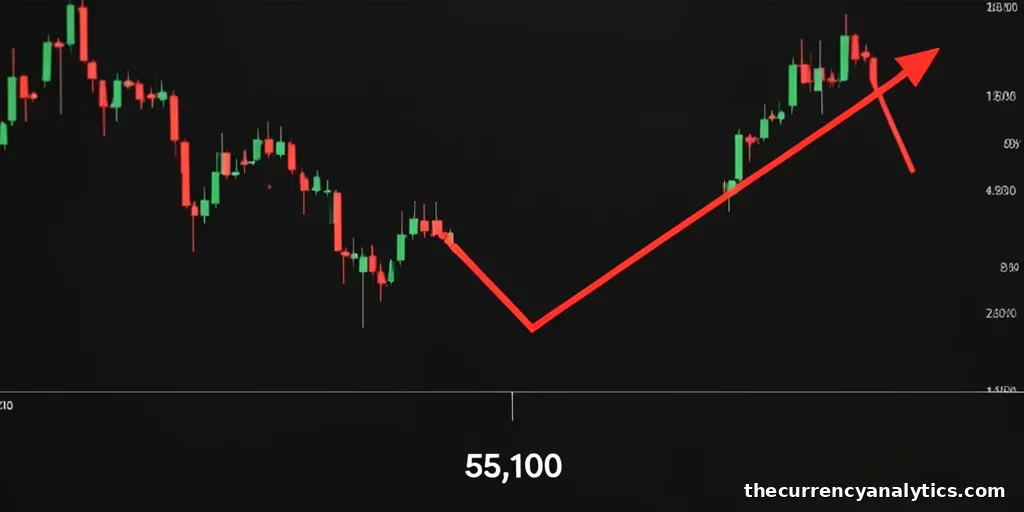
Bitcoin traded as low as $55,100 on November 21, marking a two-year low for the digital asset.
As of 04:27 UTC, Bitcoin traded at $61,373, +3.8% over 24 hours, with $28.8 billion in 24-hour volume.
The price level was last observed in September 2024. Following the sharp decline, Bitcoin recovered significantly, moving back toward the $60,000 level. By November 22, the asset was trading at $58,879. The weekly performance for Bitcoin closed at a 9.74% loss.
Market Volatility and Liquidations
Trading volume for Bitcoin rose to its highest point since February during this period. The drop in prices coincided with a broader decline in risk assets, driven by concerns regarding the U.S. stock market and the AI sector.
Total crypto liquidations reached $2.56 billion during the week. This figure reflects the scale of forced position closures across digital asset markets as prices moved sharply against leveraged traders.
Stablecoin Supply Shifts
Ripple’s RLUSD entered the top five stablecoins by market capitalization. The token reached a new all-time high in circulating supply, totaling $2.85 billion. RLUSD launched in December 2024.
The stablecoin surpassed World Liberty Financial USD (USD1), Global Dollar (USDG), and PayPal USD (PYUSD) in market size. The assets currently ranking ahead of RLUSD are Tether’s USDT, Circle’s USDC, Ethena’s USDe, and Dai (DAI).
XRP fell below the $1.00 mark on November 22, trading at $0.90. The asset had maintained a price above $1.00 since November 2024.
Shiba Inu Exchange Flows
Shiba Inu (SHIB) recorded significant movement on exchanges. A total of 372.39 billion SHIB tokens flowed into exchange wallets. This figure represented a 0.36% increase over the previous 24 hours.
Outflows from exchanges totaled 280.82 billion SHIB. The net result was an inflow of 91.57 billion SHIB. The token was trading at $0.00000365 on November 22.
Cross-Border Fraud Operation
U.S. and Canadian authorities initiated a joint crackdown on cryptocurrency fraud. The operation involves the U.S. Secret Service, Canadian law enforcement agencies, and financial regulators.
The initiative includes investigators, securities specialists, and financial crime experts from both countries. Authorities stated that the operation uses advanced technology to identify fraudulent activity and potential victims in near real time.