Community Trust ScoreVerified
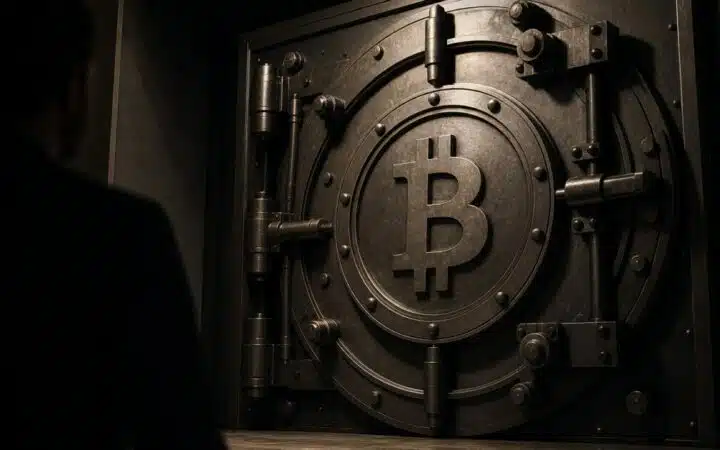
Bitcoin has experienced an impressive surge in adoption, with inflows surpassing $1 trillion, reflecting its growing influence in the financial markets. Despite this remarkable milestone, renowned financial commentator Peter Schiff remains one of the more vocal skeptics of the cryptocurrency’s long-term prospects.
Schiff, an economist known for his bearish stance on Bitcoin, recently admitted to what he describes as his “biggest Bitcoin mistake.” This mistake, he claims, was to underestimate the enthusiasm and belief that investors have in the digital asset. Schiff has consistently warned that Bitcoin’s volatility and lack of intrinsic value make it a poor investment compared to assets like gold. However, he acknowledges that he did not anticipate how fervent the cryptocurrency community would become, nor the extent to which Bitcoin would be integrated into mainstream financial systems.
The rise of Bitcoin has been fueled by both institutional and retail investors seeking to diversify their portfolios. This interest is driven by Bitcoin’s decentralized nature, perceived as a hedge against inflation and traditional financial systems. The cryptocurrency’s fixed supply cap of 21 million coins is often highlighted as a key feature that differentiates it from fiat currencies, which can be subject to inflationary pressures due to government policies.
Despite these positive trends, Schiff argues that Bitcoin’s success is largely speculative. He suggests that the currency’s value hinges on a collective belief rather than tangible utility or a stable economic foundation. This skepticism is shared by other financial experts who caution against over-reliance on a single asset class, particularly one as volatile as cryptocurrencies.
The Bitcoin market has seen dramatic price swings over the years. In 2021, the price of Bitcoin hit an all-time high of nearly $69,000 before plummeting to below $30,000 in 2022. These fluctuations highlight the risks associated with investing in Bitcoin and have led some investors to approach it with caution. Nonetheless, the recent surge in prices has reignited interest, with Bitcoin once again approaching its previous highs.
Adding to Bitcoin’s intrigue is the technological advancements surrounding blockchain technology, which underpins all cryptocurrencies. Blockchain’s potential to revolutionize industries, from finance to supply chain management, adds a layer of interest for those investing in Bitcoin. Proponents argue that blockchain’s decentralized ledger technology could create more transparent and efficient systems, thereby increasing trust and reducing costs.
However, Bitcoin’s rise hasn’t come without challenges. The environmental impact of Bitcoin mining, which involves solving complex mathematical problems to validate transactions, has been a significant concern. Bitcoin mining consumes substantial amounts of energy, often sourced from non-renewable resources, which has prompted criticism from environmentalists and policymakers alike. Countries like China have even banned Bitcoin mining due to its energy consumption, although this has not stopped the activity from thriving in other regions.
In terms of regulation, Bitcoin operates in a somewhat ambiguous legal space in many countries. While some governments embrace cryptocurrency innovations, others implement strict regulations or outright bans. This regulatory uncertainty poses a risk to Bitcoin’s future, as policy changes can significantly impact market dynamics. For instance, the United States and European Union continue to grapple with how to effectively regulate cryptocurrencies to protect investors while fostering innovation.
Despite these challenges, Bitcoin’s role as a digital asset continues to evolve. Many financial institutions now offer Bitcoin-related products, such as exchange-traded funds (ETFs) and futures contracts, making it easier for investors to gain exposure without directly owning the currency. This mainstream acceptance has bolstered Bitcoin’s legitimacy in the eyes of many investors.
Historically, new asset classes often face skepticism and volatility as they integrate into the financial ecosystem. Bitcoin, as a relatively young asset, is no exception. Yet, its rapid adoption and integration suggest that it may continue to play a significant role in the evolving landscape of digital finance.
Schiff’s critique of Bitcoin centers on its perceived lack of fundamental value compared to traditional assets like gold. Gold has been used as a store of value for centuries, offering tangible utility and historical stability. In contrast, Bitcoin’s value proposition is more abstract, relying heavily on technology and future potential. This fundamental difference underpins the ongoing debate over Bitcoin’s legitimacy as a long-term investment.
A potential counterpoint to Schiff’s argument is the growing acceptance and use of Bitcoin in everyday transactions and cross-border payments. Major companies, including Tesla and PayPal, have experimented with accepting Bitcoin as a form of payment, lending it additional credibility. Additionally, countries such as El Salvador have adopted Bitcoin as legal tender, highlighting its potential for broader economic integration.
Looking forward, the sustainability of Bitcoin’s growth will likely depend on several factors. Key among them are regulatory developments, technological advancements, market dynamics, and environmental concerns. Investors must weigh these factors carefully when considering Bitcoin as part of their investment strategy.
In conclusion, while Bitcoin has undoubtedly achieved remarkable success and garnered significant attention, it remains a polarizing asset. Figures like Peter Schiff highlight the skepticism that continues to surround it, even as its adoption grows. As Bitcoin navigates the challenges of regulation and environmental impact, its future will be shaped by both its proponents and detractors. Whether Bitcoin can sustain its momentum in the face of these challenges remains an open question, with implications for investors and the broader financial landscape alike.