Community Trust ScoreVerified
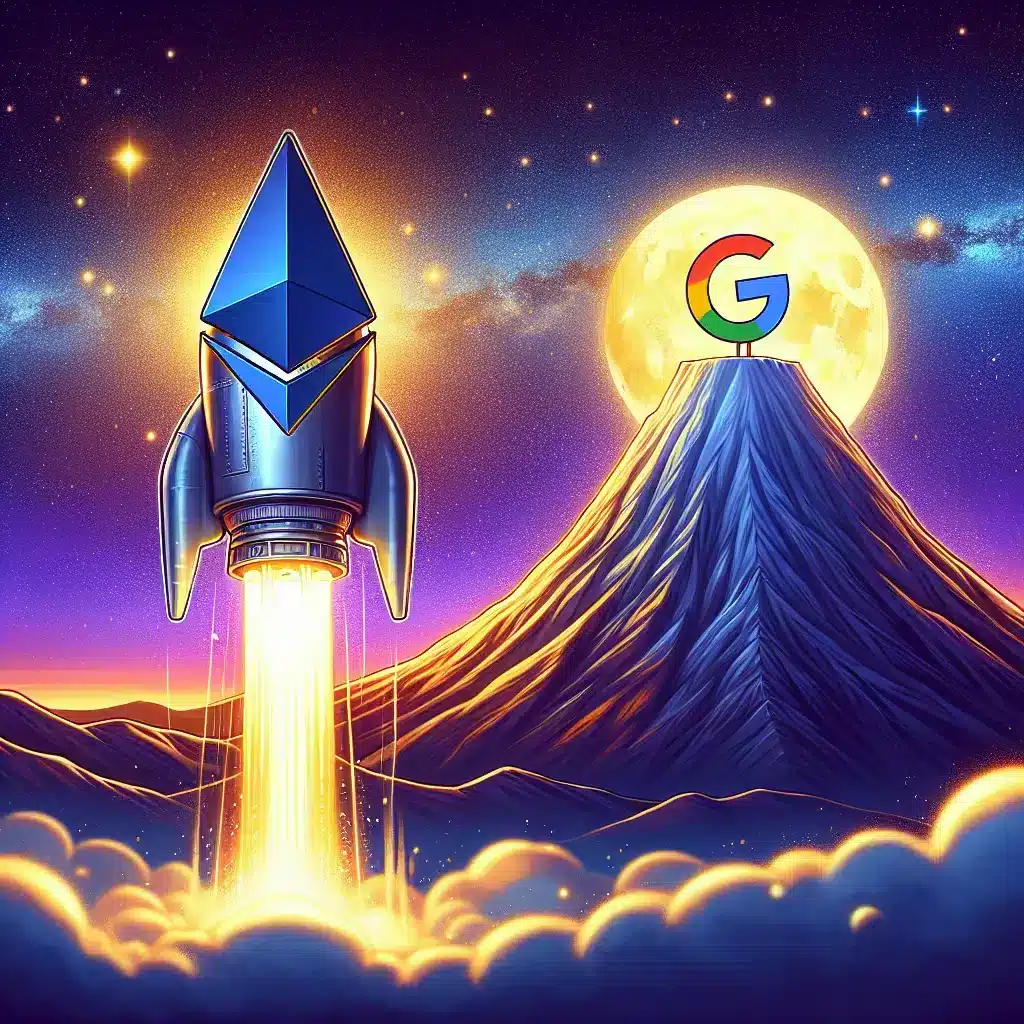
Vitalik Buterin, co-founder of Ethereum, recently expressed optimism about Ethereum’s potential, suggesting it could surpass tech giants like Google in terms of innovation and societal impact. Ethereum, a decentralized blockchain platform known for its smart contract functionality, has been pivotal in the rise of decentralized finance (DeFi) and non-fungible tokens (NFTs), which have reshaped areas of finance and digital ownership.
Ethereum’s technological framework allows for more than just cryptocurrency transactions; it supports decentralized applications (dApps) and complex programmable contracts. This versatility has positioned Ethereum as a leader in the blockchain space, driving innovation across various sectors. Its open-source nature invites developers worldwide to build on its platform, fostering a collaborative ecosystem that continuously pushes the boundaries of what’s possible.
While Google’s impact on technology and business is undeniable, with its search engine dominating global internet searches and its advertising network revolutionizing online marketing, Ethereum offers a fundamentally different model. Where Google operates within a centralized structure, Ethereum’s decentralized network promotes transparency, security, and user control. These characteristics are increasingly valued in an era where data privacy and autonomy are paramount concerns.
Ethereum’s transition from a proof-of-work to a proof-of-stake consensus mechanism, completed with the Ethereum 2.0 upgrade, underscores its commitment to sustainability and scalability. This shift has significantly reduced the network’s energy consumption, addressing one of the primary criticisms of blockchain technology. As environmental concerns grow, Ethereum’s eco-friendly approach could further enhance its appeal to developers and users.
Furthermore, Ethereum’s capacity to facilitate decentralized finance protocols has opened new financial opportunities. DeFi platforms enable users to lend, borrow, and trade without intermediaries, making financial services more accessible and inclusive. This democratization of finance aligns with Ethereum’s ethos of creating a decentralized economy where individuals have greater control over their assets.
However, Ethereum faces challenges in achieving widespread adoption. Scalability issues and high transaction fees have been persistent concerns, often deterring new users and developers. The network’s ongoing upgrades aim to address these issues, but competition from other blockchains, such as Solana and Binance Smart Chain, which offer faster transaction speeds and lower costs, remains fierce.
Critics argue that Ethereum’s complexity can be a barrier to entry for those unfamiliar with blockchain technology. While efforts to improve user experience and education are underway, simplifying access to Ethereum’s ecosystem remains a crucial hurdle. Additionally, regulatory scrutiny poses a risk to Ethereum’s growth. As governments worldwide grapple with how to regulate cryptocurrencies and blockchain technology, increased regulation could impact Ethereum’s operations and user base.
In contrast, proponents of Ethereum highlight its resilience and adaptability. Despite challenges, Ethereum has consistently demonstrated its ability to evolve and meet the needs of the market. Its robust developer community is a testament to its enduring appeal and potential for innovation.
Looking ahead, Ethereum’s role in the burgeoning Web3 movement further cements its relevance. As the internet shifts towards decentralized models, Ethereum’s infrastructure could underpin the next generation of digital platforms, offering users greater control over their data and interactions. This transformation has the potential to disrupt traditional internet structures, much like how Ethereum has already impacted finance and art.
While it’s uncertain if Ethereum will indeed surpass Google in terms of influence, its trajectory suggests significant potential. The platform’s commitment to innovation, community engagement, and addressing environmental impacts positions it as a formidable player in the tech landscape. As blockchain technology continues to mature, Ethereum’s influence could extend beyond finance and technology, affecting societal structures and norms.
In conclusion, Vitalik Buterin’s assertion of Ethereum’s capability to “do better than Google” is not just hyperbole but a reflection of its unique position in the tech ecosystem. Ethereum’s open, decentralized approach offers an alternative to traditional tech giants, promising a future where technology serves the many rather than the few. Whether it can overcome its challenges and fully realize this vision remains to be seen, but its impact on the digital world is already profound.