Community Trust ScoreVerified
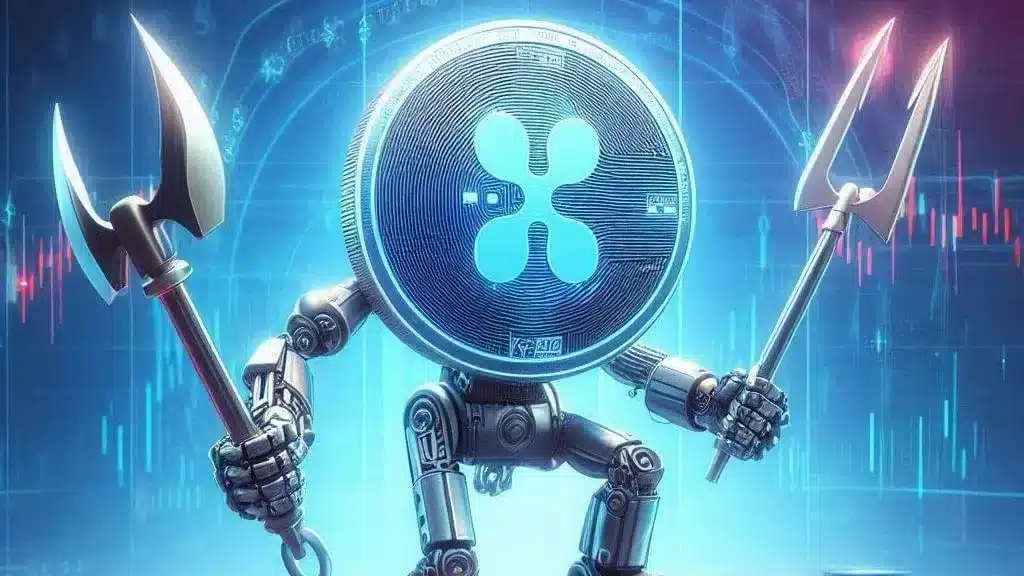
As XRP continues to garner attention from both its community and the broader cryptocurrency market, some experts are raising concerns over the authenticity of its price action. These figures argue that a significant portion of the price movements of XRP may not be driven by human investors but by trading bots. The issue of automated trading, particularly the dominance of bots in the cryptocurrency space, has become a topic of increasing scrutiny.
Bots Execute 75% of Crypto Trades
“All Things XRP,” a widely followed commentator in the XRP community, has pointed out that automated bots are responsible for executing as much as 75% of all cryptocurrency trades. On some lesser-known exchanges, this figure can rise as high as 95%. This revelation has left many traders questioning the reliability of chart patterns and price movements, which they typically rely on to make trading decisions. With such a large percentage of trades executed by bots, the question arises whether the price fluctuations are the result of genuine market forces or the outcome of algorithmic activity.
XRP: Prime Real Estate for Bots
XRP, according to the analyst, is an attractive target for automated trading due to its deep liquidity and persistent volatility. These characteristics make the asset an ideal candidate for a variety of automated trading strategies, such as arbitrage, scalping, spoofing, and even wash trading. Bots, designed to capitalize on small price discrepancies or market inefficiencies, can manipulate short-term price movements without any real buy-and-sell pressure from human investors. The analyst argues that retail traders may find themselves caught in a game increasingly dominated by algorithms rather than genuine market demand.
The presence of bots in the market can make the price of XRP appear either artificially bullish or bearish, even when there is no real change in investor sentiment. This situation raises concerns about the integrity of the market and whether the price action that traders observe is a true reflection of the underlying fundamentals of XRP. As the debate unfolds, it has become apparent that bots don’t just participate in the market—they dominate it.
Market Manipulation and Lack of Regulation
The post referenced “Operation Token Mirrors,” a 2024 operation that revealed how bots were used to artificially inflate volumes on the NexFundAI platform, leading to massive losses for unsuspecting investors. The operation demonstrated how bots can manipulate the market, making assets like XRP appear to be in a bullish or bearish phase without any real buying or selling activity to justify the moves. While investigations by agencies such as the SEC and the FBI into market manipulation continue, the reality is that bots operate far faster than regulators can respond. The decentralized nature of the crypto market and the cross-border technology used by these bots further complicates efforts to prevent such manipulations.
As the market becomes increasingly reliant on automated trading, experts caution against placing too much trust in technical signals alone. They argue that fundamentals and regulatory oversight are more crucial than ever, especially in a market where bots play such an influential role in shaping price action.
XRP Ledger (XRPL) Could Be the Solution
In response to these concerns, software developer Vincent Van Code weighed in, agreeing with the claims of bot manipulation and calling the current market “rigged.” However, he highlighted the XRP Ledger’s decentralized exchange (DEX) as a potential antidote to bot manipulation. Unlike centralized exchanges, where bots can easily run rampant, the XRPL DEX offers increased transparency due to its on-chain structure. Van Code emphasized that bots operating on the XRPL would be exposed to public view, as every transaction is recorded on the blockchain. Additionally, the XRP Ledger’s 3-second transaction times and rising fees during periods of congestion make it difficult for bots to execute large-scale manipulations effectively.
For bot-resistant trading at scale, Van Code proposed several necessary improvements, including a simple fiat on-ramp for RLUSD, reputable token issuers for wrapped assets, and advanced trading interfaces. He envisions a future where crypto trading is fully transparent, secure, and owned by the users, leaving no room for manipulation or “funny business.” Such a system would allow traders to engage in a market that is free from the undue influence of automated bots and market manipulators.
Conclusion
As XRP’s market continues to evolve, concerns over the role of trading bots in price movements remain significant. While bots are increasingly dominant in executing trades across various platforms, there is hope that decentralized exchanges like the XRP Ledger can provide a more transparent and bot-resistant environment for trading. Until such solutions are fully realized, traders are advised to exercise caution and consider both the underlying fundamentals and the influence of automation when navigating the market.