Community Trust ScoreVerified
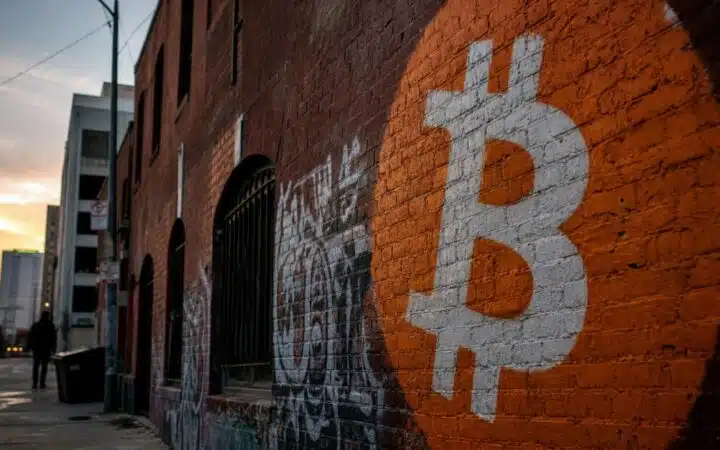
Bitcoin remains in a holding pattern, with its price hovering between $109,929 and $110,056 over the past hour. This range reflects a significant moment as the cryptocurrency’s market capitalization steadies at $2.19 trillion, bolstered by a robust 24-hour trading volume of $44.79 billion. In recent trading sessions, Bitcoin’s price has fluctuated between $108,655 and $110,845, teasing traders with hints of volatility but ultimately settling into a steady pace without making decisive moves.
This range-bound activity suggests a critical point of indecision among investors. On one hand, the current price level represents a key resistance line that Bitcoin has struggled to surpass convincingly. Historically, resistance levels mark price points where cryptocurrencies face substantial selling pressure, often causing prices to stagnate or reverse. Bitcoin’s struggle to maintain momentum beyond this threshold is indicative of broader market uncertainty.
Several factors contribute to this market indecision. Recent macroeconomic conditions, including fluctuating interest rates and global economic instability, have influenced investor sentiment. With central banks around the world implementing varied monetary policies in response to inflationary pressures, Bitcoin’s role as a hedge against inflation is once again under scrutiny. Investors are weighing the potential for Bitcoin to break through its resistance level against the backdrop of these economic dynamics.
Adding to the complexity, the regulatory landscape continues to evolve. Authorities in various countries are grappling with how to regulate cryptocurrencies effectively. In the United States, recent moves by lawmakers have aimed at establishing clearer guidelines for digital assets, which could either pave the way for greater adoption or introduce new hurdles. Elsewhere, countries like China have maintained stringent restrictions on crypto trading and mining, impacting global market dynamics.
Despite these challenges, Bitcoin’s fundamentals remain strong. Its decentralized nature and limited supply continue to attract investors looking for alternative assets outside traditional financial systems. Moreover, the ongoing interest from institutional investors has provided a degree of stability, as large-scale entities explore cryptocurrencies as part of their investment portfolios.
However, risks remain. The inherent volatility of the cryptocurrency market means that sudden shifts in investor sentiment can lead to rapid price changes. Additionally, the possibility of regulatory crackdowns or technological challenges, such as network security breaches, could disrupt market confidence and lead to significant price corrections.
To understand the current situation, it is important to consider Bitcoin’s historical price patterns. Over the past decade, Bitcoin has experienced several significant price surges followed by corrections. Each cycle has been characterized by periods of euphoria and panic, often driven by external factors such as regulatory news or macroeconomic developments. This pattern suggests that while Bitcoin may face temporary setbacks, its longer-term trajectory remains upward, driven by increasing adoption and technological advancements.
In comparison, other leading cryptocurrencies such as Ethereum and Ripple are also navigating their own market conditions. Ethereum, for example, has been undergoing a major transition with the rollout of Ethereum 2.0, which aims to improve scalability and energy efficiency. Ripple, on the other hand, continues to deal with legal challenges in the U.S., which have affected its market performance. However, these cryptocurrencies remain important players in the digital asset ecosystem, each with its unique value propositions.
Looking ahead, Bitcoin’s ability to breach its current resistance level may depend on several factors. Increased adoption by mainstream financial institutions could provide the necessary momentum. Additionally, technological innovations such as the Lightning Network, which facilitates faster and cheaper transactions, could enhance Bitcoin’s utility and appeal. However, sustained upward momentum will likely require a combination of favorable market conditions, supportive regulatory environments, and continued investor confidence.
In conclusion, Bitcoin’s current standoff at the $110,000 resistance level is emblematic of broader market indecision. While the cryptocurrency’s fundamentals are strong, external factors such as economic policies and regulatory developments continue to shape investor sentiment. As Bitcoin navigates these challenges, its performance will be closely watched by traders and institutional investors alike, seeking to capitalize on its potential for growth in the evolving financial landscape.