Community Trust ScoreLikely Real
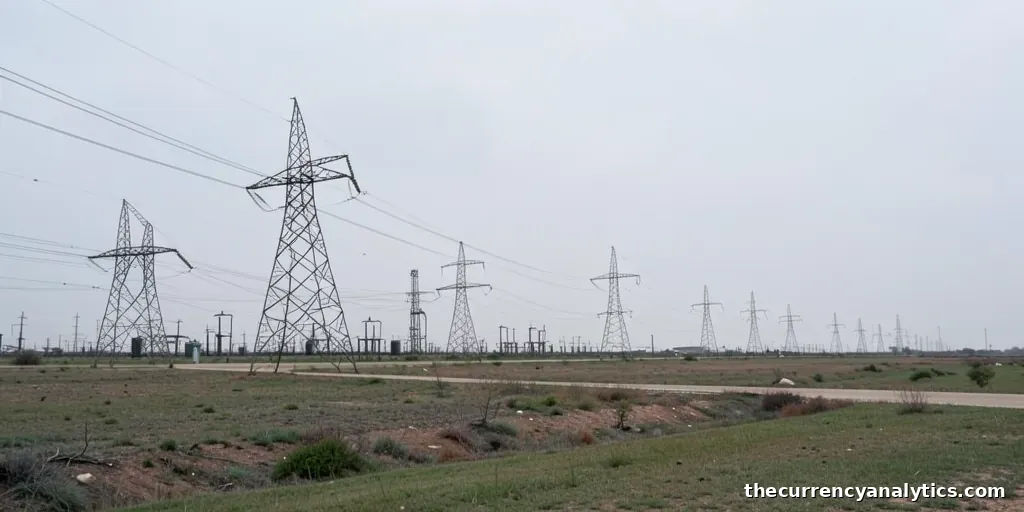
The Electric Reliability Council of Texas (ERCOT) has established a demand threshold of roughly 2,500 megawatts for a group of facilities in the northern part of the grid that includes Riot Platforms’ Bitcoin mine in Corsicana. Once the combined draw of this group reaches that level, the grid operator plans to activate limits on transmission providers and market schedulers. This mechanism is designed to manage stability risks associated with simultaneous disconnections during electrical faults, a constraint that had not yet been formally activated when Riot filed its most recent quarterly report.
As of 15:44 UTC, Bitcoin traded at $59,973, +1.2% over 24 hours, with $17.2 billion in 24-hour volume.
Group Limits and Fault Simulations
ERCOT organizes sites that might disconnect during the same fault into specific groups to monitor their collective load. For the fourth quarter of 2026, the grid operator used simulated faults to identify which sites in North, Central, and Far West Texas could disconnect together. The assigned shares for the sites in the relevant group total 2,720 megawatts, which leaves 480 megawatts of capacity below the level ERCOT used in its stability study. In September, the northern group recorded a simultaneous draw of 1,615 megawatts, well below the 5,465 megawatts of approved capacity for its sites, with some connected sites drawing less than five megawatts.
The underlying risk involves voltage dips caused by transmission line faults, which can force power plants to generate more electricity than customers require. ERCOT described a simulation where the sudden loss of 3,200 megawatts of demand could push grid frequency to 60.4 cycles per second, moving away from the normal 60 cycles per second. This frequency deviation poses an outage risk, prompting the need for coordinated limits on large industrial loads.
Demand Reductions and Financial Impacts
During Winter Storm Fern in January, cryptocurrency miners in Texas reduced their demand by an estimated 4,100 megawatts, representing nearly 5% of the grid’s forecast peak demand. Miners began powering down on Saturday, Jan. 24. Oil and gas operators accounted for the largest reduction at 4,200 megawatts, slightly exceeding the miners’ contribution. Together, these two sectors made up more than nine-tenths of the quantifiable reductions. Other sectors also cut demand: steelmakers reduced usage by 420 megawatts, data centers by 170 megawatts, and hydrogen and electrofuel producers by 75 megawatts.
When ERCOT added these estimated reductions back to Monday morning’s demand, the total reached 84,558 megawatts, a figure within 60 megawatts of the forecast peak demand of 84,500 megawatts before the storm. Despite the operational constraints, Riot reported booking approximately $24.7 million in power credits across its markets in the third quarter, derived from power sales and demand-response programs.
Regulatory Exemptions and Future Capacity
Riot’s existing operations in Corsicana qualify for an exemption from new requirements to remain connected through voltage and frequency disturbances. The company believes its Texas facilities predate the cutoff established by Senate Bill 6, which requires utilities to have methods for interrupting certain large customers connected at transmission voltage during last-resort demand shedding. However, Riot’s lease with Anthropic introduces a new layer of complexity. The agreement covers 910 megawatts of planned capacity for computing equipment, with the first block due in June 2027.
Once Anthropic begins drawing power, Riot will require the tenant’s consent to voluntarily cut its supply or enroll the premises in a voluntary demand-response program. Nevertheless, an order from the utility or grid operator takes precedence over the lease agreement regarding power cuts. The specific group limits for the Corsicana area remain pending activation, a procedural step that had not occurred at the time of Riot’s filing.