Community Trust ScoreVerified
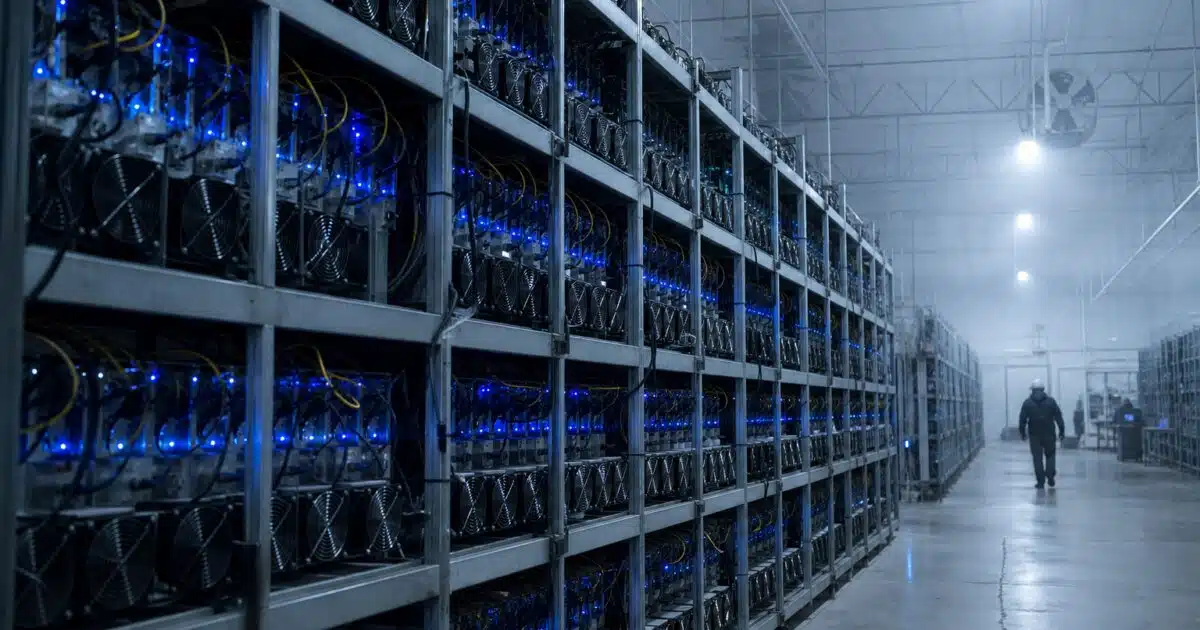
Bitcoin’s hashrate is in its first real bear market. That’s the word from Rapha Zagury, CEO of Twenty One Capital, who laid it out at the Bitcoin Asia 2026 conference in Hong Kong — and the numbers back him up.
Why It Matters
The decline in Bitcoin's hashrate signals a potential shift in miner priorities, as the allure of lucrative AI opportunities may be diverting resources away from cryptocurrency mining. This trend could impact Bitcoin's network security and transaction processing capabilities, raising concerns among investors about the long-term viability of the ecosystem amidst increasing competition from emerging technologies. As miners reassess their investment strategies, the overall dynamics of the crypto market may experience significant changes, influencing both supply and demand factors for Bitcoin.
The network hit close to 1.3 zettahashes per second late last year. Since then it’s been sliding, and it hasn’t bounced back. Zagury put it plainly: “We hit close to 1.3 zettahashes late last year, and it’s been gradually coming down.” What makes this stretch unusual isn’t just the decline itself — it’s how long Bitcoin has now sat below its hashrate peak without any real recovery. That’s basically never happened before. Past drops had a clear cause and a clear fix. The 2021 Chinese crackdown, for instance, forced miners offline temporarily, but the machines got relocated and came back online. Hashrate recovered fast. What’s happening now is different, and Zagury’s point is that the cause isn’t a government ban or a price crash. It’s competition — specifically, competition from artificial intelligence.
AI Is Pulling Miners Off Bitcoin
Mining infrastructure, it turns out, is pretty much exactly what AI firms need. Power access, land, cooling, connectivity — data centers built for Bitcoin work just as well for high-performance computing. And AI companies are willing to pay, often through long-term contracts that offer something bitcoin mining rarely does: predictable revenue. That’s a hard pitch to argue with when bitcoin’s block reward just halved again and margins are tight.
So miners are moving. Not all of them, but enough to matter.
Keel Infrastructure went furthest — it shut down all U.S. bitcoin mining operations entirely and is repurposing those sites for AI. The company had $819 million in liquidity to fund that transition. Full stop, no hedging, no partial pivot. Done with bitcoin mining in the U.S.
Bitdeer went a different route but landed in the same general direction. The company signed a 16-year AI infrastructure deal worth $4.7 billion for its Norway campus, with room to expand to $8 billion. Sixteen years. That’s not a test — that’s a commitment. And Hut 8 locked in a 15-year lease worth $9.8 billion for AI infrastructure at its Texas campus. The scale of these contracts is hard to overstate. These aren’t small operators hedging their bets. These are major public mining companies making multi-decade bets on AI demand.
What’s Left for Bitcoin Miners
Here’s the part that’s easy to miss: for miners who stay focused on Bitcoin, the exodus is actually good news. Fewer machines competing for the same block rewards means a bigger slice of the pie for whoever’s left. Zagury made this point — as large operators pivot away, the remaining dedicated miners can capture a larger share of network production. It’s kind of a silver lining buried inside a story that mostly sounds like bad news for Bitcoin’s security model.
But Zagury’s broader warning is real. Few companies are still running large-scale bitcoin mining as their core business. The ones with the most infrastructure are the ones signing AI deals. And that creates a tension that’s probably going to define the next phase of the mining industry — who stays, who goes, and what Bitcoin’s hashrate looks like when the dust settles.
The economics are murky. Mining companies moving to AI have to reconfigure existing facilities, which takes capital and time. It’s not a simple flip of a switch. But the upside — stable, contracted revenue over 15 or 16 years — is clearly winning the argument in a lot of boardrooms right now.
Bitdeer’s Norway deal alone could reach $8 billion. Hut 8’s Texas lease sits at $9.8 billion over 15 years. Keel walked away from U.S. mining with $819 million ready to deploy into AI. These aren’t exploratory moves. They’re structural shifts, and they’re already showing up in the hashrate data.
For dedicated miners, reduced competition is a real opportunity. But the broader question — whether Bitcoin’s network security takes a hit as infrastructure drains toward AI — is one Zagury didn’t fully answer. Unclear whether anyone has a clean answer yet.
What’s clear is the number: 1.3 zettahashes per second, and falling.
Hub: Bitcoin price, news, and analysis
Frequently Asked Questions
What did Rapha Zagury say about Bitcoin’s hashrate at Bitcoin Asia 2026?
Zagury, CEO of Twenty One Capital, said Bitcoin is in its first “bear market in hash rate,” noting the network hit close to 1.3 zettahashes per second late last year and has been gradually declining since.
Which mining companies are shifting to AI infrastructure?
Keel Infrastructure halted all U.S. bitcoin mining with $819 million in liquidity for AI repurposing; Bitdeer signed a 16-year, $4.7 billion AI deal in Norway; and Hut 8 secured a $9.8 billion, 15-year AI infrastructure lease in Texas.