Community Trust ScoreVerified
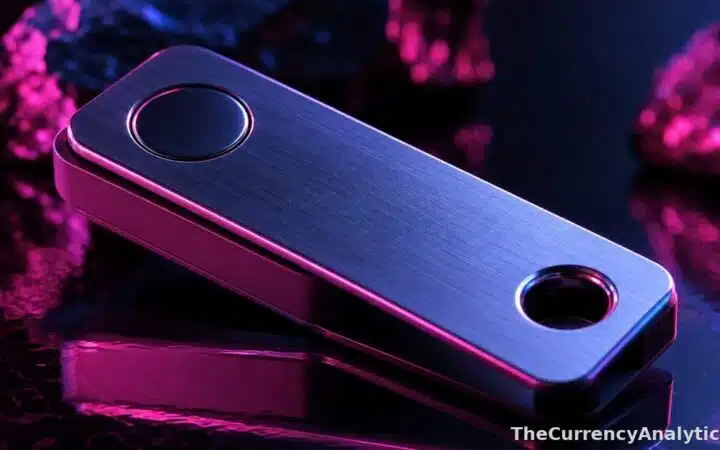
Ledger dropped a big one Thursday. The hardware wallet company unveiled the Atom, a $849 device that looks more like a smartphone than a traditional cold-storage dongle — and it’s coming with a feature set that’s clearly aimed at a problem the company is very much dealing with right now.
Why It Matters
The launch of Ledger's Atom wallet highlights the increasing urgency for robust security measures in the hardware wallet sector, particularly in light of recent incidents involving compromised units. As the crypto market continues to grow, so too does the sophistication of threats targeting digital assets, making it imperative for companies to innovate and restore consumer confidence. This move not only addresses immediate security concerns but also positions Ledger to potentially regain market trust amid heightened scrutiny over device integrity.
The timing isn’t subtle. Just days before the Atom announcement, Ledger confirmed that wallets sold through an Asian reseller had been compromised. Someone had planted malicious implants inside the devices before they reached customers. That’s the kind of news that shakes confidence in hardware security products fast, and Ledger knows it.
What the Atom Actually Does
The Atom runs Android apps alongside wallet operations, but the key point is that it keeps them separated. Regular apps live in one lane. Sensitive wallet functions live in another. That architecture, Ledger says, can block the exact type of implants found in the compromised devices from the Asia incident. And it can detect tampering even when the device is fully powered off — which matters, because a lot of supply chain attacks happen before a device ever gets turned on for the first time.
Beyond the anti-tampering angle, the Atom adds AI agent approvals, encrypted messaging, and post-quantum cryptography. That last one is worth noting. Post-quantum cryptography is designed to hold up against computing power that doesn’t fully exist yet but is getting closer. It’s a forward-looking feature, and probably one that most buyers won’t need for years. But it’s in there.
Shipping starts in summer 2027. No earlier date was given.
The Breach That Preceded the Launch
The reseller at the center of the tampering incident is CryptoBilis, an authorized distributor. After the compromised wallets surfaced, Ledger told distributors across Southeast Asia and Hong Kong to stop selling its products immediately. That’s a significant call — pulling inventory across an entire region isn’t cheap or easy, and it signals the company took the scope of the problem seriously.
It didn’t stop there. European retailer MediaMarkt also pulled Ledger wallets from its shelves. MediaMarkt is one of the largest consumer electronics chains in Europe, so that’s a meaningful hit to visibility and sales on a continent where Ledger has strong brand presence.
A Ledger spokesperson, when asked whether the Atom’s anti-tampering features were developed specifically because of the CryptoBilis incident, basically said no. The protections weren’t a reaction to specific incidents, per the spokesperson. No development timeline was shared. So it’s unclear exactly when Ledger started building these features into Atom — that detail didn’t make it into the announcement.
Tighter Rules for Resellers
Alongside the Atom reveal, Ledger published a Thursday blog post laying out new rules for authorized resellers. The changes are pretty direct. Devices can’t be put on display. They have to be kept off shelves and handed directly to a customer at the point of purchase. And if a customer returns a device for any reason, that unit can’t be resold. It gets pulled from circulation entirely.
That last rule is important. Returned devices are a known vector for tampering. Someone buys a wallet, opens it, does something to the hardware or software, reseals it, and returns it. The retailer, seeing a product that looks fine, puts it back on the shelf. The next buyer gets a compromised unit. Ledger’s new policy cuts that chain off.
The off-display requirement is probably aimed at a different threat — reducing the window during which a device sits unattended and accessible in a retail environment. It’s not foolproof, but it narrows the attack surface.
Hardware wallet security has always depended on the assumption that the device you receive is the device Ledger shipped. When that assumption breaks down — as it did with CryptoBilis — the whole value proposition gets questioned. Ledger’s response here is basically two-pronged: build a device that can survive tampering attempts, and tighten the rules so tampering is harder to pull off in the first place.
Whether the Atom’s $849 price tag finds enough buyers is a separate question. It’s a steep ask compared to Ledger’s existing lineup.
Frequently Asked Questions
What happened with the CryptoBilis tampering incident?
Ledger confirmed that wallets sold through authorized reseller CryptoBilis had been compromised with malicious implants, prompting the company to halt sales across Southeast Asia and Hong Kong.
How much does the Ledger Atom cost and when does it ship?
The Ledger Atom is priced at $849 and is expected to begin shipping in summer 2027.