Community Trust ScoreVerified
Bitcoin, the pioneering cryptocurrency, has climbed back above the $93,000 mark, driven by a resurgence in institutional interest and a wave of short position liquidations. This price rally comes as the market eagerly anticipates the Federal Reserve’s upcoming policy meeting, which has left traders grappling with a backdrop of economic uncertainty.
The recent surge in Bitcoin’s value is propelled by a confluence of factors. A significant one is the renewed interest from institutional investors, who are increasingly viewing Bitcoin as a hedge against inflation and economic instability. Large financial institutions and asset managers have been progressively adding Bitcoin to their portfolios, contributing to upward price pressure. This trend is reminiscent of the 2020 shift when Bitcoin first started seeing substantial institutional adoption, marking a pivotal moment in its acceptance as a legitimate asset class.
Another key factor in Bitcoin’s recent performance is the liquidation of short positions. Traders betting against Bitcoin’s rise have been caught off-guard by its sudden upward momentum, leading to a cascade of short covering. This process involves selling Bitcoin to cover positions, which inadvertently adds to the buying pressure and further elevates prices. Such market dynamics underscore Bitcoin’s notorious volatility and the risks associated with speculative trading.
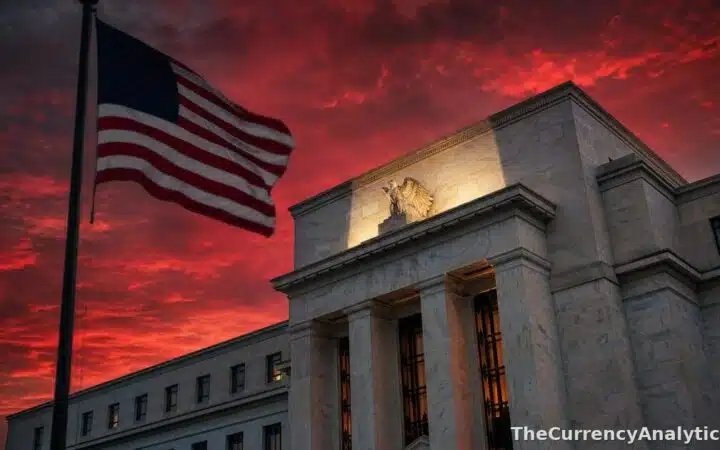
The broader economic environment plays a crucial role in Bitcoin’s latest movements. With the Federal Reserve meeting on the horizon, investors and traders are anxious about potential changes in monetary policy. The central bank’s decisions on interest rates and quantitative easing can significantly influence financial markets, including cryptocurrencies. Speculation that the Fed might maintain a dovish stance to support the economy could be encouraging more investment in Bitcoin as a perceived safe haven.
Historically, Bitcoin has shown an ability to react sharply to macroeconomic events. For instance, during periods of economic stimulus, such as those seen during the COVID-19 pandemic, Bitcoin witnessed significant rallies as investors flocked to it as a store of value. The anticipation surrounding the Fed’s possible course of action reflects the cryptocurrency’s growing integration into the broader financial system.
However, Bitcoin’s path is not without its challenges. Despite its allure as a digital gold, Bitcoin faces regulatory scrutiny across several jurisdictions. Governments worldwide are grappling with how to manage and regulate cryptocurrencies, balancing innovation with consumer protection and financial stability. Regulatory uncertainty can induce market volatility, as seen in past instances when countries have imposed or threatened to impose strict crypto regulations.
Additionally, Bitcoin’s environmental impact continues to be a point of contention. The energy-intensive process of mining Bitcoin raises concerns about sustainability, especially in an era increasingly focused on climate change. Some institutions may hesitate to invest heavily in Bitcoin because of these environmental considerations, potentially limiting its adoption.
Another potential risk is the inherent volatility of Bitcoin itself. While its price rise attracts investors seeking high returns, it also deters those who are risk-averse. The significant price swings, as observed in past bull and bear cycles, can lead to substantial financial losses if markets turn rapidly. Such volatility was starkly evident during the 2021 bull run, followed by a subsequent sharp correction, reminding investors of the unpredictable nature of crypto assets.
On the technical front, Bitcoin’s recent price action suggests strong support levels have formed, enticing more buyers into the market. The technical analysis indicates that if Bitcoin manages to sustain its current price levels, further bullish momentum could ensue. Analysts are watching closely for any breakout signals that could push Bitcoin into new all-time highs, setting a precedent for future market behavior.
In contrast, skeptics argue that the current rally might be overextended, with Bitcoin potentially facing downward pressure if the Fed’s policy stance surprises markets or if global economic conditions deteriorate. Inflationary pressures and geopolitical tensions can also weigh heavily on risk assets, including cryptocurrencies, causing sudden shifts in investor sentiment.
In a broader context, Bitcoin’s movement reflects the digital asset market’s growing maturity. The increasing involvement of institutional players suggests a shift from a niche speculative market to a more mainstream investment landscape. This transition is supported by the development of regulatory frameworks, enhanced security measures, and improved infrastructure, such as more robust exchanges and custody solutions.
Moreover, Bitcoin’s price dynamics are influenced by the growth of the overall cryptocurrency ecosystem. The rise of decentralized finance (DeFi) and non-fungible tokens (NFTs) showcases the expanding use cases for blockchain technology. These innovations attract a new breed of investors who see potential beyond traditional financial systems, further cementing cryptocurrencies’ role in the future economy.
As the Federal Reserve meeting approaches, the cryptocurrency market, with Bitcoin at its helm, remains poised at a critical juncture. The decisions made by policymakers could have lasting implications not only for Bitcoin’s trajectory but for the broader adoption of cryptocurrencies. Investors will be keenly observing for any hints of policy shifts that could either bolster or dampen Bitcoin’s appeal as a hedge against monetary instability.
In conclusion, Bitcoin’s resurgence to over $93,000 reflects a complex interplay of institutional interest, market dynamics, and macroeconomic factors. While it stands as a testament to the growing acceptance of digital currencies, it also highlights the challenges and uncertainties that lie ahead. As the crypto landscape evolves, Bitcoin’s ability to navigate these challenges will be crucial in determining its role in the future financial ecosystem.