Community Trust ScoreVerified
In a notable shift, institutional investors are starting to dip their toes back into the turbulent cryptocurrency market, even as a widespread sell-off continues to rattle the sector. Recent data shows that these entities are cautiously re-entering the market, aiming to buy assets at lower prices. This move comes amidst ongoing market volatility and uncertainty about whether the tumult has fully played out.
As of November 2025, the cryptocurrency landscape is marked by significant upheaval. Bitcoin, the most prominent digital asset, has seen its value plunge by nearly 30% over the past six months, while Ethereum has followed a similar downward trajectory. This decline has been driven by a combination of macroeconomic factors, including rising interest rates and regulatory challenges across major economies.
These conditions have prompted a broader sell-off, affecting both retail investors and large-scale funds. The decline has not been uniform, as some cryptocurrencies have experienced sharper drops than others, highlighting the sector’s inherent volatility. Despite these challenges, institutional investors, who had previously retreated in the face of market instability, are now beginning to see potential opportunities.
Institutional interest in the crypto market is not entirely new. Over the past few years, digital assets have gradually gained legitimacy among large financial institutions, with many viewing them as a hedge against inflation or as a tool for portfolio diversification. According to a 2023 survey by a leading financial consultancy, over 70% of institutional investors had some exposure to cryptocurrencies. However, the recent market decline tested their resolve, with many opting to reduce their holdings.
Now, with prices at what some consider attractive levels, these investors are cautiously re-evaluating their strategies. Analysts suggest that the market could be approaching the end of its current downturn, making it an opportune time for strategic purchases. Still, the tentative nature of these investments indicates a recognition of ongoing risks, such as further potential regulatory crackdowns or macroeconomic shifts.
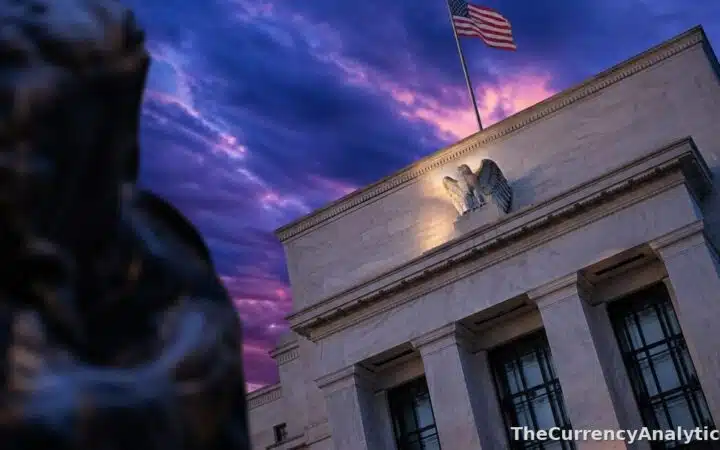
Looking ahead, one of the major factors that could influence the crypto market’s recovery is monetary policy. Analysts point to the possibility of the Federal Reserve easing interest rates in 2026, which could inject renewed liquidity into the economy. This scenario would likely benefit riskier asset classes, including cryptocurrencies, as investors search for higher returns amid a lower interest rate environment.
Historically, changes in monetary policy have had significant impacts on the cryptocurrency market. For example, the bull market of late 2020 and early 2021 coincided with a period of low interest rates and expansive fiscal policies aimed at countering the economic effects of the COVID-19 pandemic. This environment spurred substantial investment into digital assets, driving prices to record highs.
However, even as institutional investors begin to ‘nibble’ at the market, some analysts warn that the final shakeout may not yet be complete. They caution that the sector might still face further disruptions if economic conditions deteriorate or if new regulations emerge. Notably, several major economies, including the European Union and China, have recently tightened regulations on cryptocurrency trading and mining, seeking to curb potential financial system risks.
Despite these potential headwinds, there is optimism among some market participants about the long-term prospects of digital assets. Innovations such as decentralized finance (DeFi) and blockchain technology continue to attract attention and investment, suggesting that the underlying infrastructure of the market remains robust. Furthermore, with growing interest from countries exploring central bank digital currencies (CBDCs), the broader acceptance of digital currencies seems likely to persist.
In contrast, skeptics argue that the market’s current structure still relies too heavily on speculative trading, casting doubt on its stability. They point to the frequent occurrence of so-called ‘pump and dump’ schemes, where prices are artificially inflated before being quickly sold off, as evidence of the sector’s vulnerability. These practices, while not unique to crypto, undermine investor confidence and can exacerbate volatility.
Moreover, the environmental concerns associated with cryptocurrency mining have not dissipated. The energy-intensive process required to validate transactions on some blockchain networks has drawn criticism and regulatory scrutiny. As the world increasingly prioritizes sustainability, the crypto industry may face mounting pressure to adopt greener practices.
Globally, the cryptocurrency market is estimated to be worth over $1 trillion, encompassing thousands of different digital assets. While Bitcoin and Ethereum dominate, smaller altcoins and tokens contribute to the market’s diversity, offering both opportunities and risks for investors. This vast landscape is continuously evolving, with new projects and innovations emerging regularly.
In response to these dynamics, some financial advisors are recommending a balanced approach for those considering investing in cryptocurrencies. They advise clients to allocate only a portion of their portfolios to these assets, emphasizing the importance of diversification and risk management. Additionally, they underscore the necessity of staying informed about the rapidly changing regulatory and economic environment.
As the year 2025 draws to a close, the crypto market remains a focal point of both excitement and caution. The coming months will be pivotal in determining whether the nascent recovery can gain traction or if further challenges lie ahead. Institutional investors, with their considerable resources and influence, will play a crucial role in shaping the market’s trajectory, their actions closely watched by market participants and regulators alike.