Community Trust ScoreVerified
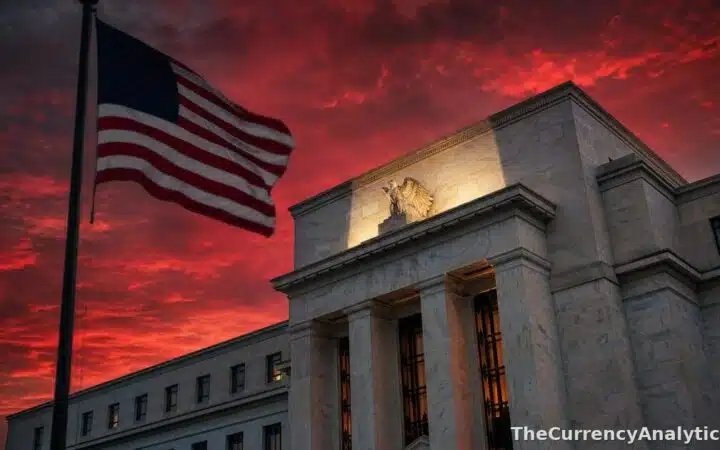
On Tuesday, the Dow Jones Industrial Average (DJIA) fell by 120 points, marking its second consecutive day of losses. This decline comes as investors brace for the Federal Reserve’s upcoming decision on interest rates, a move that could heavily influence market dynamics in the coming months.
The DJIA’s recent performance reflects growing uncertainty among investors regarding the central bank’s monetary policy. The Federal Reserve is expected to announce whether it will adjust interest rates in response to persistent inflationary pressures. If rates are increased, borrowing costs for businesses and consumers would rise, potentially slowing economic growth.
Historically, the Federal Reserve has used interest rate changes as a tool to manage economic activity. By raising rates, the Fed can cool off an overheating economy and keep inflation in check. Conversely, lowering rates can stimulate borrowing and spending, boosting economic activity. The upcoming decision, therefore, is crucial as it will set the tone for the financial markets heading into the New Year.
Outside of the United States, other central banks are also grappling with inflation. The European Central Bank, for example, is considering similar measures as it navigates economic challenges in the Eurozone. Such global actions indicate a broader trend where monetary authorities are balancing growth and inflation concerns.
Investor sentiment is further clouded by mixed economic data. On one hand, employment figures and consumer spending have shown resilience, suggesting underlying economic strength. On the other, inflation remains stubbornly high, eroding purchasing power and increasing the cost of living. This duality makes it difficult for policymakers to chart a clear path forward.
Adding to market anxiety are geopolitical tensions, particularly in Eastern Europe and the Middle East, which have the potential to disrupt global trade and supply chains. The ongoing conflicts could also impact energy prices, placing additional upward pressure on inflation.
Corporate earnings reports have also been a mixed bag. While some companies have posted strong profits, others have warned of potential slowdowns due to rising costs and supply chain issues. These factors, combined with the looming interest rate decision, are contributing to the current volatility in the stock market.
Despite the challenges, some analysts remain optimistic about the long-term prospects of the U.S. economy. They argue that the fundamentals remain strong, with a robust labor market and resilient consumer demand. These analysts believe that even if the Federal Reserve decides to raise rates, the economy is capable of absorbing the impact without sliding into recession.
However, there are risks to this outlook. If inflation continues to rise unchecked, the Federal Reserve may be forced to implement more aggressive rate hikes, which could stifle economic growth. Additionally, if geopolitical issues intensify, they could lead to further economic disruptions.
The current situation draws parallels to past economic cycles where the balance between growth and inflation has been precarious. During the late 1970s, for example, high inflation led to rapid interest rate increases, resulting in a recession. Learning from history, policymakers are striving for a measured approach to avoid repeating such scenarios.
In the financial markets, investors are closely watching the bond yields, which often serve as an indicator of economic expectations. Recently, yields have been rising, suggesting that the market anticipates higher inflation and interest rates. This trend could have significant implications for stock valuations and investor strategies.
Another layer of complexity is added by the global supply chain disruptions that have persisted since the pandemic. These have caused bottlenecks and increased production costs, which in turn contribute to inflation. The Fed’s decision on interest rates will need to consider these external factors that continue to affect the economic landscape.
Retail investors, who have become more prominent in the markets over the past few years, are also a factor to consider. Their increased participation has added volatility, as their trading patterns can be significantly influenced by news and sentiment, rather than fundamentals.
As the Federal Reserve’s announcement looms, financial advisors are cautioning clients to prepare for potential volatility. Diversifying portfolios and maintaining a long-term investment strategy are some of the methods suggested to weather potential market fluctuations.
In conclusion, the Dow Jones Industrial Average’s recent declines highlight the market’s apprehension as it awaits the Federal Reserve’s critical interest rate decision. While there is potential for continued market turbulence, the underlying strength of the U.S. economy offers hope that it can withstand any near-term challenges. As always, the interplay between inflation, monetary policy, and geopolitical factors will be key in shaping the economic and financial landscape in the months to come.