Community Trust ScoreVerified
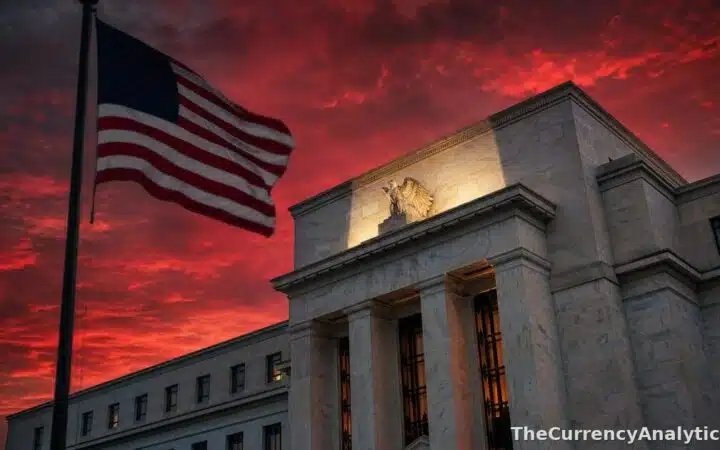
As of early Wednesday in the European session, gold prices (XAU/USD) have maintained a narrow trading range, hovering just beneath the week’s peak. Despite a weaker US dollar, gold traders appear hesitant to make moves before the Federal Reserve concludes its two-day policy meeting, set to deliver its decisions later today. This wait-and-see stance underscores the market’s dependence on cues from the Fed to determine the future trajectory of the precious metal.
The current hesitation among gold traders is not unwarranted. The Federal Reserve’s policy decisions have historically played a significant role in influencing gold prices. As investors look for signals on interest rate changes and inflation management, the central bank’s announcements could either boost or dampen gold’s appeal. With inflation currently a global concern, the Fed’s approach in combating rising prices while balancing economic growth is critical.
Gold has long been seen as a hedge against inflation, and any indication of prolonged inflation could elevate its attractiveness. Conversely, if the Fed signals aggressive interest rate hikes, it could strengthen the US dollar, making gold less appealing as an investment. Typically, a stronger dollar makes commodities priced in dollars, like gold, more expensive for foreign investors, which could curb demand.
In the broader context, gold’s role as a safe haven asset adds an additional layer of complexity to its market dynamics. Historically, during times of economic uncertainty or geopolitical tension, investors flock to gold as a reliable store of value. The ongoing global economic landscape, marked by supply chain disruptions and potential geopolitical flashpoints, continues to add to the metal’s allure.
The current market sentiment reflects a cautious optimism, where traders are waiting for clear guidance from the Federal Reserve. The Fed’s decision, particularly regarding interest rates, is anticipated to be a major market mover. As of now, analysts predict that the Fed might maintain the current rates but provide signals for future tightening, which would have significant implications for gold.
Adding to the complexity is the international economic environment. Many countries are grappling with high inflation rates and political instability, which historically increase gold’s appeal as a non-yielding asset. However, with the global economy showing signs of gradual recovery, especially after the setbacks from the pandemic, some investors are pivoting towards riskier assets, potentially impacting gold’s demand.
The gold market is also closely tied to the economic health of major players like China and India, which are significant consumers of the metal. A slowdown in these economies or changes in their monetary policies can strongly influence global demand for gold. China’s recent efforts to stimulate its economy and India’s festive season buying patterns could temporarily boost gold prices.
Despite the current indecisiveness, some market analysts remain bullish on gold, citing continuous long-term pressures such as geopolitical tensions, economic policy uncertainties, and fluctuating currency values as underpinning strong future demand. They argue that even if the Fed opts for a tighter monetary policy, the persistent global challenges could sustain gold’s appeal.
Conversely, a potential risk for gold prices is the improvement in economic conditions globally, which could shift investor interest towards equities and other riskier assets. If global inflation is successfully controlled without derailing growth, and if geopolitical tensions ease, the demand for gold as a safe-haven investment might diminish.
Historically, the gold market has experienced fluctuations based on the Fed’s actions. For instance, in the past, major interest rate cuts or hikes have led to notable shifts in gold’s valuation. Investors often look for patterns from these historical precedents to anticipate future trends. The relationship between gold and the dollar, while often inverse, can also vary based on broader economic conditions.
The anticipation surrounding the Fed’s meeting underscores the interconnectedness of gold prices with global economic policies. While waiting for the Fed’s decision, traders are also keeping an eye on other central banks and their monetary policy directions. The European Central Bank, Bank of England, and Bank of Japan are also pivotal in shaping the broader economic landscape, which in turn affects gold’s market dynamics.
In conclusion, the gold market finds itself at a crossroads, heavily reliant on forthcoming policy signals from the Federal Reserve. While the metal’s safe-haven status and hedge against inflation continue to support its demand, the potential for a stronger dollar and improving global economic conditions pose significant risks. As traders brace for the Fed’s announcement, the future direction of gold prices hangs in the balance, illustrating the complex and multifaceted nature of the global financial markets.