Community Trust ScoreVerified
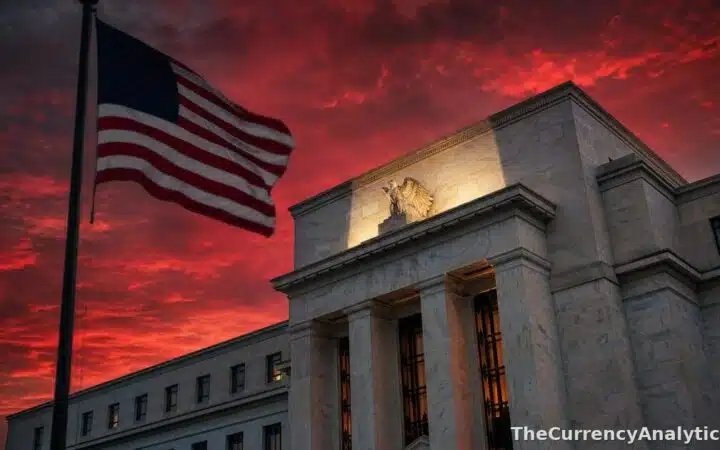
On Tuesday, gold prices continued to hover within a narrow range for the third consecutive day, reflecting a cautious market as investors await signals from the Federal Reserve regarding potential rate cuts. This sideways trading pattern has persisted throughout the Asian market session, with traders showing hesitancy ahead of the Federal Open Market Committee’s (FOMC) decision.
The precious metal’s movement is tightly linked to expectations about U.S. monetary policy. The anticipation of a possible shift in interest rates by the Federal Reserve has kept traders on edge. Interest rates are a crucial determinant for gold prices; lower rates tend to weaken the U.S. dollar, making gold—a non-yielding asset—more attractive. As such, gold often acts as a hedge against currency devaluation and inflation.
Gold’s current trading range is also influenced by broader economic conditions. Recent U.S. economic indicators have painted a mixed picture, leaving market participants unsure about the Fed’s next move. While some data points to a resilient economy, others suggest cooling growth, creating uncertainty about the central bank’s policy trajectory.
Adding another layer to the complexity is the global economic environment. Inflationary pressures, which have persisted longer than many policymakers anticipated, are a primary concern for central banks worldwide. In the U.S., inflation remains above target levels, putting the Fed in a challenging position of balancing economic growth with price stability.
Historically, gold has been a popular investment during times of economic uncertainty. Its value as a safe haven commodity often attracts investors when other markets are volatile. However, in recent months, gold’s appeal has been somewhat muted due to strong equity market performances and the relative strength of the U.S. dollar.
In contrast, some analysts argue that gold’s current consolidation is temporary. They suggest that any indication from the Fed of a dovish turn—featuring rate cuts or a more accommodative monetary stance—could spur a rally in gold prices. This is based on the premise that lower interest rates generally depreciate the dollar, making gold more affordable for holders of other currencies.
Moreover, geopolitical tensions and international trade dynamics continue to play a critical role in gold’s market behavior. Uncertainties surrounding global trade policies and regional conflicts can increase risk aversion, potentially driving investors to seek refuge in gold.
Despite these factors, there are risks associated with a potential uptick in gold prices. A scenario where economic recovery outpaces expectations could lead to higher interest rates, negatively impacting gold. Additionally, should the Fed delay rate cuts due to persistent inflation, the dollar might strengthen, exerting additional pressure on gold prices.
To provide a broader context, gold’s performance in the last decade has been notable. Following the 2008 financial crisis, gold prices soared as central banks worldwide enacted aggressive monetary easing policies. In 2020, during the early stages of the COVID-19 pandemic, gold reached new highs as investors sought safety amid unprecedented economic disruptions.
In comparison to other commodities, gold’s market dynamics are unique due to its dual role as both an investment asset and an industrial commodity. Unlike industrial metals that are heavily influenced by supply-demand factors, gold’s value is often driven by investor sentiment and macroeconomic indicators.
In terms of global market size, the gold market is substantial, with annual consumption surpassing 4,000 tonnes. Central banks, particularly in emerging economies, have been significant buyers, seeking to diversify reserves and reduce dependency on the U.S. dollar. This trend is expected to continue, providing a consistent source of demand for gold.
In conclusion, while gold remains in a holding pattern as investors await further guidance from the Fed, the metal’s long-term prospects are buoyed by its historical role as a hedge against economic uncertainty and inflation. Nonetheless, potential risks such as stronger-than-expected economic performance or delayed monetary policy changes could challenge its appeal. As the FOMC meeting approaches, market participants will be closely watching for hints of future policy shifts, which could set the direction for gold prices in the coming months.