Community Trust ScoreVerified
On Tuesday during the Asian trading session, the GBP/USD currency pair saw a resurgence of buying interest, maintaining its position above the 1.3300 level. This stability followed a period of fluctuating and directionless market activity, drawing attention from investors who are cautiously optimistic amid expectations of a dovish stance from the U.S. Federal Reserve.
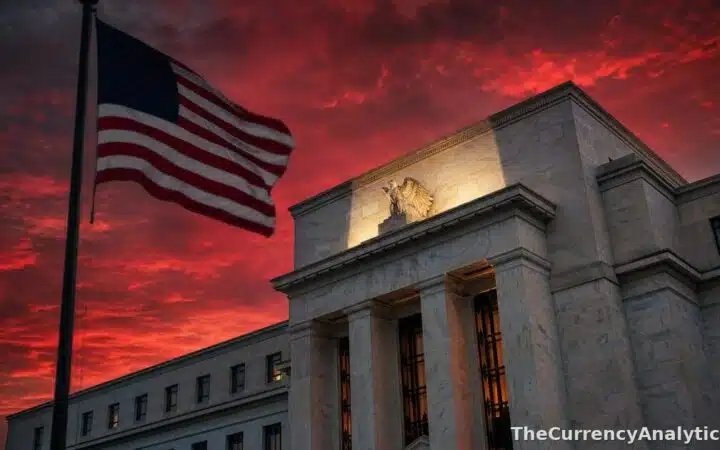
The focus on the Federal Reserve comes as market participants anticipate a potential shift in monetary policy that could impact the U.S. dollar’s value globally. The Fed’s recent signaling of a more cautious approach to interest rate hikes has led many to speculate that further rate increases might be delayed or even paused. This expectation has weakened the dollar, providing support to the pound sterling and other currencies. A dovish Fed is seen as likely to maintain lower interest rates for a longer period, which tends to decrease demand for the dollar as investors seek higher returns elsewhere.
Historically, the GBP/USD pair has been sensitive to changes in monetary policy from both the Bank of England and the Federal Reserve. The current dynamics are no exception, with the pound showing resilience despite mixed economic signals from the United Kingdom. Inflation remains a key concern for the UK, as the consumer price index continues to hover above the target set by the Bank of England. This persistent inflationary pressure has sparked debates on whether the Bank of England might tighten its monetary policy sooner than anticipated, contrasting with the Fed’s more dovish outlook.
In recent months, the UK’s economy has faced challenges, including a slowdown in consumer spending and uncertainty over potential trade agreements post-Brexit. Despite these hurdles, the labor market has shown surprising strength, with unemployment rates remaining low and wage growth beginning to pick up. This economic backdrop provides a mixed picture for the pound, as investors weigh the risks of inflation against the potential for economic recovery.
The broader forex market is also influenced by geopolitical tensions and global economic trends. The ongoing trade discussions between major economies have introduced volatility, as agreements or disagreements can swiftly alter investor sentiment. Furthermore, the economic performance of the Eurozone, a key trading partner for the UK, continues to play a critical role in shaping the pound’s trajectory. A flourishing Eurozone economy could bolster demand for British exports, while turbulence could introduce additional pressure on the pound.
In the United States, despite signs of economic resilience, including robust job growth and consumer spending, there are underlying concerns about the sustainability of this growth trajectory. The potential for a recession, driven by factors such as the end of fiscal stimulus measures and supply chain disruptions, looms large. These factors contribute to the cautious outlook of the Federal Reserve, as it seeks to balance the dual mandate of maximizing employment while controlling inflation.
On a comparative note, other major economies are also grappling with similar challenges. For instance, the European Central Bank has been balancing inflationary pressures against a backdrop of economic recovery, mirroring some of the dilemmas faced by the Bank of England and the Federal Reserve. This global context highlights the interconnected nature of monetary policy decisions and their far-reaching impacts on currency markets.
However, the assumption of a dovish Fed is not without its risks. Should inflation in the U.S. persist at higher levels than anticipated, the Federal Reserve may be forced to adopt a more hawkish stance, leading to abrupt policy adjustments. Such a move could strengthen the dollar, reversing the current support seen for the pound and potentially leading to significant volatility in the forex market.
In conclusion, while the GBP/USD pair benefits from current market expectations of a dovish Federal Reserve, the situation remains fluid. Investors must remain vigilant, considering both domestic factors and the broader global economic environment. As central banks around the world navigate complex economic landscapes, the interplay of monetary policies will continue to be a critical driver of currency values and market dynamics. The coming months will likely bring further developments as central banks recalibrate their approaches in response to evolving economic conditions.