Community Trust ScoreVerified
As the week begins, the US Dollar has gained ground against the Swiss Franc, reaching its highest level in a week. This movement comes as investors anticipate significant monetary policy announcements from both the Federal Reserve and the Swiss National Bank (SNB), set to take place in the coming days.
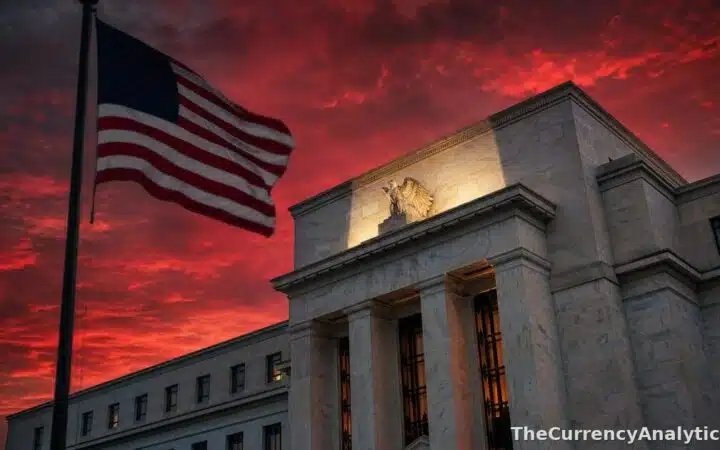
The Federal Reserve is expected to release its latest interest rate decision, a pivotal event for global markets. The central bank’s policies have profound effects on international currencies, influencing trade and investment flows. Given the robust performance of the US economy, with unemployment at historically low levels and inflation nearing the Fed’s target, many analysts are watching for signals of any shifts in interest rates or economic outlooks.
Meanwhile, the Swiss National Bank is also scheduled to announce its monetary policy decision. Traditionally, the SNB maintains its key interest rates in the negative territory to combat deflation and support the Swiss economy. However, with the Eurozone grappling with economic uncertainty, there are speculations about potential adjustments to Switzerland’s rate strategy, which could affect the CHF/USD exchange rate.
Historically, the Swiss Franc has been seen as a safe-haven currency, attracting investors during periods of economic turmoil or geopolitical tensions. This reputation has often driven demand for CHF, sometimes leading to upward pressure on the currency. However, the Swiss National Bank has occasionally intervened to manage excessive currency appreciation, protecting the nation’s export-reliant economy from adverse effects.
In contrast, the US Dollar’s recent strength can be attributed to several factors, including robust US economic data and investor sentiment that favors dollar-denominated assets amidst global uncertainties. The greenback’s resilience reflects its status as the world’s primary reserve currency, a position solidified by strong US economic fundamentals and the Federal Reserve’s relatively hawkish monetary stance compared to other central banks.
However, the path forward for both currencies is fraught with uncertainties. While the US economy appears relatively stable, the upcoming presidential election cycle introduces potential political risks that could unsettle markets. Additionally, any unexpected shifts in the Federal Reserve’s policy could trigger volatility in the USD/CHF exchange rate.
On the Swiss front, the economy continues to face challenges from external factors. The ongoing economic malaise in the Eurozone, Switzerland’s largest trading partner, could impact Swiss exports and economic growth. Furthermore, any significant policy shifts by the SNB will need to balance between supporting domestic economic conditions and managing exchange rate stability.
Beyond the immediate central bank meetings, the global economic landscape remains a critical factor for currency movements. Geopolitical tensions, such as those in Eastern Europe and the Middle East, as well as trade policy developments, could also influence market sentiment and currency preferences.
The forex market, known for its volatility, is particularly sensitive to interest rate differentials between currencies. Traders often engage in carry trades, borrowing in currencies with lower interest rates to invest in those offering higher returns. Changes in monetary policy from major central banks like the Fed and SNB could dramatically impact these strategies, influencing capital flows and exchange rates.
Counterpointing the USD’s dominance, some analysts caution against over-reliance on the US Dollar’s current trajectory. They warn that external shocks, such as a sudden dip in US economic data or unexpected geopolitical events, could reverse the greenback’s fortunes. Moreover, should the Federal Reserve indicate a pause or reduction in rate hikes, it might dampen the USD’s appeal, giving room for the Swiss Franc to regain some strength.
In the wider context, central banks worldwide are navigating a post-pandemic landscape marked by high inflation and uneven economic recoveries. Both the Fed and SNB are no exceptions, as they attempt to balance stabilizing prices with sustaining growth. The outcomes of their decisions this week will likely set the tone for the forex market in the coming months.
As investors await these crucial announcements, the forex market remains on edge, with traders closely watching for any sign of monetary policy changes. As always, the intersection of economic data, central bank actions, and geopolitical developments continues to shape the dynamic landscape of currency trading. The USD/CHF pair’s trajectory will be closely monitored, not just for its immediate impact, but also for what it signals about broader economic trends.