Community Trust ScoreVerified
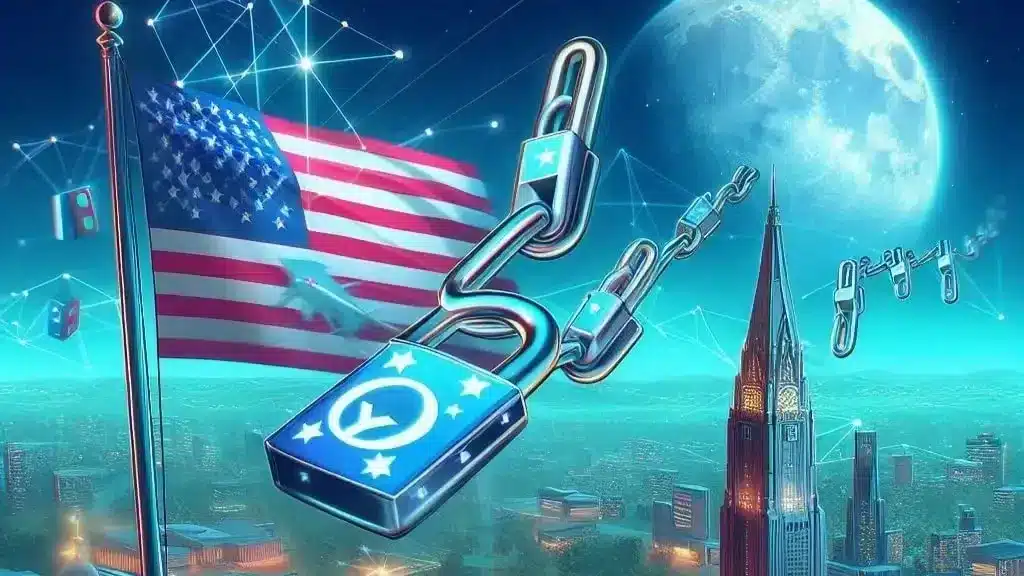
Chainlink, the decentralized oracle network co-founded by Sergey Nazarov, is extending its partnerships with U.S. government agencies to bring more federal functions on-chain. This follows its recent collaboration with the Department of Commerce, which began integrating publicly available economic data into blockchain ecosystems.
Nazarov stated that these initiatives aim to improve transparency and trust while laying the groundwork for more ambitious applications, including the potential for on-chain voting in federal elections. Though no firm timeline has been established, the company is actively engaging with multiple agencies to expand its services.
Feeding Public Data Into Blockchain Ecosystems
The Department of Commerce has started uploading GDP data for Q2 2025 onto nine blockchain networks, including Bitcoin, Ethereum, Solana, Tron, Avalanche, Stellar, and Ethereum layer-2 solutions. Chainlink and decentralized oracle network Pyth facilitate the integration of this data into the decentralized finance (DeFi) ecosystem, allowing crypto markets to access verified economic information in real-time.
While the initiative may appear incremental, it serves as a critical first step in demonstrating blockchain’s capability to securely manage and distribute government data. By using Chainlink’s oracle network, the government ensures the data’s accuracy, reducing opportunities for disputes or errors when integrating real-world metrics into smart contracts.
Oracle Networks and the Future of Blockchain in Governance
Chainlink’s platform allows smart contracts across 14 blockchain ecosystems to pull verified off-chain data, ensuring secure and accurate integration. This capability opens the door to broader government applications, from financial transparency to infrastructure monitoring and potentially electoral systems.
Nazarov emphasized that blockchain election verification technology is fully developed and ready for deployment. The challenge, he explained, is political rather than technical. Discussions in Washington have already focused on identity verification and ensuring the integrity of voting data, which could, in theory, be implemented across federal elections.
Political Considerations and Long-Term Goals
Implementing blockchain solutions in elections involves coordination between federal and state governments, which traditionally manage voting logistics. While technology exists, adoption requires political will, regulatory approval, and consensus among stakeholders. Nazarov underscored that oracle networks like Chainlink could help resolve trust issues in situations where differing groups question the validity of events or results.
The Trump administration has actively promoted cryptocurrency adoption in government applications, framing this approach as part of a broader initiative to position the U.S. as a leader in digital finance. In recent months, former President Trump has also suggested measures that could influence election procedures, highlighting the political dimension of integrating blockchain technologies into governance.
State-Level Collaborations and Cross-Chain Initiatives
Beyond federal agencies, Chainlink is exploring partnerships with state governments for similar on-chain initiatives. Though details remain limited, these collaborations aim to standardize how verified data is shared across multiple blockchain networks, enhancing transparency and reducing reliance on centralized intermediaries.
By building cross-chain initiatives, Chainlink hopes to create a seamless interface where government data, including economic indicators and possibly voting results, can be securely integrated and accessed across different blockchain ecosystems.
Broader Implications for Crypto and Governance
Integrating government data and functions on-chain has several potential benefits. First, it can increase public trust in data integrity by providing immutable records. Second, it opens opportunities for decentralized finance and other blockchain applications to interact with real-world information in a secure, verifiable manner.
Chainlink’s efforts reflect a growing trend in which blockchain networks are no longer limited to private or corporate use but are increasingly considered for public administration. This trend could transform how governments manage information, conduct oversight, and interact with constituents, especially in the digital age.
Challenges and Future Outlook
While the technical feasibility of blockchain-based elections and on-chain government data is established, the path to implementation is complex. Regulatory hurdles, political debates, and differing state and federal mandates pose significant challenges.
However, Chainlink’s incremental approach—starting with economic data feeds and gradually expanding into more sensitive applications—demonstrates a practical method for introducing blockchain solutions into the public sector. By proving the technology’s reliability and security, the company aims to build confidence among both officials and citizens.
Conclusion: Chainlink’s Role in Modernizing Government Infrastructure
Chainlink’s expanded partnerships with U.S. agencies highlight the growing intersection of blockchain technology and government operations. By securely integrating public data on-chain, the company provides a foundation for future initiatives that could include election verification, financial transparency, and cross-agency data management.
While political and regulatory factors will ultimately determine the pace of adoption, Chainlink’s technological readiness positions it as a key player in bringing government functions to blockchain networks. If successful, these efforts could reshape how public information is managed, verified, and accessed, setting a precedent for blockchain integration in governance worldwide.