Community Trust ScoreVerified
U.S. spot Bitcoin ETFs hit a rough patch on June 17. Net outflows came in at $82.2 million — but the story underneath that number is messier and more interesting than the headline figure.
Not every fund bled. Fidelity’s FBTC pulled in $14.0 million, and MSBT added $4.1 million. But ARK Invest’s ARKB lost $43.5 million, BlackRock’s IBIT shed $30.8 million, and GBTC, BTCO, and HODL all saw net redemptions too, per data from Farside Investors. So you’ve got some funds attracting fresh money on the exact same day others are watching capital walk out the door. That’s not a bear market. That’s a split.
Warsh’s Fed Debut Sets the Tone
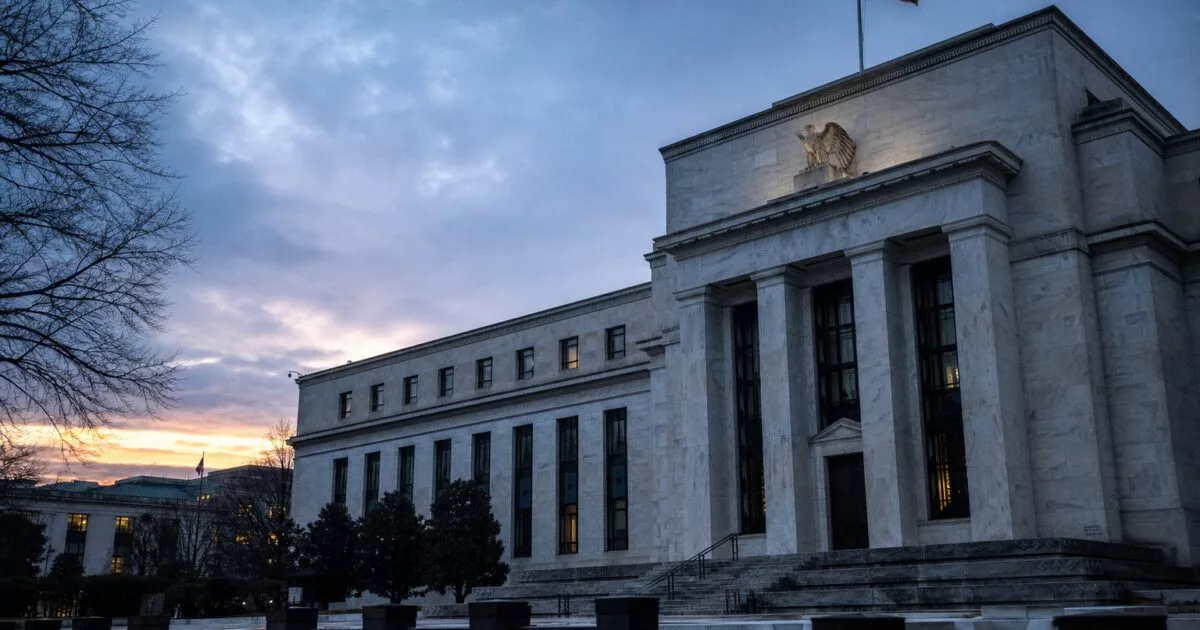
The timing matters. June 17 was Kevin Warsh’s first Federal Open Market Committee meeting as Fed Chair, and the central bank held the federal funds rate steady between 3.50% and 3.75%. Fine. But the projections that came alongside that hold were the real story. The median federal funds rate projection moved up to 3.8%, and the median PCE inflation projection climbed to 3.6%. Neither number is friendly to risk assets.
Bitcoin felt it. The price sat near $63,918 on June 18, down about 1.14% over the prior 24 hours. Not a collapse, but a clear lean toward caution.
And the ETF flows basically told the same story in a different language.
Why GBTC Fees Don’t Fully Explain the Outflows
Here’s where it gets complicated. GBTC carries a 1.50% fee structure — the highest in the peer group — and it’s been bleeding assets for a while now. Easy enough to explain. But ARKB and IBIT both run lower fees, and they still saw some of the biggest single-day outflows on June 17. ARKB lost $43.5 million. IBIT dropped $30.8 million. So the fee argument only goes so far.
Something else is driving these decisions. Probably a mix of things — platform relationships, liquidity profiles, how different institutional desks think about risk on a day when the Fed just handed them a less-than-ideal set of forward projections. It’s murky, and the data doesn’t spell it out cleanly.
What’s clear is that investors aren’t treating all Bitcoin ETFs as interchangeable. They’re picking winners and dumping others, sometimes on the same afternoon.
In-Kind Redemptions Add Another Layer
There’s a wrinkle worth flagging. The SEC approved in-kind creations and redemptions for crypto exchange-traded products in July 2025, and that changes how you read some of these outflow numbers. When a fund processes a redemption in-kind, it doesn’t necessarily sell Bitcoin on the spot market. The issuer can hand back the underlying asset directly, which means the redemption doesn’t automatically translate into downward price pressure.
So not every dollar of outflow from ARKB or IBIT is a dollar of Bitcoin hitting the bid. Some of it probably is. Some of it isn’t. The mechanics differ by fund, and the source didn’t specify exactly which redemptions on June 17 went through which process. That distinction matters for anyone trying to read the ETF flow data as a direct signal of spot market sentiment.
It’s basically a reminder that ETF flow headlines can mislead if you take them at face value.
The broader picture here is that the Bitcoin ETF market has grown complex fast. A year or two ago, the conversation was mostly about whether these products would get approved at all. Now you’ve got fee competition, in-kind redemption mechanics, issuer-specific liquidity dynamics, and macro sensitivity all running at the same time. Investors are clearly paying attention to all of it.
FBTC and MSBT managing inflows on a net-outflow day isn’t a small thing. It means Fidelity’s product found buyers even while the macro backdrop turned sour and two of the biggest names in the space were seeing redemptions. That’s either a fee story, a distribution story, or a trust story — probably some combination of all three.
GBTC’s continued outflows are almost a separate narrative at this point. The fund has been shrinking for a while, and the 1.50% fee hasn’t helped. But the fact that lower-cost products also saw outflows on June 17 is worth watching. It suggests the June 17 move wasn’t purely a GBTC rotation story. Warsh’s projections probably spooked a broader set of holders.
Bitcoin was trading near $63,918 on June 18, and the net ETF outflow for June 17 stood at $82.2 million.
Frequently Asked Questions
What were the total Bitcoin ETF net outflows on June 17?
Net outflows for U.S. spot Bitcoin ETFs on June 17 totaled $82.2 million, with ARKB losing $43.5 million and IBIT shedding $30.8 million as the largest individual outflows, per Farside Investors data.
Which Bitcoin ETFs saw inflows on June 17 despite the overall outflows?
FBTC attracted $14.0 million and MSBT pulled in $4.1 million on June 17, bucking the broader trend of net outflows across the Bitcoin ETF space that day.