Community Trust ScoreVerified
Bitcoin mining stocks are rallying hard. Wall Street’s growing obsession with semiconductor technology is spilling over into crypto mining, and investors are paying attention.
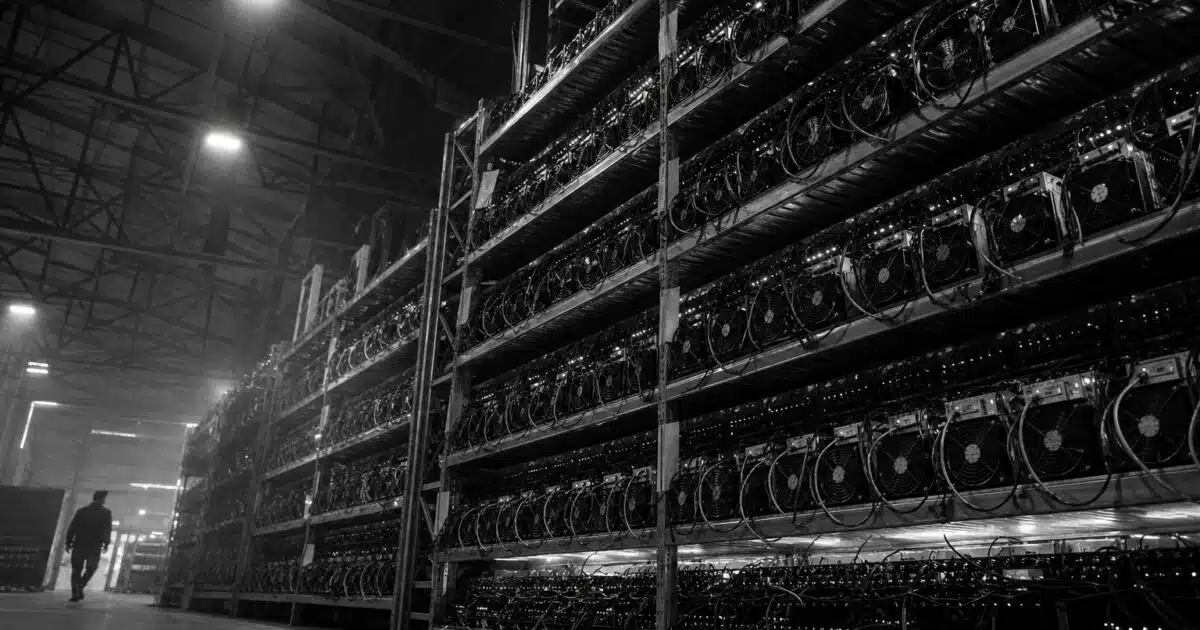
The connection isn’t complicated. AI applications eat computing power at a ferocious rate. The hardware and facilities crypto miners already run — dense, power-heavy, built for sustained high-performance workloads — look a lot like what AI infrastructure needs. That overlap is pretty much the entire story driving the current surge in mining stocks.
Semiconductors Pull Mining Stocks Higher
The semiconductor sector has been on a tear, and crypto miners are catching some of that momentum. Investors seem to believe that the existing physical infrastructure miners have built up over years can be adapted, at least partially, to serve the AI market. It’s not a guaranteed pivot, but the possibility alone is enough to move money right now.
Miners already own the buildings, the power contracts, the cooling systems. Those aren’t cheap or fast to replicate. And as demand for AI computing capacity keeps climbing, anyone sitting on that kind of setup starts looking like a strategic asset rather than just a crypto play. That’s a meaningful shift in how Wall Street frames these companies.
The optimism is real. Whether it holds is another question.
Miners’ Infrastructure as a Dual-Purpose Asset
The core argument from bulls is straightforward: crypto miners have spent years building out high-performance computing facilities, and those facilities don’t care whether they’re crunching blockchain hashes or running AI model inference. The hardware is different, sure, but the underlying needs — power, cooling, physical space, network connectivity — are basically the same.
That gives miners a head start. Building AI data center capacity from scratch takes time and capital. Miners who can repurpose or expand existing sites to support AI workloads skip a chunk of that line. It’s a competitive edge that investors are starting to price in.
And it’s not just theoretical. Miners across the sector are actively exploring what a dual-purpose strategy looks like. The interest in AI represents a real shot at additional revenue streams without fully abandoning the digital currency operations that got them here. Whether that balance is achievable at scale — that’s the harder question, and nobody has a clean answer yet.
Some miners are probably better positioned than others. The ones with newer, more flexible infrastructure and stronger balance sheets have more room to experiment. The ones running older, narrower setups may find the pivot harder than it looks on paper.
Energy Demand and the Sustainability Question
There’s a catch, and it’s a big one. Expanding into AI infrastructure means more energy consumption, not less. Crypto mining already faces serious scrutiny over its environmental footprint. Adding AI workloads to the mix could intensify that pressure.
Investors are watching how companies handle this. Energy efficiency isn’t just a PR concern anymore — it’s increasingly a financial one, tied to operating costs, regulatory risk, and access to capital from ESG-sensitive funds. A miner that can run AI workloads without blowing up its energy budget looks very different from one that can’t.
The sustainability angle is murky right now. No clear industry standard has emerged for how miners should account for the energy demands of AI operations versus traditional mining. That ambiguity probably won’t last. As both crypto and AI face tighter environmental scrutiny, the miners who get ahead of it stand to benefit.
For now, the market seems willing to look past the energy questions and focus on the growth narrative. That can change fast.
The semiconductor momentum is doing a lot of heavy lifting here. Strong earnings and bullish guidance from chip makers have lifted the whole high-performance computing ecosystem, and mining stocks are riding that wave. It’s a bit circular — AI demand drives chip demand, chip demand boosts semiconductor stocks, semiconductor optimism lifts miners — but markets run on narratives, and this one has legs right now.
What’s less clear is how sticky the gains are once investors start demanding actual results rather than potential. The story of miners pivoting to AI is compelling. The execution is harder. Integrating new workloads, managing two sets of operational demands, retraining staff, renegotiating power agreements — none of that is simple, and the companies that stumble on the operational side will likely give back a chunk of these gains.
Still, the structural argument is hard to dismiss. The physical infrastructure miners have built is genuinely valuable in a world where AI capacity is scarce. That’s not hype. It’s a real asset, and the market is right to pay some attention to it.
How much attention is the right amount? Unclear. The sector is moving fast, and the gap between the narrative and the numbers on the ground is still pretty wide. Miners who can close that gap — who can show actual AI revenue alongside traditional mining income — will probably be the ones that hold their gains. The ones riding purely on sentiment may not.
The semiconductor surge has now put crypto mining infrastructure on the map as a potential AI play, and mining stocks are up as a result.
Hub: Bitcoin price, news, and analysis
Frequently Asked Questions
Why are Bitcoin mining stocks rising alongside semiconductor stocks?
Investors see crypto miners’ existing power-intensive infrastructure as well-suited to support AI applications, which require the same kind of high-performance computing capacity that mining facilities already provide.
Can crypto miners actually shift their operations to support AI?
Miners are exploring dual-purpose strategies that keep core mining activities running while expanding into AI infrastructure support, though balancing both operations remains a significant strategic challenge.