Community Trust ScoreVerified
On November 21, 2025, Bitcoin’s price dropped below the significant threshold of $86,000, reacting to the latest U.S. jobs report that suggested enduring inflation pressures. This unexpected economic indicator has dashed expectations of an interest rate cut by the Federal Reserve in December, triggering a rapid market adjustment.
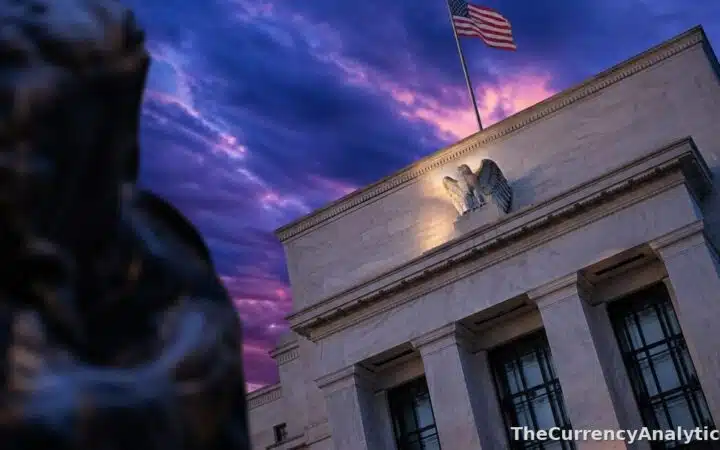
The U.S. employment data, initially delayed, revealed stronger-than-anticipated wage growth and robust hiring figures. While this points to a resilient labor market, it also heightens fears of sustained inflation. Such inflationary pressures complicate the Federal Reserve’s monetary policy, which had been leaning towards a potential interest rate reduction as a measure to stimulate economic growth.
Bitcoin, a highly volatile asset, often reflects investor sentiment about economic conditions, particularly those affecting inflation and interest rates. As a decentralized currency, Bitcoin is seen by some as a hedge against inflation, but its value is also susceptible to shifts in monetary policy expectations. Given the strong jobs data, the market recalibrated its outlook, leading to a sell-off in Bitcoin.
This price plunge comes after a period of relative stability and growth for Bitcoin. Earlier in the year, Bitcoin had risen above $90,000, driven by a combination of factors, including increased institutional investment and growing adoption by consumers. However, the current market reaction illustrates the ongoing volatility and sensitivity of cryptocurrencies to macroeconomic developments.
The Federal Reserve’s decision-making process is crucial for global financial markets. Historically, lower interest rates have been favorable for riskier assets like Bitcoin, as they reduce the opportunity cost of holding non-yielding assets. However, persistent inflation could force the Fed to maintain or even increase rates to control price rises, thereby impacting Bitcoin’s attractiveness to investors seeking short-term gains.
Despite these concerns, some analysts believe that the underlying fundamentals of Bitcoin remain strong. They argue that the cryptocurrency’s long-term trajectory is not solely dependent on short-term economic indicators. Bitcoin’s supply cap of 21 million coins and its decentralized nature continue to attract investors looking for security against currency devaluation and geopolitical instability.
Moreover, Bitcoin’s integration into traditional financial systems has been progressing. Major financial institutions are increasingly offering Bitcoin-related products and services, such as futures contracts and exchange-traded funds. This mainstream adoption is seen as a vote of confidence in Bitcoin’s future, potentially leading to greater price stability over the long term.
However, potential risks loom on the horizon. Regulatory developments continue to pose a significant threat to Bitcoin’s market dynamics. Governments around the world are grappling with how to regulate cryptocurrencies, balancing the need to protect consumers and financial systems without stifling innovation. Any unexpected regulatory crackdowns could trigger volatility, impacting Bitcoin prices sharply.
In addition to regulatory risks, technological challenges could also affect Bitcoin’s prospects. Issues such as network scalability and energy consumption are ongoing concerns for the cryptocurrency community. While solutions such as the Lightning Network aim to address scalability, critics argue that Bitcoin’s energy-intensive mining process poses environmental challenges as the world increasingly focuses on sustainability.
Comparatively, other countries’ monetary policies offer a mix of influences on Bitcoin’s performance. In Europe, for example, the European Central Bank has maintained a dovish stance, which could bolster Bitcoin’s appeal there as a hedge against economic uncertainty. Similarly, in countries like Argentina and Turkey, where local currencies have suffered significant devaluation, Bitcoin has emerged as an attractive store of value for users looking to safeguard their wealth.
Looking ahead, Bitcoin investors remain watchful of the Federal Reserve’s next moves and any signals of inflation trends. The interplay between economic indicators and monetary policy will continue to shape the cryptocurrency’s market behavior. While Bitcoin has demonstrated resilience in the face of past market corrections, its future trajectory will depend on a complex interplay of economic, regulatory, and technological factors.
In conclusion, Bitcoin’s price dip below $86,000 underscores its vulnerability to broader economic shifts and central bank policies. While the cryptocurrency continues to capture interest as both an asset and a technology, its immediate future is clouded by global financial conditions and regulatory uncertainties. As investors navigate these challenges, Bitcoin’s role as a hedge against inflation and a vehicle for financial innovation will be tested in the months to come.