Community Trust ScoreVerified
On Monday, the Euro slipped against the US Dollar, with the EUR/USD pair retreating from its earlier advances. This shift comes as the Dollar gains momentum, recovering from a slump and impacting the Euro negatively. Market participants are closely observing these developments in anticipation of the upcoming Federal Reserve meeting that could significantly influence currency movements.
In recent trading sessions, the EUR/USD pair found itself unable to sustain a climb beyond the 1.1650 mark, highlighting the Dollar’s renewed vigor. This currency pair’s fluctuations are a crucial focus for investors, given the intricate interplay of economic indicators and central bank policies influencing their values.
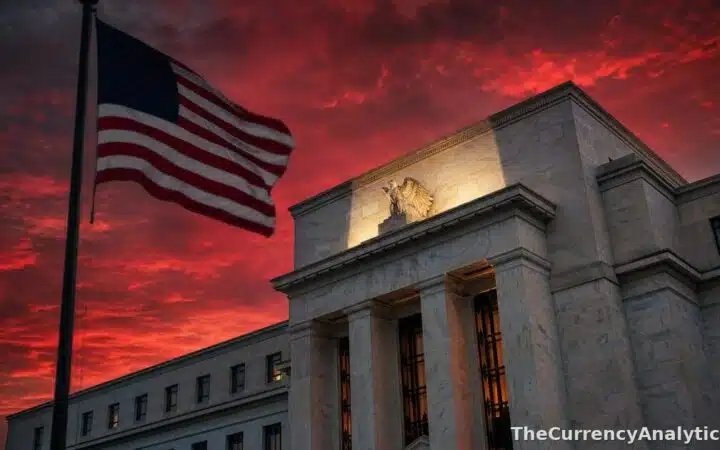
The Federal Reserve’s upcoming policy decision is a pivotal factor in the current market environment. As traders await the Federal Open Market Committee’s (FOMC) announcements, speculation is rife about potential changes to interest rates. The possibility of rate hikes has fostered a supportive environment for the Dollar, leading to its resurgence. The anticipation of tighter monetary policy contrasts with the European Central Bank’s more cautious stance, which may remain dovish in comparison.
The U.S. economy’s relative strength has further buoyed the Dollar. Recent economic data underline robust consumer spending and employment statistics, reinforcing expectations that the Fed may continue its path of monetary tightening. In contrast, the Eurozone faces its own challenges with slower growth rates and persistent inflation concerns.
Globally, the U.S. Dollar maintains a position as the world’s primary reserve currency. Its role in international trade and finance means shifts in its value can have wide-reaching implications. A strong Dollar often dampens the competitiveness of U.S. exports but can provide stability and confidence for investors during uncertain times.
The Eurozone’s economic outlook presents a mixed picture. While some member states report growth, others struggle with stagnation and high debt levels. This divergence complicates the European Central Bank’s policy approach, making it cautious about any abrupt changes that could destabilize member economies.
Another dimension affecting currency dynamics is geopolitical uncertainty. Ongoing geopolitical tensions in regions like Eastern Europe can exert pressure on the Euro, as investors typically seek the Dollar as a safe haven in times of crisis. Additionally, trade agreements and external economic policies continue to play significant roles in currency valuations.
However, some analysts warn of the risks associated with an overly strong Dollar. A sustained Dollar rally could lead to imbalances, such as hurting U.S. exporters by making American goods more expensive abroad. This scenario could lead to trade deficits and potentially slow down economic growth if not managed carefully.
Potential disruptions in the Eurozone could also affect the Euro’s performance. Economic reforms in key Eurozone countries have not been uniform, and political instability in certain regions could further weaken investor confidence in the shared currency.
Historical context offers additional insight into the current trends. Over the past decade, the U.S. has seen periods of both Dollar strength and weakness, often correlating with policy changes and economic cycles. The Euro, since its introduction at the turn of the century, has experienced fluctuations tied to the integration and expansion of the Eurozone.
In terms of recent policy actions, the European Central Bank has been cautious, maintaining lower interest rates to stimulate growth. Despite this, inflation remains a concern, and any hint of tightening policy could send ripples through financial markets. Conversely, the Fed’s more aggressive stance in managing inflation through rate hikes has provided a contrasting approach, influencing investor decisions across currencies.
As the Federal Reserve meeting draws closer, market analysts and traders will be closely monitoring any signals that could suggest a shift in the central bank’s strategy. The outcome of this meeting could either reinforce the current trajectory or introduce new dynamics into the forex market.
In summary, the Euro’s recent decline against the Dollar is a reflection of broader economic forces and anticipations of central bank actions. While the U.S. Dollar finds support from robust economic indicators and Fed policy expectations, the Euro remains pressured by regional challenges and a more conservative monetary stance from the European Central Bank. The interplay of these factors will continue to shape the forex landscape, with potential implications for global trade and investment flows.