Community Trust ScoreVerified
As of Tuesday, the New Zealand Dollar (NZD) is trading at approximately 0.5780 against the US Dollar (USD). The NZD’s effort to climb higher is facing resistance as the USD shows signs of strengthening, curbing any significant upward movement for the Kiwi.
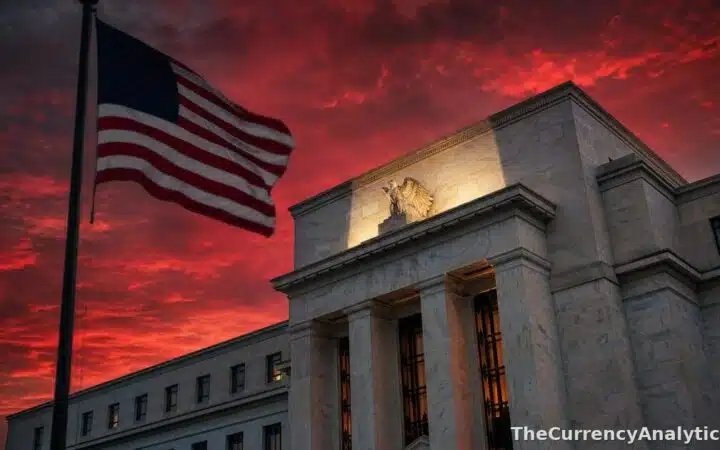
The near-static performance of the NZD/USD pair reflects market caution ahead of the forthcoming Federal Reserve meeting, where key interest rate decisions are expected. Currency traders are closely watching for any signals from the Fed that could indicate shifts in monetary policy. Historically, announcements from the Fed have had substantial impacts on currency values, given its influence over global economic conditions.
The Federal Reserve’s decision is particularly critical now as global markets navigate the aftershocks of recent economic turbulence. Inflation rates have remained a focal point for central banks worldwide, including the Reserve Bank of New Zealand (RBNZ), which has faced its challenges. The RBNZ has been grappling with domestic issues such as housing market corrections and the post-pandemic recovery, which have complicated its monetary policy stance.
In contrast, the US economy’s resilience, underscored by robust employment data and moderate inflation trends, has provided a supportive backdrop for the USD. This economic strength has led to expectations that the Fed might maintain its current policy course, which could bolster the USD further and apply additional pressure on currencies like the NZD.
Furthermore, New Zealand’s economy is experiencing its own unique pressures. Recent data suggests a slowdown in GDP growth, partly due to shifts in export demand and domestic consumption patterns. With agriculture being a significant sector, any fluctuations in global dairy demand can substantially impact the NZD. Additionally, New Zealand’s reliance on China as a major trading partner introduces another layer of uncertainty, especially with the ongoing geopolitical tensions and China’s own economic challenges.
On the other hand, there are arguments that the NZD could find support from domestic factors such as fiscal policies and potential trade partnerships. New Zealand’s government is actively seeking to diversify its trade relationships, which could cushion the economy against external shocks. However, the success of these initiatives remains to be seen in the face of global economic volatility.
A key risk factor for the NZD is the possibility of increased market volatility stemming from unexpected announcements by the Fed. Should the Fed signal a more hawkish stance than anticipated, it could lead to a stronger USD and a weaker NZD, complicating the economic recovery efforts in New Zealand. Moreover, any indication that the Fed might adjust its interest rates sooner than expected could lead to rapid capital flows into the US, leaving other currencies, including the NZD, struggling to maintain their value.
Interestingly, the NZD’s current struggle mirrors broader trends in the forex market, where several currencies are contending with a dominant dollar. The US Dollar Index, which tracks the USD against a basket of other currencies, has shown an upward trajectory, reinforcing the dollar’s strength across the board.
Looking at historical precedents, similar scenarios have played out in the past where interest rate differentials between the US and other countries have led to shifts in currency valuations. For instance, during the early 2000s, the USD saw substantial gains against several currencies when the Fed pursued aggressive rate hikes, highlighting the potent influence of US monetary policy on global exchange rates.
The upcoming Fed meeting is not the only event that traders are watching. Market participants are also keenly observing developments related to fiscal policies in both the US and New Zealand, as these could provide further insight into future currency movements. For New Zealand, the government’s budgetary plans and economic forecasts could play pivotal roles in determining the NZD’s trajectory.
In summary, while the New Zealand Dollar currently hovers around 0.5780 against the US Dollar, its future movement is contingent on a complex interplay of domestic and international factors. The Federal Reserve’s imminent interest rate decision looms large, potentially altering the landscape for the NZD/USD pair. As markets brace for the Fed’s announcement, the NZD remains in a precarious position, influenced by both local economic conditions and broader global trends.