Community Trust ScoreVerified
Students in applied STEM courses scored higher on proctored exams when instructors used AI tools tailored to their classes, a randomized trial led by Jun Li of the University of Michigan found. The Nov. 14 preprint estimated a student-level gain of 0.32 standard deviations for those with access to the tools compared to classes awaiting them.
More coverage is filed under Technology.
Trial Scope and Methodology
The trial covered 7,200 students in 55 applied STEM classes across 19 universities over three semesters, from spring 2025 through spring 2026. Each course-and-instructor pairing counted as one class. The exam analysis specifically focused on 4,768 students across 44 course offerings, using earlier term results to establish a baseline.
Researchers grouped classes by subject and academic level before randomly assigning a rollout schedule. The first group introduced AI tools immediately; the second group introduced them one term later. This design compared rollout timing rather than specific tools against generic chatbots. Both groups received technical support, training, and a deployment platform. Students in the first group used the tools for a full term before exams.
Exam Conditions and Student Outcomes
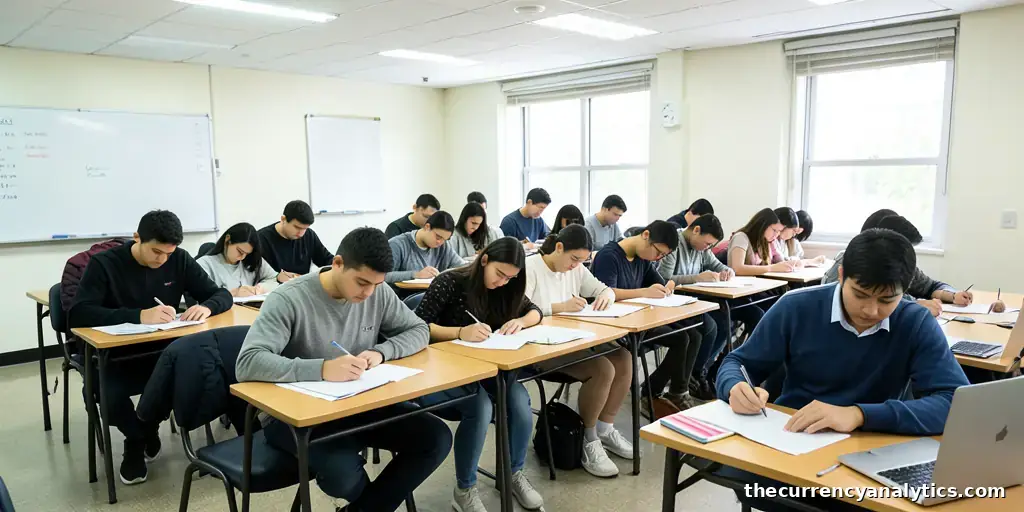
Analysis focused on proctored, in-person exams, mostly on paper. Other exams used monitored or restricted-access computers at university centers. To ensure data integrity, researchers excluded courses where exams allowed AI assistance. Scores were standardized within each class to enable comparisons across different exams.
The 0.32 standard deviation gain falls within a 95% confidence interval of 0.06 to 0.59, representing roughly 33% of the typical score spread within a class. Tools varied by course: some instructors built tutors for practice and feedback, others created coaches to guide students through problems, and some designed interactive simulations or AI-driven role-play exercises.
Engagement and Satisfaction Metrics
The study found no statistically significant change in student engagement or satisfaction. Engagement was measured by attendance and assignment completion; satisfaction was drawn from end-of-term evaluations. While tailored AI tools improved exam performance, they did not alter reported student experiences or participation levels.