Community Trust ScoreVerified
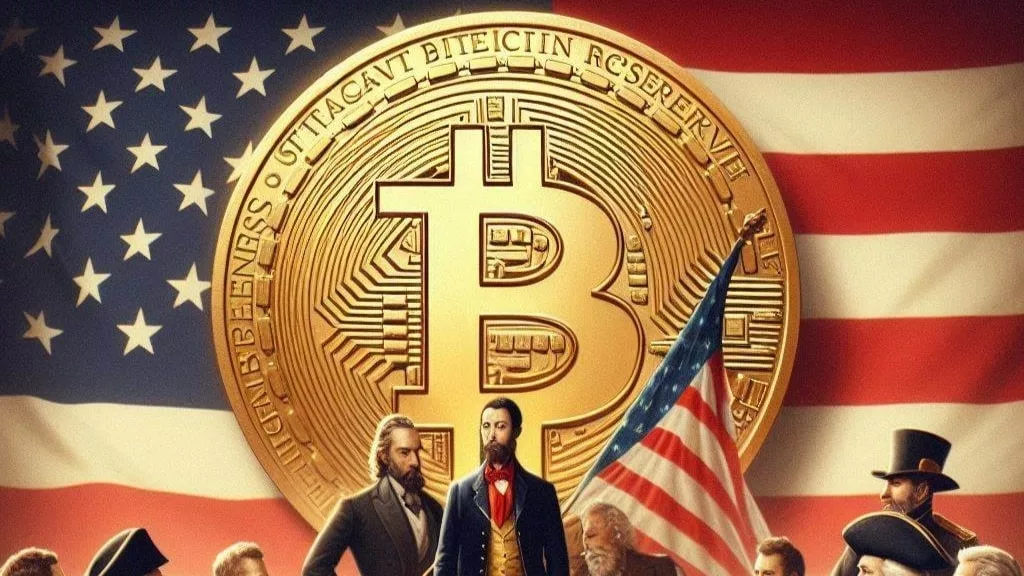
Michael Saylor, the executive chairman of Microstrategy and a staunch advocate for Bitcoin, is urging the United States to adopt a strategic bitcoin reserve. In a post on social media platform X (formerly Twitter), Saylor argued that such a reserve could transform America’s financial landscape, drawing parallels with some of the most lucrative acquisitions in U.S. history.
Historic Investments: A Lesson in Long-Term Strategy
Saylor’s comparison rests on the idea that early investments in high-potential assets can yield exponential returns over time. He cited several historic U.S. acquisitions as examples:
- Manhattan (1626)Purchased for 60 guilders (roughly $1,000 today), Manhattan has grown into one of the most valuable pieces of real estate globally, with an estimated worth of $2.1 trillion today. This equates to an annualized return of 6% over nearly four centuries.
- Louisiana Purchase (1803)Acquired for $15 million, the Louisiana Territory has evolved into an economic powerhouse with an estimated current value of $12 trillion, achieving a 6.3% annualized return over 220 years.
- California (1848)Purchased for $18 million, California’s modern valuation stands at $8 trillion, reflecting a 7.7% annual return since its acquisition.
- Alaska (1867)The United States purchased Alaska for $7.2 million. Today, its estimated worth is $1 trillion, yielding an impressive 7.8% annualized return over 150 years.
Saylor’s point is clear: investments in transformative assets, no matter how ambitious or unconventional at the time, can pay off massively in the long run.
Bitcoin: The Next Great Asset
By likening Bitcoin to these historic acquisitions, Saylor emphasizes its potential as a strategic asset for the U.S. He suggests that Bitcoin, as a digital and decentralized store of value, could become a cornerstone of economic stability and growth.
“Bitcoin represents the future of sound money,” Saylor argued. “It’s a scarce digital asset with the potential to appreciate exponentially as adoption grows globally.”
His advocacy is grounded in Bitcoin’s deflationary nature, finite supply of 21 million coins, and increasing adoption by governments, institutions, and individuals worldwide.
Microstrategy’s Bold Bitcoin Bet
Microstrategy, under Saylor’s leadership, has been a pioneer in adopting Bitcoin as a corporate reserve asset. The company has consistently accumulated Bitcoin, holding over 158,000 BTC (worth more than $5 billion at current prices).
This bold strategy has made Microstrategy a de facto Bitcoin proxy in the stock market, with its fortunes closely tied to the cryptocurrency’s performance.
Saylor’s personal conviction in Bitcoin has also been evident. He has consistently argued that Bitcoin is not only a hedge against inflation but also a revolutionary asset that could reshape global financial systems.
Challenges and Opportunities
While Saylor’s vision is ambitious, it faces several challenges:
- Volatility Bitcoin’s price fluctuations make it a risky investment for governments and institutions accustomed to more stable assets.
- Regulatory Uncertainty Governments worldwide are still grappling with how to regulate cryptocurrencies. In the U.S., this uncertainty has slowed broader adoption.
- Skepticism Critics argue that Bitcoin’s long-term viability depends on widespread adoption and technological improvements.
Despite these hurdles, Bitcoin’s resilience and increasing integration into traditional financial systems suggest its potential to become a cornerstone of global finance.
Strategic Reserve: A Vision for the Future
Saylor’s proposal for a strategic bitcoin reserve positions Bitcoin as a modern equivalent of historic U.S. acquisitions. By investing early in Bitcoin, he believes the U.S. could secure a leadership position in the global digital economy.
“History shows us that bold investments in transformative assets shape the future,” Saylor stated. “Bitcoin is our generation’s opportunity to make such an investment.”
As governments and institutions continue exploring the potential of cryptocurrencies, Saylor’s vision provides a compelling argument for proactive adoption.
Conclusion
Michael Saylor’s push for a strategic bitcoin reserve is rooted in historical precedent and his belief in Bitcoin’s transformative potential. By drawing parallels with iconic U.S. acquisitions like Manhattan and California, Saylor highlights the long-term benefits of investing in revolutionary assets early.
Whether or not the U.S. heeds his advice, Saylor’s vision underscores the growing recognition of Bitcoin as a pivotal asset in the digital age. As Bitcoin continues to mature, its role in shaping future economies may prove to be as significant as the historic investments Saylor invokes.